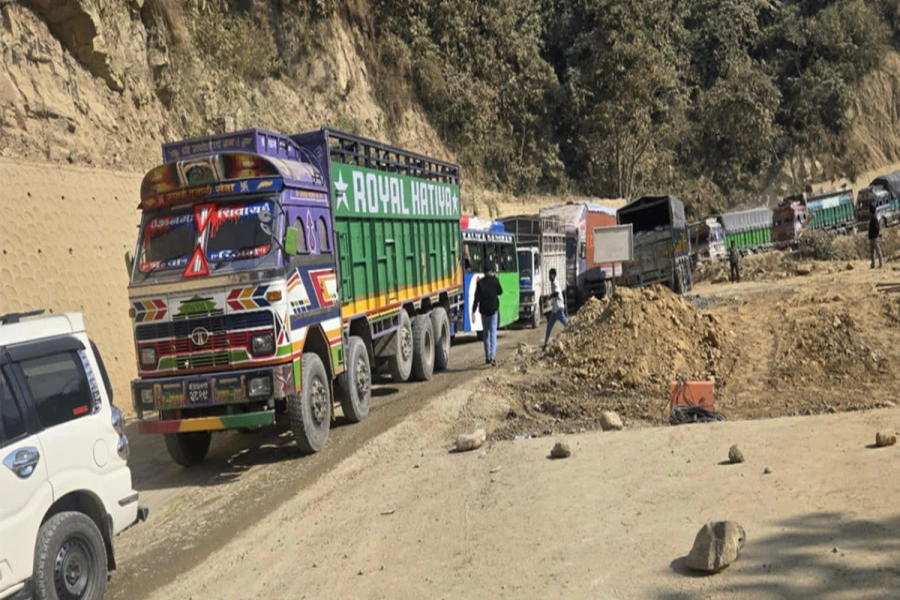
We welcome the First Amendment of the new Constitution of Nepal. The parliament's amendments on Saturday of three articles of the new constitution at least partially address the demands of the Madheshi parties that have been protesting in Tarai-Madhesh for the past five months. The amendments guarantee proportional representation of historically discriminated communities like women, Dalits, Janjatis, Madheshis, Tharus and Muslims. Likewise, in keeping with the demands of Madheshi parties, population has been made the "primary basis" (and geography the "secondary basis") for delimitation of electoral constituencies in federal Nepal. True, these amendments don't address the central demand of the Madheshi parties that there be two Madhesh-only provinces spanning the entire Tarai belt from Jhapa district in the east to Kanchanpur district in the west. Nor does it address their demand that federal boundaries be settled solely on population basis. But these demands of Madheshi parties were more idealistic than practical. There is no economic rationale for such divisions. Nor does the dispersed population pattern of ethnic groups allow for such neat east-west horizontal demarcations of federal provinces.There can be meaningful negotiations only when both the sides are ready to engage in a spirit of give and take. Now that the Big Three have shown their readiness to meet Morcha halfway, the Morcha must now reciprocate this gesture of goodwill and try to make peace with the major parties. Nepali people have already suffered enough in the past five months, first from the unrest in the Tarai and then from the Indian blockade. (This when they were still struggling to come to terms with a devastating earthquake.) They deserve a respite. But instead the Morcha has just announced a fresh round of protests, which, they say, will now be centered on Kathmandu. They will also continue with their protests at various border points, chiefly Raxaul-Birjung. It is hard to understand why they are so intent on making Nepalis suffer more. In a democracy, political parties are supposed to be the articulators of people's aspirations. What Nepali people from around the country, irrespective of their economic and ethnic backgrounds, want the most right now is for the protests at the border to end.
The constitution has now been amended to accommodate Madheshi parties. People thus see that the Big Three are making an effort to reach out to the disgruntled forces—not just to Madheshi parties but also to other traditionally marginalized groups like Dalits and Janjatis. Now they expect a similar gesture from Morcha, something that shows it is also serious about resolving the current crisis. If Morcha ignores this wish of common Nepalis, they could soon find themselves at the end of people's ire, as has happened recently when businessmen in border towns chased away protestors who were destroying their means of livelihood. If the parties affiliated to Morcha believe that their agendas are popular, they can test them out in the next general election. That is the only democratic way of establishing their agendas. Their decision to continue with self-defeating measures like border blockade and violent protests suggests these parties doubt their popularity but also, and more troublingly, the sanctity of the democratic process.
Related story
Hong Kong's population estimated at 7.33 million at end-2022