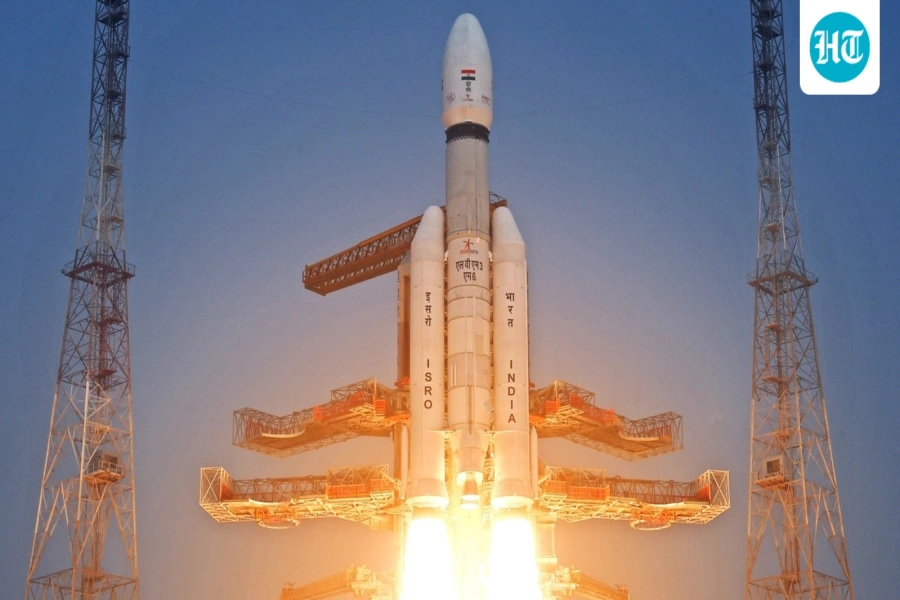
KATHMANDU, Dec 25: India’s growing stature as a preferred destination for global space launches received a major boost on Wednesday as the Indian Space Research Organisation (ISRO) successfully launched the United States’ BlueBird Block-2 satellite—the heaviest communication satellite ever deployed in low Earth orbit—aboard its most powerful operational rocket, the LVM-3, also known as “Bahubali.”
The launch took place at 8:55 am local time from the Satish Dhawan Space Centre in Sriharikota, southern India. Weighing 6,100 kilograms, BlueBird Block-2 is not only the largest commercial communications satellite placed in low Earth orbit (LEO) to date but also the heaviest payload ever launched from Indian soil, according to ISRO.
The satellite, built by US-based AST SpaceMobile, was carried into space by the LVM3-M6 launch vehicle and was successfully injected into its intended orbit, marking another milestone in India’s expanding commercial launch capabilities.
India launches 'heaviest' satellite for internet access

The mission has drawn global attention not just for the scale of the payload, but for what it represents: a growing international preference for India as a reliable, cost-effective, and technologically advanced space-launch hub. With this launch, ISRO further strengthened its credentials in the competitive global satellite-launch market, traditionally dominated by the United States, Europe, and, more recently, China.
Indian Prime Minister Narendra Modi hailed the achievement, calling it “a significant stride” for India’s space sector. “It strengthens India’s heavy-lift launch capability and reinforces our growing role in the global commercial launch market,” he said in a statement.
The LVM-3 rocket, originally developed for strategic and human spaceflight missions, is set to play a central role in ISRO’s future plans. A modified version of the launcher will be used for the country’s ambitious Gaganyaan programme, India’s first human spaceflight mission, currently targeted for 2027.
Beyond prestige, the commercial implications are significant. As global demand surges for satellites supporting mobile connectivity, internet services, and data transmission, India is positioning itself as a key launch partner for international firms looking to deploy large constellations in low Earth orbit.
At the same time, ISRO is balancing commercial launches with deep-space ambitions. The space agency is preparing an unmanned lunar mission even as it advances toward human spaceflight, signalling a broad-based strategy that combines exploration, technology development, and commercial opportunity.
Wednesday’s launch of BlueBird Block-2 thus marks more than a technical achievement. It reflects a shifting global landscape in which India is increasingly being chosen—not just for its affordability—but for its reliability, scale, and growing sophistication in space technology.
With inputs from agencies