

However, the frightening part is that nobody seems to know what it wants to build anew in place of the old. Even more terrifying, few seem to care about what is falling all around them.[break]
The Nepali Congress (NC) is busy breaking its hard-earned image of having been pioneers of socio-political changes. In the 1950s, the NC brought modernist ideas of nationality, democracy and socialism to a country that had remained closed to the rest of the world for centuries.
Some of the practices it introduced in society—listening to women’s voice, fraternizing with “untouchables” and fallen castes, ridiculing rituals, breaking cultural taboos and organizing the downtrodden—were considered so revolutionary at that time that “May the Congress enter your house” became a form of curse among families faithful to the Shahs, Ranas and their courtiers.
In the 1960s, cadres who remained with the proscribed party were idealistic, and they dreamt of building a progressive Nepal even when they remained behind bars or in self-exile. By the mid-1970s, the NC leadership had reconciled itself to the compulsions of geopolitics.
Yet, the embers of Gandhian socialism were kept alive through the 1980s. These ideas helped the party remain at the forefront of democratic revival in the country.
It must have taken some recklessness to dump socialism and embrace free-market fundamentalism lock, stock and barrel in the early 1990s.
The party had to pay a heavy political price for its choice, but it carried the burden of counter-revolution in socio-economic policies with a determination characteristic of neo-converts.
One may have disagreed with the NC’s transformation, but the zeal with which Ram Sharan Mahat or Mahesh Acharya implemented neo-liberal (the doctrine that market exchange is an ethic in itself, capable of acting as a guide for all human actions) agenda was exemplary.
Policies that the NC implemented in the post-2006 dispensations, such as the removal of monarchy, acceptance of secularism and recognition of the military as a powerful player in politics were quite in tune with the principles of neo-conservatism.
Howsoever discredited, the party remained loyal to newfound dogmas of capitalism.
After the demise of Girija Prasad Koirala, the grand old party lost its anchor. Now nobody knows what the NC stands for in politics, society, culture or economics.
Unsure of the future, every leader wants to corner as many bricks from the crumbling house as he can, and is thus hastening the process of its
collapse.
Forget about taking the lead of the Peace Process it helped design, the NC establishment has become so insecure that it had begun to make common cause with the UML, RPP and a host of fringe parties. It is likely that some of NC’s ambitious politicos are already scouting for alternative platforms.
Those who remain after the arriviste brigade is gone will have to rediscover its revolutionary and socialistic roots.
Destruction experts
The disease of self-destruction appears to be even more virulent in the party steeped in the politics of violence: The UCPN (Maoist). During the decade of armed conflict, the Maoists acquired considerable skills in political and physical demolition.
With no identifiable enemy outside, they have turned the sword upon themselves and are bent upon committing hara-kiri. Nothing else explains the confusion being created in the Peace Process.
If the Peace Process breaks down, the Maoists would have nothing left to show for what they call their “People’s War.” With priests like CP Gajurel and preceptors like Mohan Baidya, Messrs Dahal, Bhattarai and Company Limited need no enemies.
In order to deflect public attention from internecine warfare inside the party, the Maoist-led government has declared war upon urbanites who have been unfortunate enough to inherit or build houses along Kathmandu’s main streets.
Among the upwardly mobile and the comfortable class, there is a near consensus over the necessity of pulling down structures that come in the way of road expansion. Royalists love grandeur and would be quite happy to have wide avenues for their chauffer-driven black sedans.

According to neo-liberal messiahs, the social costs of physical infrastructures should be ignored to pursue growth, and freedom to drive around in white SUVs is one of the fundamental rights of wheeler-dealers, professionals, fixers and dealmakers.
Roads in the People’s Republic of China as also in North Korea have been built following the favorite dictum of Lenin that you couldn’t make magnificent omelettes without cracking quite a lot of eggs. After all, even outriders of VVIPs in indigenously assembled Mustang prefer to cruise along open highways.
Nobody has either the time or the intention of thinking about the last person of the society: A homeless Madheshi Dalit woman dying of cold and hunger somewhere in the Kamala-Balan ravines.
What role would the six-lane road between Maitighar and Tinkune play to reduce her misery? It has become politically incorrect to ask such uncomfortable questions in polite circles.
It is even more improper to question the timing of the demolition spree in the city when priorities of a responsive government should have been checking inflation, reducing load-shedding, managing fuel scarcity and ensuring survival of the poor.
Responsibility of drafting the Constitution seems to have been handed over to donor agencies, their political collaborators, and technical consultants.
With so much drama and live actions in the streets of Kathmandu and in the salons of those that control the levers of power, dutifully relayed in minutest details by an irrepressible media, who has time for mundane matters like arts?
Arts, however, thrives like wild bushes in the harshest of climates. The same, however, is not exactly true of theater—the complete but complicated form of art. The uncomfortable question, however, remains the same: does theater have a role in reducing the misery of the last person of the society?
The Gurukul Spirit
Joseph Schumpeter coined the expression “creative destruction” to denote a “process of industrial mutation that incessantly revolutionizes the economic structure from within, incessantly destroying the old one, incessantly creating a new one.”
A cultural addendum to that economic theory would perhaps be a process that destroys even as it creates in an unceasing manner.
That should help appreciate the predicaments of a society struggling to stand straight as it falls, gets up and runs all over again to stay at the same place.
Attempts being made are aplenty. Contestations over meaning are rife. Shared goals and purposes have not yet been defined. These are interesting times that have allowed a hundred flowers to bloom.
The art scene is fecund, and sparks of creativity are flying all around. Many babies of the brain are stillborn, and flashes of the heart die down before they hit the ground.
But that hardly matters. The experiences and spectacles are rewarding enough.
The subaltern seeks to speak through the written word. The oppressed have begun to find their voice in music. Colors of desire have discovered different hues in works of the marginalized.
Movements in traditional dance forms have become confident. Improvised jigs are energetic. The overabundance of energy in society is unmistakable.
Fashion parades are parts of urban landscape. Beauty pageants are held under the banners of different communities, competitions open for separate age groups.
The dream machine continues to churn out stories of actions, dramas, songs, dances and denouements. Ramesh Kharel is Rajesh Hamal in Birgunj; Rajesh Hamal is Ramesh Kharel on the silver screen.
It is difficult to determine which soap being telecast over the idiot box washes emotions best. There is vigor in the air, as also complacency. Assurance: Everything is fine. Reassurance: Everything will be fine.
Divisive politics hold sway. There is a reduction in public spaces for cultures to speak to each other. Voices that are vital for the growth of plurality remain confined to echo chambers of otherwise vibrant but separate communities.
These are the best of times for the flowering of cultures in the country. These are the worst of times for their beauty and scents to complement each other and produce balance, harmony and rhythm in the larger society.
Theater has no answers. It respects questions. After a certain point, plays begin to rise above communities, societies, countries and cultures. Stage presents slices of life in comprehensible capsules.
It is now time to state the purpose of this ramble: My worries over the uncertain future of Gurukul Theater. Part of it is personal. Though not a regular, I have enjoyed several plays in its Baneshwar premises that are now being torn down. Sunil Pokharel created and directed a play based upon my story “Sapanako Sabiti.” In one of the scenes of the drama, the protagonist agonizes over her lost soul. In another, she glares at the mirror. She survives.
No matter how virtuous the purpose, the sight of a home being torn down is invariably unsettling. How can any sane person stand the specter of a plastic potty for children being crushed by the wheels of a giant bulldozer? At the very least, a normal human being would avert her eyes from the scene of desecration. But when a crowd claps at the felling of a roof, something is seriously amiss. The society is probably afflicted with the sickness of the soul.
Gurukul still has its identity, but it has lost its address. That is not such a big hurdle to overcome. More challenging would be to spread its fighting spirit. Catharsis is an essential element of treatment of sick souls.
Theater offers that hope.
Edward Bond has earned the right to be called “one of Britain’s most shocking, uncompromising playwrights.” A character in one of Bond’s plays says, “All destruction is finally petty and in the end life laughs at death.”
Kathmandu’s street life will survive the proletarian dreams of Paris’ boulevards. The playful seriousness of Gurukul plays would be staged once again. Life would most assuredly laugh at death.
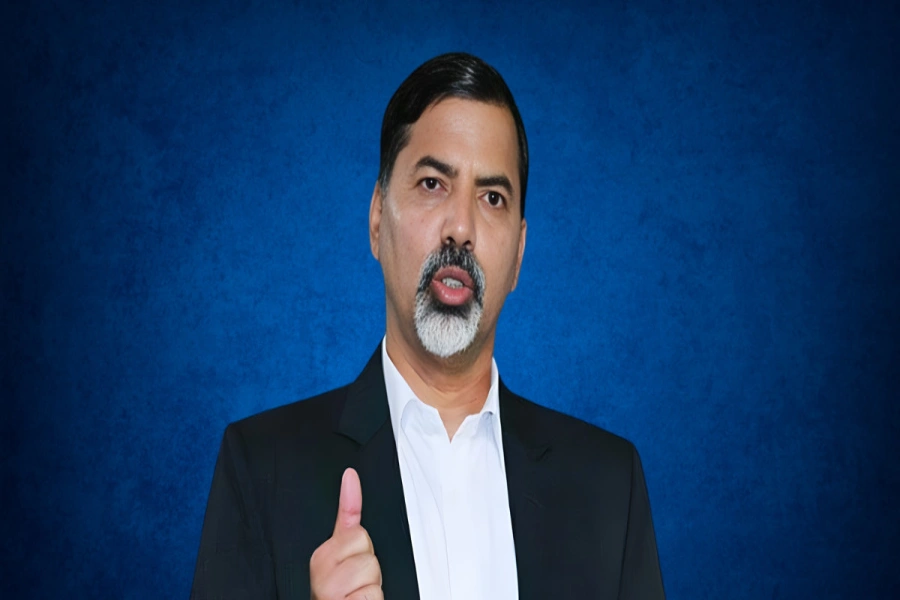
Lal contributes to The Week with his biweekly column Reflections. He is one of the widely read political analyst in Nepal.
Related story
Mandala Theatre-Nepal officially opens new comprehensive theatr...




-1782782519.webp)


-1200x560-1774606010.webp)


