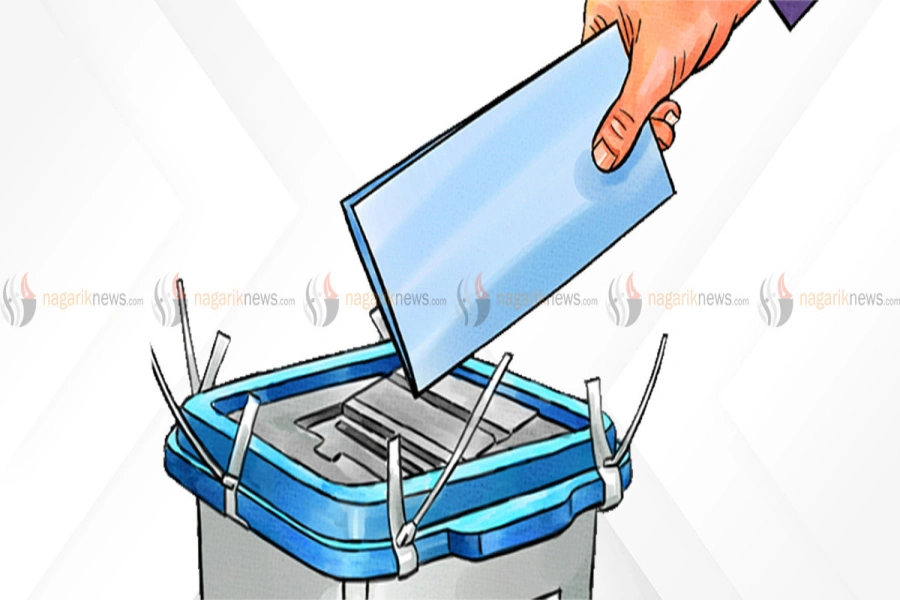
As Nepal approaches its next political crossroad, the national discourse remains obsessed with the "Machine”, i.e., the electoral system. Activists argue that moving from First-Past-The-Post (FPTP) to Full Proportional Representation (PR) will magically "reduce election spending." But as an Industrial Engineer, I see this as a classic error in systems design: you are trying to fix a defective product by simply changing its packaging.
The political crisis in Nepal is not an "Election Problem"; it is a “Market Failure”. To fix it, we must stop debating the ballot paper and start engineering the "Product", which is “Governance”.
The ROI Equation: Why Politicians spend 10 Crores for a 1 Lakh a month job?
In any industrial system, the Acquisition Cost (Election Spending) is directly proportional to the Expected ROI (Return on Investment). Currently, candidates are known to spend 10 Crores to win a seat that pays a modest monthly salary. From an engineering perspective, this is rational behaviour because the Systemic ROI, achieved through "Policy Capture" and "Contractual Patronage”, is worth 100 Crores or more.
We see this "Investment Cycle" in action with the recent 2026 Pokhara International Airport case. The Commission for the Investigation of Abuse of Authority (CIAA) alleges that Rs. 461.5 million was misappropriated through the manipulation of a Bill of Quantities (BOQ) and the appointment of consultants outside the terms of the EPC contract. This is the "Product" in its current form: a high-yield investment vehicle for those who control state resources.
The Danger of the "PR Trap"
There is a dangerous misconception that a full PR system will curb this spending. In reality, a full PR system in a corrupt ecosystem is more dangerous than FPTP.
NC President blames electoral system for electoral alliance

Under FPTP, corruption is a "Distributed Defect”; it is "retail corruption” spread across 165+ individual points of failure. However, PR centralises the "Market Value" of a seat within the party leadership. In a country with no specific law on political party financing, PR allows leaders to "sell" spots on closed lists to high-net-worth investors looking to protect a syndicate or capture policy. Simply "repackaging" the voting system does not remove the profitability of power; it only streamlines the "wholesale of parliament”.
The Case for FPTP: Precision and Ownership
I am a strong advocate of the FPTP system, provided the underlying governance is transparent. When a system is engineered for “Zero-ROI”, FPTP becomes the superior tool for optimization:
• Process Ownership: FPTP ensures a representative is the "Process Owner" for a specific geographic territory, creating high geographic accountability.
• Short Feedback Loops: It creates a direct link between the voter and the representative, allowing for clearer performance metrics.
• Stability: It traditionally yields clear majorities, preventing the fragmentation seen when 120 parties compete for PR spoils.
• Product vs. Brand Choice: In an FPTP system, voters are empowered to choose a "Product" (the Candidate) based on their specific record of service, rather than just a "Brand" (the Party). This allows a localized leader with a proven record to win a seat based on merit and community trust, rather than political patronage.
The Engineering Solution: Systemic Transparency
If we want to reduce election spending, we don't need to change the ballot paper; we need to “Remove the ROI”. We must engineer a system where being a politician is a Service, not a Sovereign Investment.
The blueprint for Systemic Transparency requires three primary controls:
• Automated Procurement: We must eliminate "Minister’s Choice" in contracts. While Nepal has an Electronic Government Procurement (e-GP) system, it must be strengthened to minimize human discretion and prevent the type of collusion seen in airport projects.
• Minimized Discretionary Power: Decisions must be moved from personal "favours" to data-driven, pre-set criteria.
• Real-Time Auditing: Every rupee of state expenditure should be tracked on a public ledger. This would allow for immediate accountability, mirroring the "revolutionary counter" to opaque politics demanded by the 2025 Gen Z protests, where 100,000 youths used digital platforms to simulate a transparent "Parliament of Nepal”.
Conclusion: Engineering the Future
The goal is to drive the "Market Value" of a parliamentary seat to zero. If a politician can no longer "sell" a contract or "protect" a syndicate, there is no reason for a patron or the candidate to "invest" 10 Crores in their campaign. The spending will stop because the investment no longer yields a corrupt return.
Any election system will fail if this ROI is not made zero, and a more dangerous situation of institutionalized corruption will take root if Full PR elections are held in the same existing governance ecosystem.
Nepal does not need a new "Machine" for elections; it needs a re-engineered "Product" of governance. Let us stop fixing the packaging and start fixing the internal chemistry of our state. Let us focus on the “Why” rather than the “What”.
The author is Assistant Professor at the Department of Industrial Engineering, IoE, Thapathali Campus.