



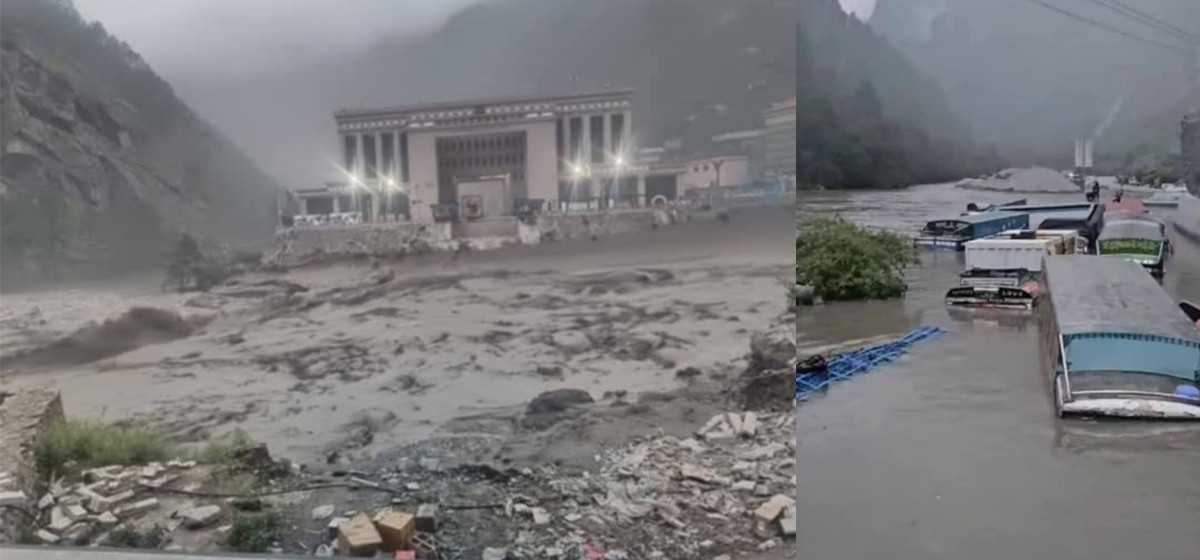
KATHMANDU, July 13: Efforts to restore Nepal’s sixth-largest trading checkpoint i.e the Rasuwagadhi–Kerung border point, have intensified following last week's devastating flash floods. Both Nepali and Chinese authorities are working to resume cross-border operations within ten days, according to local officials and trade representatives.
The disruption was caused by a sudden flood in the Lhende River on July 8, which led to a blockage of the Kerung River near its confluence. According to the Armed Police Force (APF) stationed in the area, the flood carried large boulders, tree trunks and debris that obstructed the river’s flow, resulting in significant water accumulation on the Chinese side. In response, Chinese authorities have deployed heavy machinery to clear the obstruction and gradually release the impounded water.
According to border security officials, the flood submerged more than 30 Chinese cargo containers, many of which had just completed deliveries to Nepal and were awaiting re-entry. The floodwaters also caused considerable damage to the nearby highway infrastructure, halting the movement of goods on both sides.
The Rasuwa Customs Office reports that on the Nepali side, roughly 1.2 kilometers of the Rasuwagadhi access road were damaged at over 10 different locations. The flood swept away 24 Nepali containers, 70 electric cars cleared for customs but not yet dispatched, and several large trucks from Chinese logistics firms. Most of these vehicles were parked at the dry port or roadside due to a shortage of drivers.
Rasuwagadhi border remains open as 20 containers of Chinese goo...

According to the Rasuwa Customs Office, the damaged goods included Dashain-targeted imports such as ready-made garments, footwear materials, food products, and electronics. He also stated that customs-cleared vehicles and consignments worth millions were lost or severely affected.
Likewise, 20 individuals—including three Nepal Police personnel, six Chinese nationals, and several Nepali drivers and laborers were reportedly swept away during the flood. Search and rescue teams, consisting of Nepali Army, Armed Police Force, and Nepal Police personnel, remain deployed in the area.
Senior Chinese technical staff stationed at Rasuwagadhi have also reported that floodwaters destroyed several construction vehicles and equipment belonging to the Tibet-based Fuli Construction Company, which was engaged in dry port development. This includes a cement mixer, roller, tipper, and excavator.
Locals from the Gosainkunda Rural Municipality area, including elected ward officials, have urged the federal government to expedite relief distribution and ensure the safe return of Nepali nationals stranded in Kerung during the flood.
Trade experts say the economic impact of the disruption is significant. According to the Department of Customs, Nepal imported goods worth over Rs 80 billion through the Rasuwagadhi checkpoint in the first 11 months of the current fiscal year. While this accounts for about 4 percent of total imports, the volume typically increases in the months leading up to major festivals such as Dashain and Tihar.
Experts said that as per updates from Chinese logistics counterparts, repairs on the Miteri Bridge and road infrastructure are likely to be completed within ten days. Local business owners in Rasuwa have also indicated that road restoration on the Nepali side is nearing completion, increasing confidence that the trade route will reopen in time for seasonal imports.
Nonetheless, the damage to pre-imported goods has sparked concerns over potential shortages and price hikes during the upcoming festive season. Shrestha also suggested temporarily rerouting imports via alternate northern trade corridors such as Tatopani and Korala to mitigate the disruption’s effects.
In the broader context, data from the Department of Customs shows that Nepal imported goods worth Rs 314 billion from China in the first 11 months of the fiscal year, with nearly half—over Rs 150 billion—brought in through northern land ports like Rasuwagadhi.


_20200706125809-1200x560(1)_20230104145915.jpg)





