In 1955, leaders from Asia and Africa gathered in Bandung, Indonesia, to reject colonial domination and imagine political, cultural, and economic futures on their own terms. The conference was a refusal of silence and marginalisation—an assertion of both the need for and the capacity for autonomy. It gave rise to the Non-Aligned Movement, led by Sukarno, Nasser, and Nehru, articulating a vision of South–South solidarity rooted in cooperation, dignity, and self-determination.
 Photo: Samagra Shah
History also revealed its fractures. The Suez Crisis of 1956, the limits of pan-Africanism, and the dilution of the Non-Aligned dream exposed how fragile solidarity could be under military power, economic pressure, and geopolitical manipulation. Reflecting on Bandung today therefore means holding its ambitions and its failures together.
This is why Photo Kathmandu’s (PhotoKTM) focus on South–South solidarity felt urgent—not as nostalgia, but as critical re-engagement.
International sociopolitical spaces rarely allow for this kind of reckoning. They often resist contradiction, preferring coherence over complexity. Art, however, has the ability to face what others avoid—to bring difficult conversations into public view—and PhotoKTM demonstrated just how powerful that can be. Through exhibitions, film screenings, talks, educational tours, and public programmes, PhotoKTM this year became a space that refused silence, asked difficult questions about complicity and resistance, and interrogated what solidarity actually means today—not as a slogan, but as a lived, ongoing practice, while actively building and empowering local communities.
 Photo: Dipankar Shrestha
Much of the programming directly examined how cultural workers can sustain pressure on institutions, corporations, and states that enable violence through silence or contradiction. It also wrestled with harder questions: how to hold on to hope while demanding accountability, how to resist while trying to survive, and how to remain committed to political values while navigating everyday realities of work, family, and economic pressure.
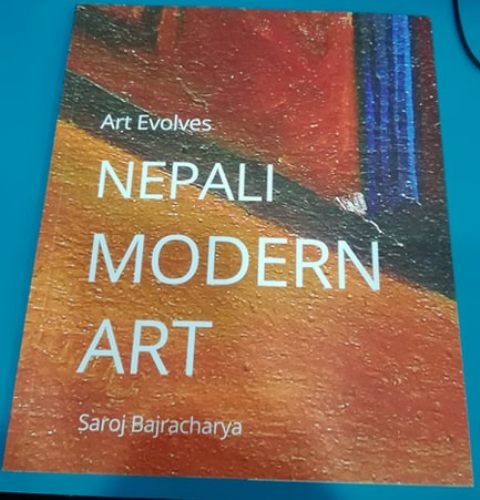
‘Art Evolves: Nepali Modern Art’: Review
Conversations around Palestine, boycott, divestment and sanctions (BDS), and global complicity were central to several key moments at PhotoKTM. When the World Is Blind – Images by Palestinians featured Ahmed Alaqra’s work and a conversation with Yasmine Eid-Sabbagh, making visible how images and letters convey lived realities under occupation, as well as the limits of representation in the face of erasure. The workshop The Cultural Boycott: Strategy, Impact and Principles, led by Samir Eskanda, directly addressed how cultural workers can mobilise ethical resistance without exploiting those already most at risk.
 Photo: Samagra Shah
Exhibitions grounded these debates in concrete conditions. Última Huella (“The Last Footprint”) by Claudio Pérez documented enforced disappearances under dictatorship, showing how images function as tools of memory, accountability, and humanisation while also confronting the gaps and limits of the photographic record. Life and Struggle of Garment Workers by Taslima Akhter foregrounded the everyday precarity of labour and global supply chains, mirroring inequalities discussed in debates on boycott and complicity. Between Us, a Thread by Ahmed Alaqra traced fragile connections across borders and crises, underscoring how visual practices can resist erasure and build shared witness beyond dominant narratives.
The Photo Circle Fellowship, mentored by Uma Bista, Prasiit Sthapit, Sagar Chhetri, Bunu Dhungana, Diwas Raja Khatri, Kishor Sharma, NayanTara Gurung Kashyapati, and Shikhar Bhattarai, embodied a commitment to duration and care. By prioritising long-term projects over one-off production, it reinforced the idea that meaningful artistic and political practice unfolds slowly—through sustained presence, accountability, and relationship-building. Some of the fellows’ projects were displayed at the Nepal Art Council during the festival.
Panchardobato by Enuma Rai examined the violences of “development” and how progress can erase land, histories, and communities, turning storytelling itself into an act of resistance. Fragmented Land and Me by Sujata Khadka explored landscapes shaped by extraction and displacement, revealing the deeper costs of political and environmental violence. Why Doesn’t Home Feel Like Home? by Karma Tshering Gurung addressed the emotional and structural forces that make belonging precarious. The Land Remembers Our Name by Rejin Purja reflected on how places hold memory even when communities are pushed into silence or erasure.
Tender by Sushila Bishwakarma reflected on the quiet loss and transformation of her village landscape, exploring memory, nature, and the tension between tradition and modernity under the banner of “progress.” Permanent and Passing by Manjit Lama traced inherited displacement and belonging through a childhood memory of bureaucratic humiliation, connecting it to broader questions of land, identity, and survival in Kathmandu. Through his grandfather’s story and the unresolved status of the “Thai-Asthai” community, the work questioned whether Nepal’s promises of bikas and samriddhi would ever account for those long pushed to the margins.
Ji Ta Newa Bhyaa Mawa by Jyoti Shrestha explored language, memory, and belonging through a personal reconnection with Nepal Bhasa, revealing how linguistic loss shapes identity and cultural continuity. The King Didn’t Like the Song by Manoj Bohara revisited the Piskar massacre, showing how music and collective performance became acts of resistance, and how culture itself can be both a target of repression and a means of survival.
Who Does the River Belong To? brings together work by the 2024 photo.circle fellows, challenging dominant ideas of “Bikas” and “Samriddhi” through stories of rivers, forests, hills, and land shaped by ecological and political struggle. A curated slideshow at the festival’s opening and closing featured Not the Same Anymore by Amit Machamasi, Once Upon a Time There Was a Tree by Kishor Maharjan, Aman Shahi, Udne Sapana by Deepa Shrestha, Thapsang pe by Priyanka Tulachan, Tambhungma: The spirit of the forest by Sara Tunich Koinch, The Place I Called Home by Sundup Dorje Lama, and Since the time of the gods, our boats have been in these rivers by Samagra Shah, inviting reflection on who belongs to the land and waters that shape our lives.
Together, these panels and exhibitions pushed beyond abstraction, urging institutions, galleries, universities, and cultural organisations to move past neutrality, adopt ethical and intersectional practices, and confront the entanglements of power, impunity, and violence shaping our world.
The video presentations of archival photographs from the Non-Fiction Fiction Story Collective, shown at the closing ceremony, stretched time—allowing culture to appear not as something fixed in the past or urgent only in the present, but as a continuum of past, present, and possible futures. These images created space for slowness and nuance, making room for emotions that daily life rarely allows: grief, tenderness, exhaustion, and persistence.
Kathmandu, and Nepal more broadly, is a resonant place for these conversations. Shaped by migration, remittances, political transition, and its delicate position between global powers, Nepal understands layered dependence and negotiation. With Nepali migrant workers forming a major labour force in countries like the UAE—a state entangled in labour exploitation and regional geopolitical violence—these questions were not abstract. They were lived.
PhotoKTM worked within this context. Through school collaborations, youth programmes, and educational initiatives, the festival created space for younger generations to engage critically with power, representation, and global injustice—not as passive viewers, but as thinkers and future cultural workers. In a moment when hopelessness can quietly become complicity, these spaces offered agency.
In the session We Must Refuse Silence!, featuring Samir Eskanda, Shahidul Alam, and Tabara Korka Ndiaye in conversation with Yasmine Eid-Sabbagh, Alam quoted Nadeem Aslam: “Despair has to be earned. I personally have not done all I can to change things.” The warning was clear: hopelessness itself can become a form of surrender—not a call for optimism, but for responsibility.
The festival’s engagement with public space—through murals, pop-ups, projections, and outdoor installations—reinforced the idea that solidarity cannot remain confined within white cubes. Resistance had to be visible, embedded in everyday life. These interventions turned the city into a living archive and a shared classroom.
At the Nepal Art Council, this energy felt concentrated. The space became less a venue than a meeting point—somewhere to slow down, sit with discomfort, and reflect, particularly in the community reading room. Beyond its walls, PhotoKTM spilled into neighbourhoods and streets, reminding us that art does not exist apart from society, but moves through it.
Equally striking was the collective buy-in. People showed up, stayed, and contributed. Fundraising goals of $50,000 were not only met but slightly surpassed—not through spectacle, but through trust—demonstrating that PhotoKTM models a care-based cultural economy rooted in mutual investment, accountability, and sustainability rather than extraction. This sense of shared ownership made the festival accountable to its community.
Reflections by Yasmin Eid-Sabbagh during the closing echoed this ethos. Referencing her work Possible and Imaginary Lives, she returned to the idea that belief itself is a practice—that sustaining fiction, hope, and imagination is not indulgent, but essential. These imagined lives are not distractions from reality; they are what allow us to continue within it.
What stayed with me most is this: art may not dismantle systems on its own, but it builds the emotional, intellectual, and collective infrastructure required to do so. As PhotoKTM demonstrated, success is not perfection, but the creation of spaces where people can gather, question, imagine, feel, and feel less alone.
In that sense, PhotoKTM did not merely commemorate Bandung. It reactivated its questions through culture rather than statecraft, revitalising its legacy with honesty and care. In a world where silence remains the most common response to injustice, this felt not only important, but necessary.