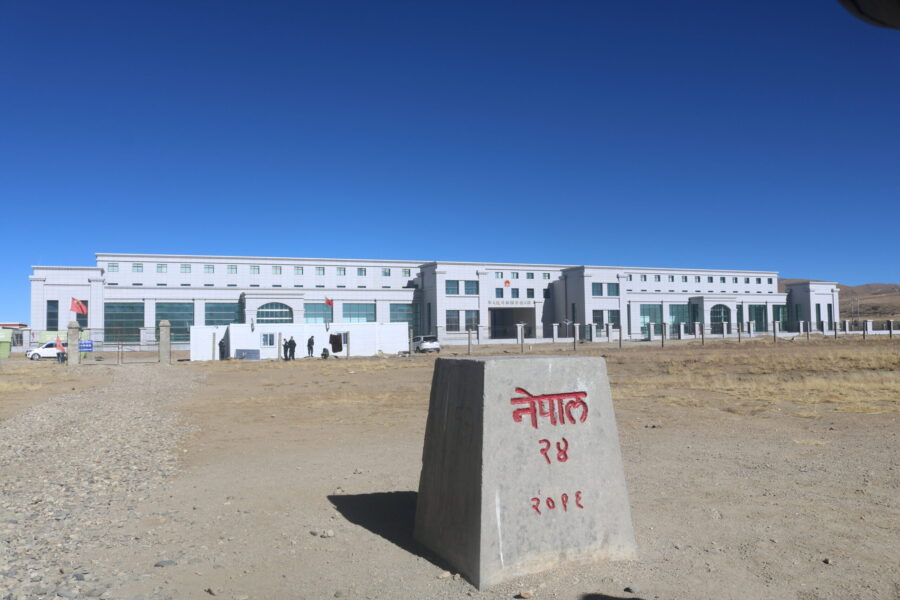
KATHMANDU, October 27: The Korala checkpoint in Upper Mustang has been emerging as an alternative trade route for the Nepal-China bilateral trade. According to government data, the border point accounted for bilateral trade of goods worth Rs 5.27 billion in the first three months of the current fiscal year (FY).
According to the Department of Customs (DoC), Nepal imported goods worth Rs 5.27 billion via the customs point during mid-July and mid-October this year. It makes up 5.06 percent out of the total imports of Rs 104 billion from China. Electric vehicles, clothes and fruits were among the major imports from this customs point.
Similarly, the country earned Rs 9.13 million by exporting goods via the Korala checkpoint to the northern neighbor. The amount was 4.89 percent of the export earnings of Rs 186.4 million in total.
Nepal’s trade deficit soars to Rs 1.527 trillion despite 82 pc...

The governments of Nepal and China decided to open the Nepal-China border at Korala, located in the district of Mustang, bringing relief to traders importing goods from China ahead of the recently held festivals. Commercial trade via this land route started for the first time on September 8, 2025.
To streamline operations, the DoC has installed the Automated System for Customs Data (ASYCUDA) at the Korala checkpoint, while Nepal Rastra Bank has started issuing letters of credit for imports through the new border crossing.
Despite opening of the new route for bilateral commercial trade, the narrow and dilapidated roads on the Nepal side through Mustang have made it difficult to transport large trucks. In contrast, the Chinese government has already constructed a paved two-lane road and established a modern customs office on its side.
Prior to Korala, Nepal and China had been holding bilateral trade via land routes using the borders of Rasuwagadhi and Tatopani. The Rasuwagadhi border was shut after the devastating floods in Tibet’s Lhende River in mid July swept away the cross-border bridge.
According to government authorities, it will take time to resume trade as significant damage occurred on the Nepali side. Although the Tatopani route is open for trading, frequent landslides on the Araniko Highway has made the smooth operation of the border point uncertain. These challenges have called for bringing into use the alternative land route for bilateral trade between the two neighboring countries.
In the review period, Nepal’s import through Rasuwagadhi was recorded at Rs 388.10 million. On the other hand, imports through Tatopani border point stood at Rs 9.44 billion. Nepal’s export via these traditional land routes was negligible.
The 17-point protocol signed with China in March 2016 talks about facilitating bilateral trade through six border points between the two countries. These include Tatopani, Kerung, Kimanthanka, Korala, Yari, and Olangchungola. Among these, Kimanthanka, Yari, and Olangchungola border points are yet to be brought into operations for commercial trade.