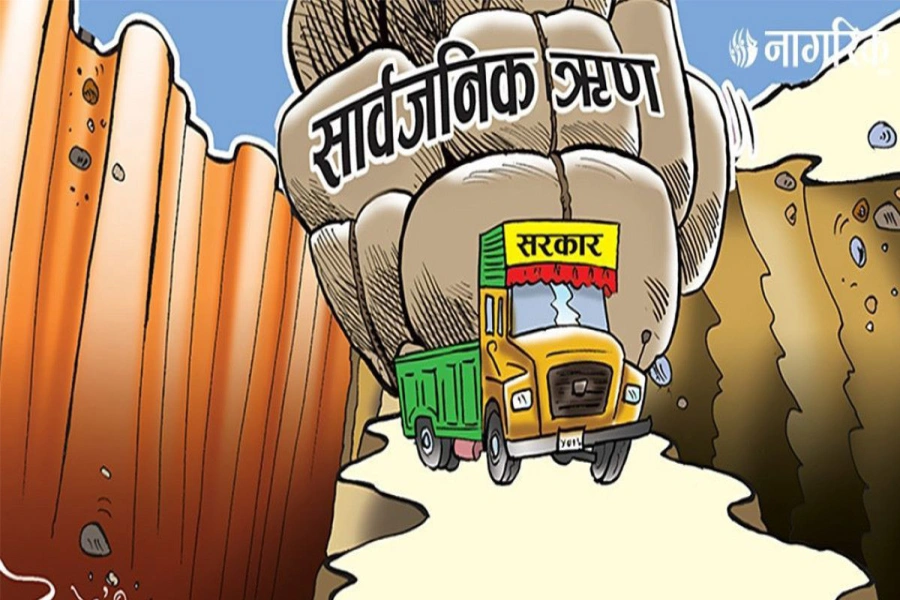
KATHMANDU, Aug 9: The government is raising internal debt worth Rs 100 billion in the first quarter of the current Fiscal Year (FY).
Releasing its annual calendar for FY 2026/27, the Public Debt Management Office (PDMO) has aimed to raise the aforementioned amount for the government in the first three months of current FY. Citing the existing low market interest rate, the PDMO has set a target to collect a huge portion of the annual debt for the government during the first quarter.
As per the plan, the government will be raising a total of Rs 410 billion of debt from the internal sector this year.
Of the debt to be raised in the first quarter, Rs 10 billion will be collected by issuing treasury bills. The PDMO will be selling this short-term credit instrument with maturity periods of 91, 182 and 364 days.
Desperate search for missing girls as nearly 80 dead in Texas f...

Likewise, the PDMO will be collecting the remaining Rs 90 billion through issuance of development bonds. The interest rate will be determined through the bidding process.
In the second quarter, the PDMO has set a target to raise Rs 93 billion. Of the amount, Rs 10 billion will be generated from treasury bills, Rs 80 billion from development bonds, Rs 2.50 billion from citizen savings certificates and Rs 500 million will be raised from issuance of foreign employment bonds. Citizen savings certificates and foreign employment savings certificates are issued for a repayment period of five years.
Similarly, the government has plans to raise the largest amount of Rs 102 billion in the third quarter. Of this loan, Rs 30 billion will be raised from treasury bills and Rs 90 billion from development bonds.
A total of Rs 97 billion will be raised in the fourth quarter. Of the amount, Rs 54 billion will be generated from treasury bills, 40 billion from development bonds, Rs 2.5 billion from citizen savings certificates and Rs 500 million from foreign employment savings certificates.
The PDMO has stated that its annual schedule will help potential investors plan their investment.
In recent years, the government has been borrowing at relatively low interest rates, helping to keep debt servicing costs manageable.
However, Nepal’s public debt has started rising more rapidly in recent times due to the government’s excessive reliance on borrowing to offset weak revenue collection and meet expanding public expenditure needs.
As of FY 2025/26, the country’s public debt reached Rs 2.975 trillion, taking the debt stock equal to 45.07 percent of the GDP.