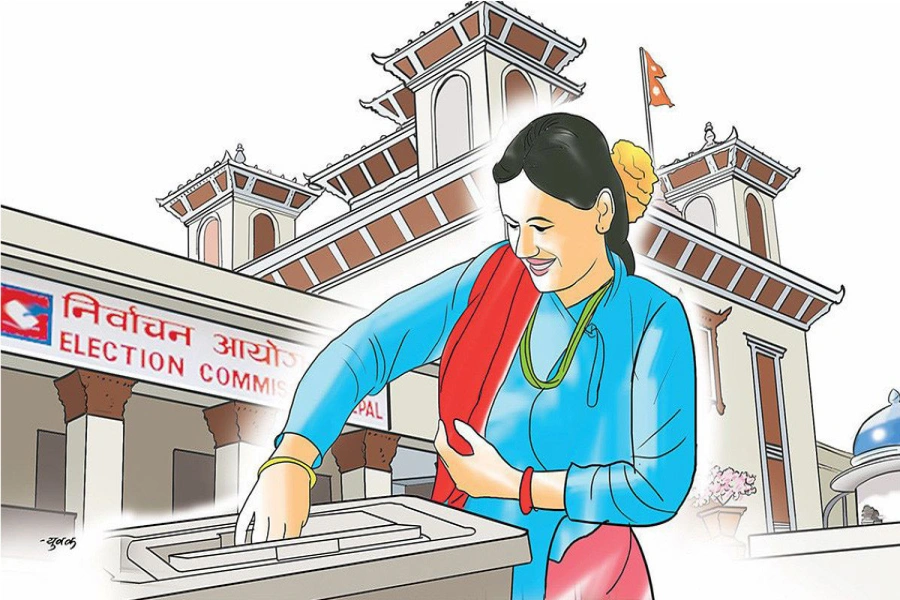
About 1.5 million students are enrolled in some 6,000 institutional schools across the country. According to the Education Regulations, proposals on determining the level of fees should be submitted to the District Education Offices by January 15 each year. The District Education Offices need to grant permission by February 15 after fixing the fee ceilings for the schools. The new academic session begins on April 15."However, private schools have kept aloof from the rules while increasing their fees," said Suprabhat Bhandari, president of the Guardians' Association of Nepal (GON). "They have done as they please when fixing the fees, irrationally adding to the burden on guardians," he added.
Lakshya Bahadur KC, president of the Private and Boarding Schools' Organization, Nepal (PABSON), admitted that private schools have failed to submit their fee proposals for the coming academic session. "Some have already put forward their proposals while others are in the process of doing so," he said.
"I don't like to term it an increase in fees. It is just an adjustment in accordance with inflation and the salary increment for teachers and staff," KC claimed.
Private schools are generally allowed to review their fee structure as per the grade rating for the school in question. The grade rating is determined as per the facilities at the school and the quality of the education provided. The fee structure for C grade schools was determined in the Rs. 1,100 to Rs. 1,700 per month range last year. However, the range is yet to be finalized this time.
B grade schools can increase their fees up to 25 percent and A grade schools up to 50 percent, with permission from the District Fee Determining Committee, which is headed by the district education officer.
"We have found most of the schools not implementing the existing rules. They are ready to go ahead and increase their fees without permission," said GON's Bhandari. "They have charged manifold fees in contravention of the rules."
The Ministry of Education recently drafted some directives to allow private schools to increase their fees, mainly for transportation and room and board, through a two-thirds majority of the assembly of guardians and teachers. The directives also provision the construction of earthquake-resistant school buildings, including ramps and dual exits, within three years. The licenses of the private schools will be scrapped if they fail to adhere to these provisions..
"We are confused by the regulations and directives," said KC at PABSON. "How can we set up such complex infrastructures in such a difficult situation," he said. "The government should make changes in the directives."
Baikuntha Aryal, director at the Department of Education, said private schools must not flout the rules and regulations. "Schools need to construct earthquake-restitant buildings within three years. At the very least, they should initiate the construction right away," he said. "The directives cannot be amended at once but they are not unchangeable."
"We have issued notice to the schools to abide by the rules within a month," Aryal added. "We hope they will come into line within the time provided"
The Ministry of Education has reiterated every year that it will take action against rule violators, but to no avail.
Related story
Unions padlock 175 private schools against fee hike