

Kathmandu’s water crisis is no longer a seasonal inconvenience. It is structural, chronic, and growing. Even after decades of investment in large supply projects, water remains unreliable, unequal, and expensive for many households. As cities expand and climate risks intensify, it is becoming increasingly clear that relying only on centralized infrastructure will not secure Kathmandu’s water future. In this context, the hiti system—Kathmandu Valley’s traditional network of stone spouts—deserves renewed attention, not as a relic of the past, but as a relevant urban planning tool for the present. For centuries, hiti supplied water through an integrated system of shallow aquifers, canals, ponds, and recharge areas. These systems were carefully aligned with local geology and topography, and embedded within settlement patterns. Importantly, they were decentralized, resilient, and community-managed. Today, while many hiti have dried up or fallen into disuse, their underlying logic remains deeply relevant.
The decline of hiti did not happen overnight. As Kathmandu urbanized rapidly, land use changed faster than planning institutions could respond. Agricultural land was converted into housing, ponds were filled to create buildable plots, and natural drainage channels were either covered or encroached upon. In many cases, development unknowingly severed the underground connections that sustained the hiti system. At the same time, modern water supply systems were introduced with the assumption that they would replace traditional ones. Individual household taps became a marker of progress, and shared water sources were gradually neglected. This shift was reinforced by weak enforcement of land-use regulations and fragmented institutional responsibility for water, heritage, and urban development. Ironically, even as the municipal system struggled to meet demand, the traditional system that could have provided supplementary resilience was allowed to deteriorate. The result is a city that depends heavily on groundwater extraction and private tankers, while sitting atop an underutilized network of traditional water infrastructure.
In present-day Kathmandu, hiti matter for three key reasons: water resilience, climate adaptation, and urban livability. First, the hiti system offers decentralized water security. They do not aim to replace the municipal supply, but they can significantly reduce pressure on it. In times of supply disruption—whether due to infrastructure failure, disaster, or seasonal scarcity—functional hiti can provide much needed water. Second, hiti are climate-responsive systems. Kathmandu already experiences intense monsoon rainfall followed by long dry periods. Traditional ponds and recharge areas associated with hiti helped absorb excess rainwater, reduce surface runoff, and replenish groundwater. Modern cities now invest heavily in similar ideas under labels such as “sponge cities” or nature-based solutions. Kathmandu already has its own version; it simply needs to be recognized and restored. Third, the hiti system contributes to urban livability. They were never just water outlets. The system functioned as public spaces—places to gather, rest, and interact. In dense neighbourhoods with limited open space, revived hiti can once again serve social and cultural functions, strengthening community life.
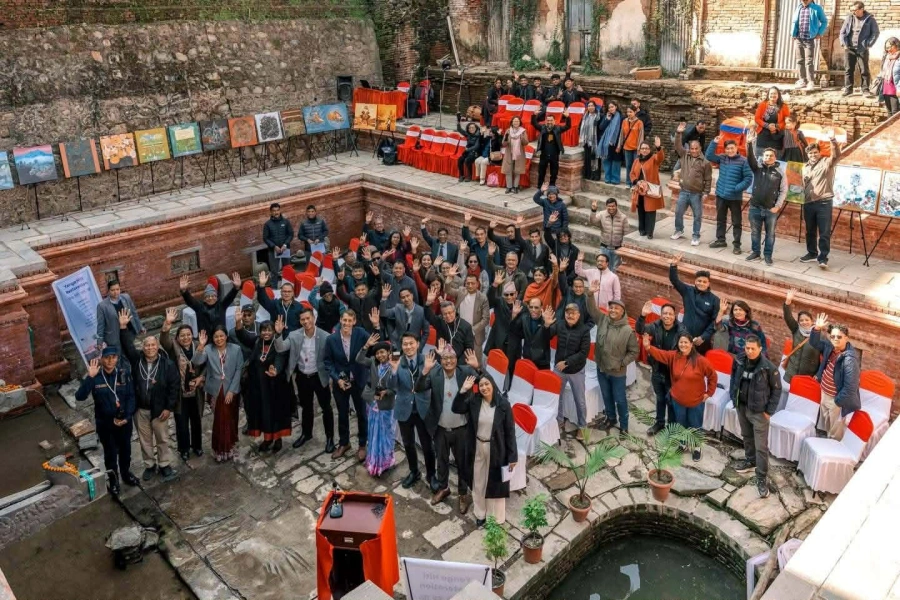
Yenga Hiti reborn with US support after 50 years of silence
Despite their relevance, hiti remain largely absent from contemporary urban planning frameworks. Urban plans, regulations, and infrastructure projects often focus on visible elements such as roads, buildings, and utilities, while ignoring invisible systems like groundwater flow and recharge paths. This disconnect has real consequences. Construction permits are issued without assessing impacts on aquifers or traditional water channels. Road projects cut through rajkulo (water channel) alignments. Ponds that once served as recharge basins are paved or built over. By the time a hiti dries up, the damage has already been done elsewhere. Urban planning in Kathmandu still treats water primarily as a service to be delivered, not as a holistic system integral with the environment. This approach is increasingly unsustainable.
There are, however, encouraging examples within the Valley. In parts of Patan and Bhaktapur, community-led efforts have revived hiti by restoring ponds, clearing blocked channels, and protecting recharge zones. In some cases, water has returned after decades of inactivity. These initiatives highlight an important lesson: technical fixes alone are insufficient. Successful restoration required cooperation between local governments, technical experts, heritage practitioners, and, crucially, the community. Where local ownership was strong, maintenance followed. Where it was absent, interventions remained symbolic. Such experiences suggest that hiti revival should not be approached as a standalone conservation project, but as part of integrated neighborhood planning.
Integrating hiti into present urban planning is not without challenges. Institutional fragmentation remains a major obstacle. Water supply agencies, municipalities, heritage authorities, and planning departments operate with limited coordination. Hiti fall between sectors—too “heritage” for engineers, too “infrastructure” for conservationists. Another challenge is the lack of systematic documentation. Many hiti systems are poorly mapped, and their recharge areas remain unidentified. Without proper data, planners and developers cannot avoid damaging them, even if they want to. Public perception is also an issue. Hiti are often seen as outdated or ceremonial, rather than functional assets. Changing this mindset requires demonstrating their practical value in addressing today’s urban problems.
If hiti are to play a role in Kathmandu’s urban future, planning practice must change in several ways. First, the government needs to document and map traditional water systems, including hiti, ponds, canals, and recharge zones. These should be integrated into GIS databases and development control systems. Second, urban policies and bylaws must recognize traditional water systems as critical infrastructure. Development guidelines should include provisions to protect recharge areas and underground water channels, just as they protect road alignments or public land. Third, hiti restoration should be linked to groundwater management and climate adaptation strategies. Viewing the system through the lens of water security, rather than heritage alone, opens access to broader planning and financing mechanisms. Fourth, community participation should be institutionalized. Local users are often the first to notice changes in water flow and quality. Empowering neighborhood-level institutions to manage hiti can improve accountability and sustainability. Finally, planning education and professional practice in Nepal need to reconnect with indigenous knowledge systems. Modern tools and technologies are essential, but they should build upon local understanding of land and water, not override it.
Kathmandu’s water challenges are complex, and no single solution will resolve them. Large supply projects remain necessary, but they are not sufficient. The future lies in hybrid approaches that combine centralized infrastructure with decentralized, locally grounded systems. Hiti represent such a possibility. They remind us that Kathmandu once planned its settlements with water at its center. Reintegrating that logic into contemporary urban planning is not about returning to the past—it is about learning from it. As the city continues to grow, the question planners and policymakers must ask is simple: will Kathmandu keep chasing water from afar, or will it finally learn to value and restore the systems beneath its own feet?





-1781882999.webp)


