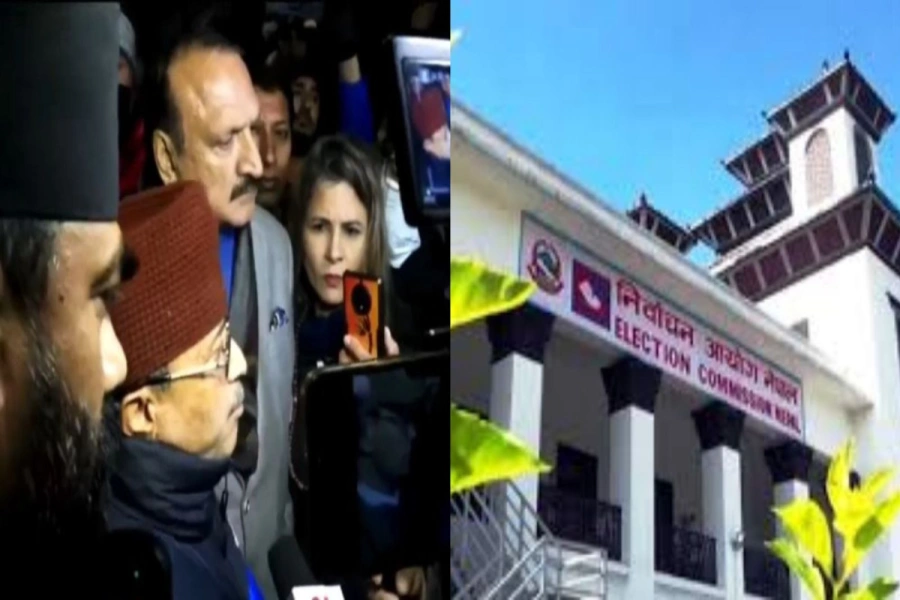
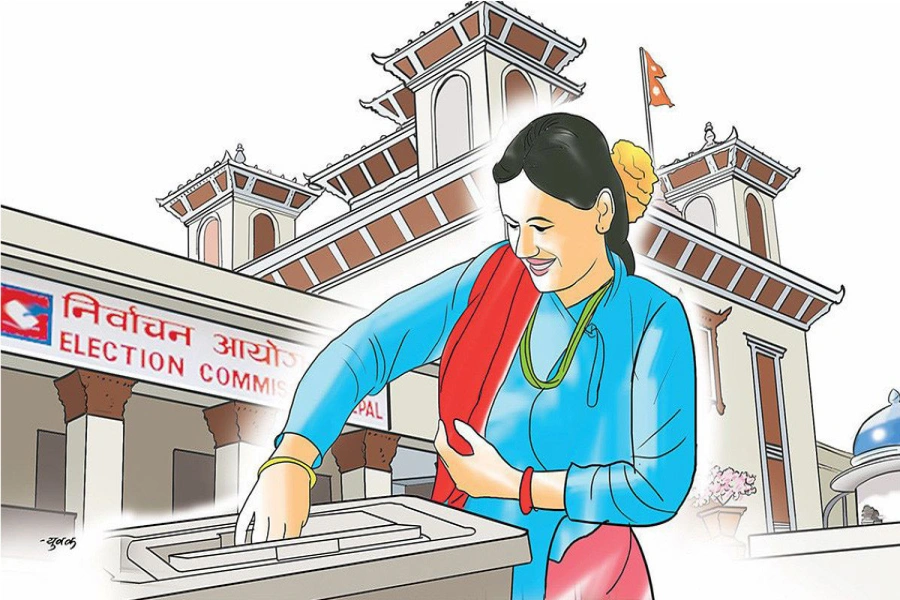
Even the Election Commission (EC) had written to the government a month ago to amend the Interim Constitution and election related laws, without which the election is not possible. The EC had told the government that the elections would be feasible only if the constitution and the laws are amended before 120 days since the election date, which is July 22.[break]
However, the government is yet to come out with any solutions to create an environment for the polls.
"We are yet to receive any instruction from the government for amending the Interim Constitution and other election-related laws," senior officials at the Prime Minister´s Office (PMO) and Council of Ministers and Ministry of Law, Justice and Constituent Assembly Affairs told Republica on Sunday.
"No work has yet been started in responding to the demands of the Election Commission," a senior official at the PMO said.
The EC has sought the amendment to the constitutional provision that requires re-drawing of the election constituencies on the basis of the new census of 2010.
The EC has also asked the government to amend the provision related to the term of the Constituent Assembly, which says the term of the CA will be four years.
In addition, the constitutional body has also demanded the government to amend the constitutional provision related to adult franchise as it says only those citizens who turned 18 by November 2006 will be eligible for voting. It has also asked the government to amend election related other laws by July 22 if the elections were to be held on November 22.
"The issue of amending the constitution requires consensus among political parties," a government secretary said, adding, "That is why the government has not taken any initiatives as of now."
The government, however, has not been able to make any preparations due to lack of political consensus, and chances are slim that it would be able to meet the EC´s deadline with the opposition parties demanding for prime minister Baburam Bhattarai´s caretaker government.
With no consensus in sight, the EC is now gearing up to actuate the government and the political parties for the election.
The EC has called the prime minister and members of the cabinet for discussions on Monday, according to Sharada Prasad Trital, spokesperson of the EC. Another meeting with the head of the parties represented in dissolved CA is being held on Tuesday.
Trital said the commission will discuss all the issues related to the election, including the constitutional and legal issues that need to be resolved in the next two weeks.
As there is no parliament to amend the constitution and the statute cannot be amended through ordinance, all the eyes are now with the president who has power to remove constitutional difficulties. But senior government officials at the prime minister´s office and law ministry point out difficulty in excercising that power as well.
According to them, the Article 158, which relates to power to remove constitutional difficulties, says that the power can be invoked only if there is a parliament. The provision requires that any move by the president to remove constitutional difficulties requires to be ratified from the parliament within one month.
However, Dr Bhimarjun Acharya, an expert on constitutional affairs, says, "Even this difficulty requires to be removed by the president."
Related story
Avenged Sevenfold selling gear to aid music education charity