There is no provision for an interim or caretaker government in the Constitution of Nepal. Instead, the Constitution specifies that an outgoing prime minister generally continues in a caretaker capacity until a new government is formed. According to the Constitution, the Council of Ministers remains functional even if the prime minister’s position becomes vacant—for instance, due to resignation—operating in a limited, administrative capacity until a new government takes office. However, Nepal has a practice of forming interim governments, also referred to as caretaker governments, as temporary administrative bodies during political vacuums or significant constitutional transitions.
Such arrangements emerge when an existing government loses its mandate, political deadlock prevents the formation of a new government, or major constitutional changes require a neutral body to oversee the transition. During periods of crisis, Nepal has appointed respected figures outside partisan politics—often jurists—as caretaker prime ministers to lend credibility, ensure impartiality, and focus solely on conducting elections. These caretaker governments function as short-term, ad hoc administrations until a regular government is elected or formed.
A notable example is the caretaker government led by former Chief Justice Khil Raj Regmi in 2013. Following a prolonged political deadlock and the dissolution of the Constituent Assembly, Nepal faced a constitutional void. To break the impasse and pave the way for fresh elections, a non-political interim government was formed under the premiership of the then Chief Justice. Although controversial, this arrangement ultimately facilitated the successful election of the second Constituent Assembly, which drafted the current Constitution of Nepal.
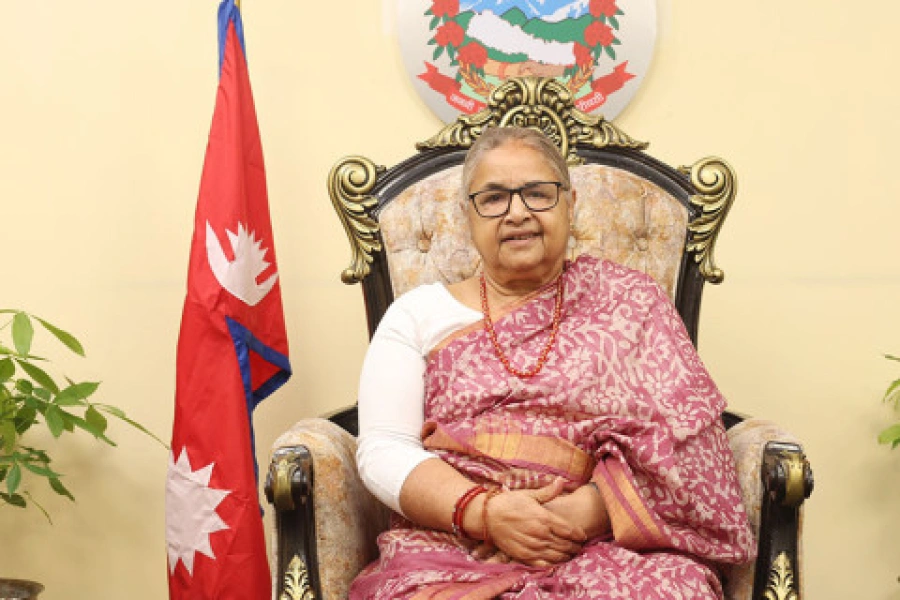
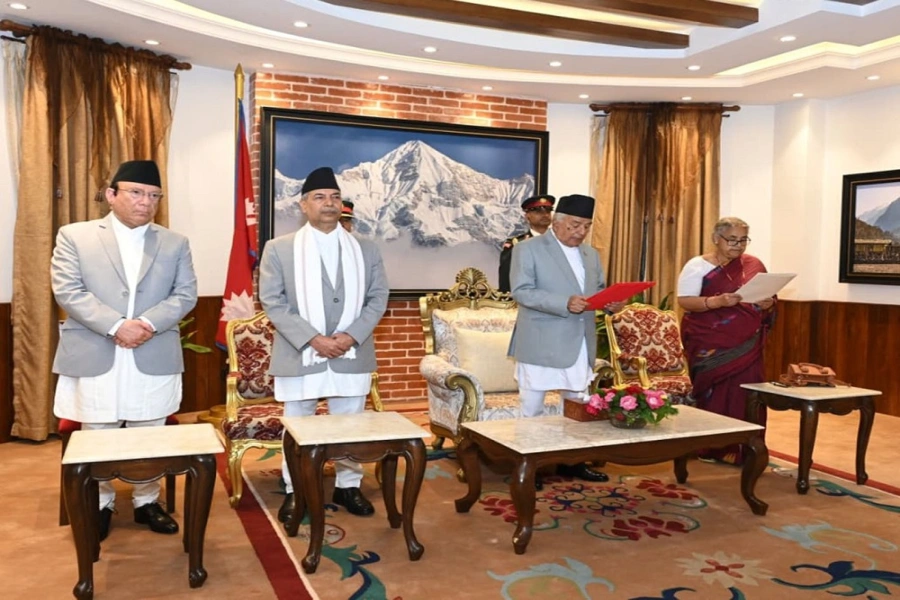
Similarly, the recent interim government led by former Chief Justice Sushila Karki, formed after the Gen Z–led protests, also functions as a caretaker government. Its mandate focuses on anti-corruption measures and holding general elections scheduled for March 2026. The President appointed Karki by exercising constitutional authority under Article 61 after Prime Minister K.P. Sharma Oli resigned, creating a leadership vacuum. Karki, known for her integrity, was chosen through consensus among protest leaders, major political parties, and the army, with additional input from online polls conducted by activists.
Dahal’s caretaker govt doled out Rs 167m to party cadres ahead...

The Gen Z protests resulted in at least 74 deaths and widespread destruction. Multiple government buildings, political party offices, Parliament, the President’s residence, and private and commercial properties were set on fire, causing losses amounting to trillions of rupees—representing the greatest destruction of property in Nepal’s history.
In countries that follow the Westminster system, caretaker governments typically operate during the interim period between the dissolution of parliament for elections and the formation of a new government afterward. Once a general election is declared or a government loses confidence in the legislature, either the existing administration or a newly formed one operates briefly in a caretaker capacity until a new government is sworn in. While caretaker governments generally retain full executive authority, they are expected to refrain from major policy decisions, leaving non-urgent matters to the incoming government.
Some countries—including Australia, Bangladesh, Canada, Malaysia, Pakistan, and New Zealand—have constitutional provisions for caretaker governments during elections.
The primary objective of a constitutionally mandated caretaker government is to ensure free and fair elections and maintain political stability. However, the abrogation of such provisions can create instability. Bangladesh provides a cautionary example. After the Awami League–led government abolished the caretaker government system in 2011—originally enacted in 1998—Bangladesh entered a prolonged period of political instability and election boycotts by the opposition BNP. On June 10, 2025, the High Court of Bangladesh restored the caretaker government provision, nullifying the 15th Amendment that had abolished it. The court emphasized that the caretaker system, established through political consensus, is essential for ensuring free, fair, and credible elections.
There are key differences between ordinary and caretaker governments. Ordinary governments can dissolve parliament, whereas caretaker governments cannot. In practice, caretaker governments limit themselves to administrative matters and avoid introducing legislation. Major political decisions require extensive inter-party consultation. While caretaker governments technically retain full executive powers, they are expected to exercise restraint. They may continue policies already announced but not fully implemented by previous governments. Members of caretaker governments should be non-partisan and are typically barred from contesting elections. Their core objective is to ensure a level playing field for free and fair elections, free from political influence by outgoing administrations.
Opponents—including established political leaders and constitutional experts—argue that Nepal’s existing parliamentary system is sufficient and that unelected caretaker governments undermine democratic accountability. They contend that even temporary unelected administrations erode the principle that the executive must be accountable to parliament. There are also concerns that caretaker systems could be manipulated by powerful actors or the military, especially in countries with histories of political interference. Critics maintain that a non-elected government lacks the legitimacy to govern beyond basic administrative functions.
Proponents counter that Nepal’s history of political instability and public distrust in incumbent governments necessitates a constitutionally mandated caretaker government. They argue that an independent, non-partisan administration—possibly led by a technocrat or former judge—would prevent the misuse of state resources during elections and ensure neutrality.
The current practice of forming caretaker governments without explicit constitutional provision may create legal and political complications in the future. The legality of the Sushila Karki–led caretaker government has been challenged in the Supreme Court by several political parties, and a verdict is awaited. Given these uncertainties, it is imperative for all political parties to seriously consider whether a caretaker government mechanism should be clearly and permanently incorporated into the Constitution to ensure free and fair elections.


-1781882999.webp)