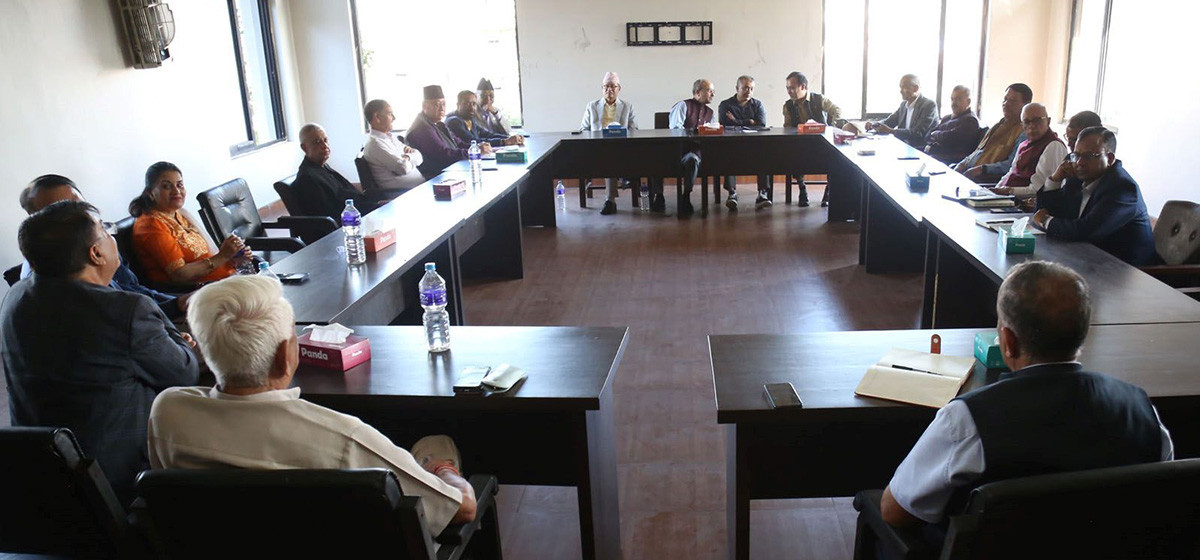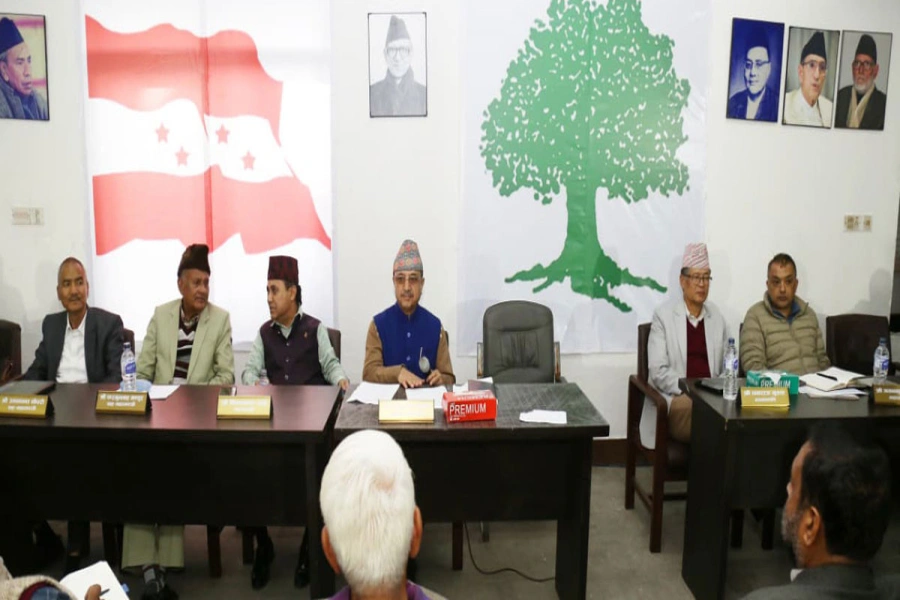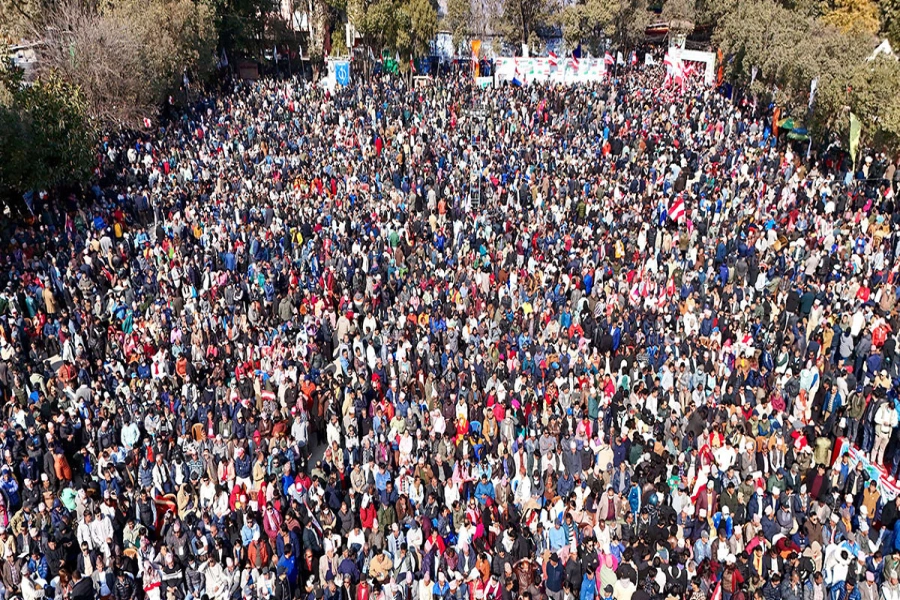
KATHMANDU, Jan 12: The Special General Convention of the Nepali Congress (NC) that began at Bhrikuti Mandap in Kathmandu on Sunday marked a conscious departure from the party’s recent political culture. What made the opening particularly telling was not only what was articulated from the stage, but also what was deliberately avoided. There was neither the vendetta of “I will fix this and that,” nor the arrogance of “we brought this down and that down.” Equally symbolic was the absence of full-length portraits of any incumbent supreme leader—an uncommon sight in a party long shaped by personalities rather than institutional norms. The restrained atmosphere conveyed humility and, above all, a genuine desire for change, distinguishing the convention from the power-centric politics that has gradually hollowed out the country’s oldest and largest democratic party.
This shift in tone reflects a deeper recognition that the party’s decline in relevance is rooted not merely in electoral setbacks, but in prolonged leadership dominance, ideological ambiguity and the narrowing of internal debate. Over time, dissent was managed rather than engaged, and access to state power became a substitute for political vision. The Special General Convention, therefore, is not simply an organisational exercise; it is an attempt to reassess what the NC stands for in a rapidly changing society.
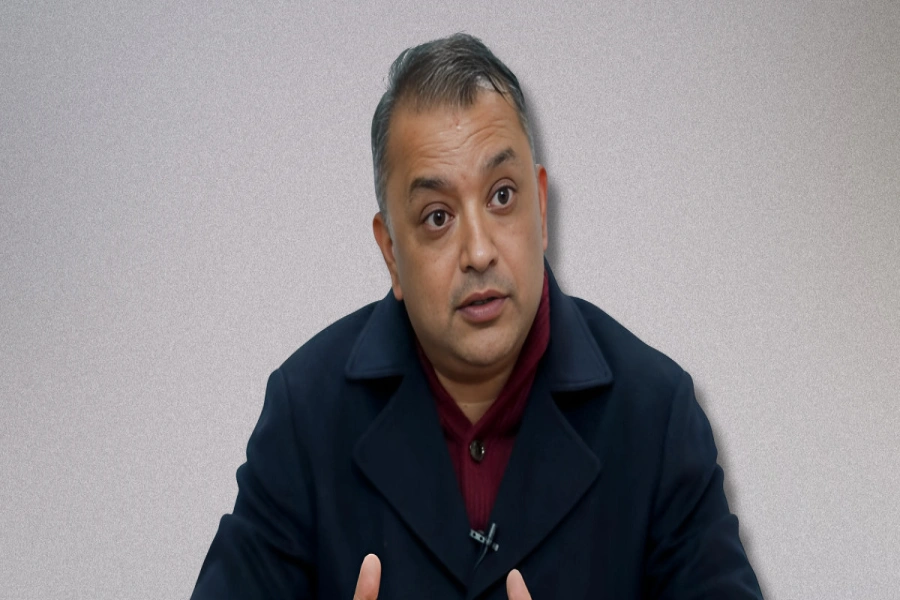
That assessment was articulated most clearly by General Secretary Gagan Thapa, who argued that the current moment should not be misread as a struggle for positions. “This is not a struggle for power; it is a struggle of ideas,” Thapa said, pushing back against the narrative that frames internal competition as mere infighting. His emphasis on ideology and direction underscored the convention’s broader purpose: to redefine the party’s political orientation rather than reshuffle its leadership alone.
Special general convention of the party will be held after elec...

Thapa directly linked this introspection to the Gen Z–led protests of September 8 and 9, which he warned should not be dismissed as vandalism or disorder. Instead, he described them as an expression of deep public frustration with the government and parliament—institutions the NC itself was leading or was part of them at the time. “The anger was against the government, and we were the government. It was against parliament and we were the parliament,” he said, acknowledging that public resentment was fueled by perceptions that some leaders continued to live lavishly even after the abolition of the monarchy. This admission marked a rare moment of institutional self-critique within a party often reluctant to publicly accept responsibility.
Crucially, Thapa argued that the protests should be treated not as an isolated eruption, but as a warning that demands introspection. “Sometimes we must look within our own house, take ownership and ask ourselves where we went wrong,” he said, explaining that the Special General Convention was convened precisely to seek answers to such uncomfortable questions. In this sense, the convention represents an internal response to a societal critique that Nepal’s major parties have otherwise failed to absorb.
The resolve shown by Thapa and fellow General Secretary Bishwa Prakash Sharma must be understood in this light. Opening space for debate, reflection and reform—particularly against the wishes of entrenched leadership—carries significant political risk in a large and historic party like the NC. Their initiative reflects a willingness to prioritise process over position and institutional renewal over personal advancement. Thapa’s insistence that calls for a regular or special general convention are a legitimate right of party members—“What is so difficult about honoring that right?”—reasserts the principle of internal democracy at a time when it has been steadily eroded.
The participation of more than 62 percent of convention representatives (more participation expected today) further strengthens this argument. The turnout—despite call of the establishment faction not to attend the convention-- suggests that discontent within the party is not confined to a faction or generation, but is structural. Cadres appear increasingly unwilling to accept inertia, managed consensus and leadership insulated from accountability. As Thapa noted, party members have openly questioned the NC’s ideology, alliances and political choices, demanding change through dialogue rather than rupture.
The convention’s significance is heightened by the party’s recent history. Once the standard-bearer of Nepal’s democratic struggle, the NC has increasingly lost public trust due to ideological drift and an overemphasis on power-sharing and personal interests—particularly during the tenure of President Sher Bahadur Deuba. The Gen Z movement exposed this disconnect in stark terms, revealing how far the party had drifted from the aspirations of a younger, more politically aware generation.
Thapa’s assertion that the NC is “not a party of slaves or lifeless bodies; we are a party of living human beings who speak and question” captures the convention’s underlying ethos. His rejection of claims that the process is designed to elevate specific individuals—“Policies may change, leaders may change—but this is not something I sought”—further reinforces the idea that the struggle is about direction rather than dominance. Even his evocative remark that political struggles may require sacrifice —“Sometimes we must be ready to burn ourselves so the flame can stay alive”—points to an understanding that renewal often comes at personal cost.
Ultimately, the Special General Convention that is set to begin deliberation today on the party’s plans and policies in the changed context of the recent Gen Z movement represents a decisive choice for the NC: whether to allow the party to continue rusting into irrelevance or to give it a new lease of life in tune with the spirit of a changing society and the demands articulated by the Gen Z movement. Whether this moment becomes a genuine turning point will depend on the willingness of all factions including the establishment led by President Sher Bahadur Deuba to engage in good faith. If approached with political maturity, the convention could redefine the NC’s role in Nepal’s democratic future rather than merely manage its decline.