If the government had used satellite images to assess damage, rescue could have been swift. Some CA members had advised the government to do so but it did not listen. Government mechanisms failed to provide plastic sheets to victims. Now this need has been met largely by local clubs, private education, health and business fraternity and some I/NGOs. By the time government tarps reached villages, if at all, the victims had started getting back up on their own using materials recovered from the rubble. Yet the government asks us to spare criticism.Victims have started receiving Rs 15, 000 announced for displaced families only now. Procedural hurdles came in the way, it's said. But the truth is those engaged in duplication are usually local cadres of ruling parties. A strong prohibitive order from the center could help curb the malpractice. But again the government pointed to inflated number of affected households.
The affected farmers were promised 'free-of-cost' paddy seeds. Paddy plantation starts in mid-hills in the next two weeks. It is already too late to plant seeds. By the time seeds reach every victim farmer, they will either have managed things by themselves or decided to leave their farmlands fallow. Our state machinery is such that it cares about proper record keeping of aid materials coming through government channels only after media pressure. Bulk of five million kilo rice sent to Nepal by Bangladesh was almost undocumented. Yet the government thinks it's unfair to be criticized.
Some government anger is understandable. Rising popularity of foreign aid agencies (which have pledged billions of dollars for relief and reconstruction)—whose big media coverage makes it seem like they are contributing much more than the government—have dwarfed its relief efforts. Perception among the victims is 'foreigners are giving so much in our names, but the government is not giving us what it owes.' Very few of us may be aware of how more than 75 percent of money pledged by donors is administrative spending, staff remuneration and international consultant fees—(two million rupees per month per consultant according to a recent media report) and how little of their contribution trickles down to the ground.
Besides, donors cannot be unaware of how political leaders are beneficiaries of aid. The NGOs headed by them receive a good deal of aid. Donors know their weaknesses, one reason why political class cannot resist their modus operandi.
Vested interests aside, some I/NGOs, business sector and Nepalis living abroad proved to be friends, indeed, during the difficult times. They reached affected districts with containers loaded with relief material. In villages of Sindhupalchowk, Gorkha and Dolakha they provided tarpaulin, closed tents, clothes, beddings and food. It is another thing that some MPs from ruling parties distributed such reliefs as their personal contribution.
But public disenchantment with the government was long time coming. Anger and frustration was accumulating. In the last few years, government has been limited to formulating policies it cannot implement, making promises it cannot fulfill and selling hopes that cannot be materialized. It is limited to bearing health expenses of rich politicians. Often our government has given in to black marketers and profit sector—including gold entrepreneurs, petroleum suppliers, crusher operators, transport entrepreneurs. This is the time to make amends. Government cannot take comfort in the fact that people are taking care of themselves, or some rich are helping the poor in need.
Political parties have tried to inspire optimism. Perhaps for the first time since 1990, they have done something good on the ground. Their cadres are in earthquake-ravaged districts, rebuilding schools and individual homes. If this momentum continues and selfishness and greed are sacrificed for some time, these volunteers could prove to be new builders of Nepal. But the danger is these cadres—long used to state comforts—may not be able to withstand scorching heat in hinterlands or they will be too happy to let their leaders lift a piece of brick and show it to the world.
For the first two weeks after the earthquake, it looked like there was only kindness in the air. Business men, PABSON members and NRNs went to affected areas and provided whatever they could. This rare show of generosity must be acknowledged but how the business sector will conduct themselves in the days to come will determine if their generosity was selfless. The period of giving won't last long. The victims must be supported by long-term policies. But there are no signs of this as yet.
The ruling coalition seems to be deliberately delaying relief aids so that people stop expecting at all. After all, Finance Minister Ram Sharan Mahat has told them in no uncertain terms: Don't look up to the government for help, build temporary settlements on your own and move ahead. This also implies that proposed rebuilding loan of Rs 1.5 million (for villages) and 2.5 million (for towns) at the lowest interest rate (two percent) is going to come with many strings attached, and poor villagers won't be able to afford it.
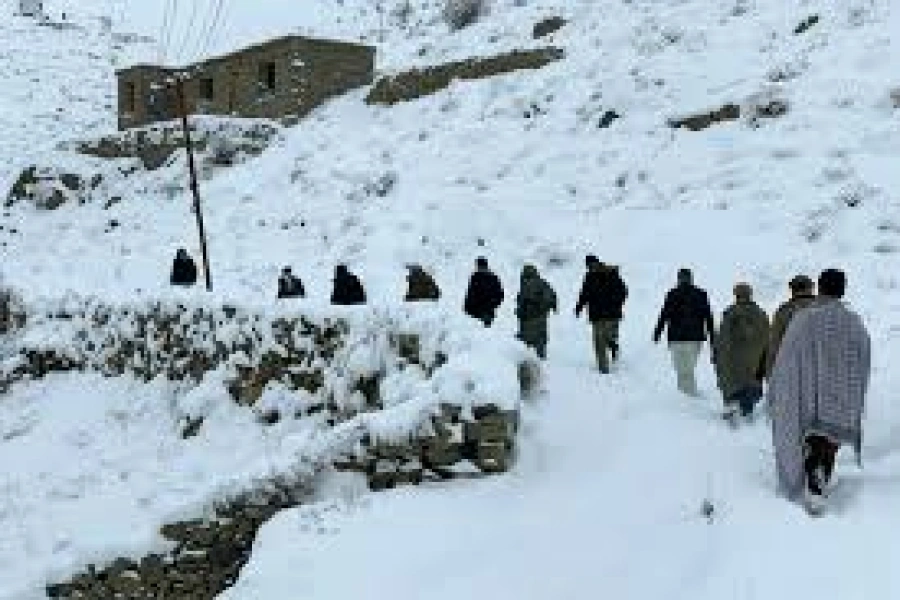
In most villages, people have built temporary shelters themselves. They have returned to the fields to tend to crops. About 4,000 people who were selling their blood and sweat in the Gulf are coming home every day to help build shelters for their parents. When they restore their shelter and have the bare minimum to get going again, these foreign youths might return, leaving their families to fend for themselves and face the ensuing tragedy as fate. When poverty and suffering becomes a habit people stop complaining.
Besides, the priorities of ruling parties are shifting, as semblance of normalcy is being restored in villages. The buzzwords again are constitution, national unity consensus government, modalities and leadership of new government. Earthquake victims could be easily forgotten in the battle for power in Kathmandu.
Harder times await them. Once the dust settles, the profit sector that contributed generously will seek to recover the loss from the very people they claimed to serve. There are already signs of this. Food prices have gone up. Private schools and private hospitals are back looking to maximize their profits. Some private hospitals are fleecing earthquake patients. As monsoon begins and Kathmandu deliberates whether to continue with or replace Koirala, living for the commoners will be much harder. The government that fails to control profiteering and black-marketing at these sensitive times will always fail to do so. Situation will call for strong government intervention. But expectedly, it will tell us even then: Don't complain, don't criticize the government, fend for yourself.
Twitter: @mahabirpaudyal
Related story
Philandering with Philanthropy