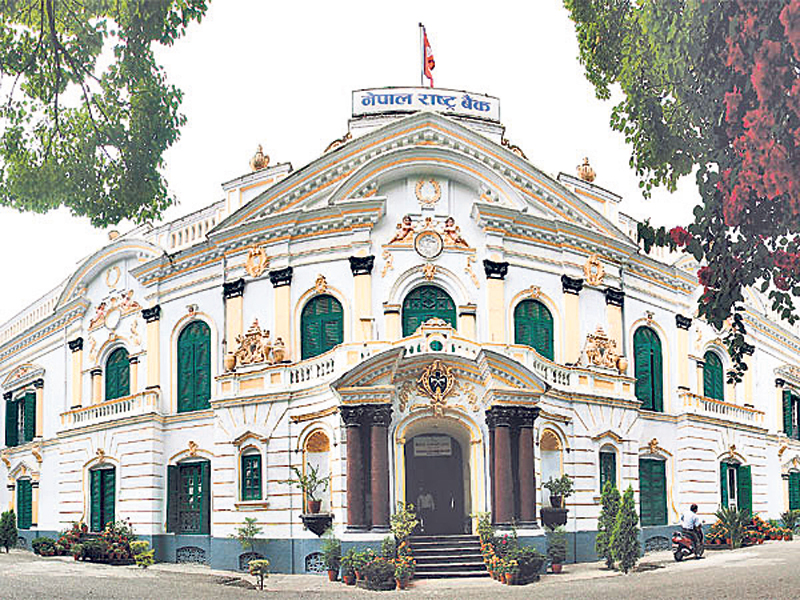
An IMF mission that scanned the country´s macro-economic fundamentals over the past two weeks pushed for tighter monetary policy mainly as maintaining Nepal´s interest rates within a certain margin of those in India is crucial to ensure monetary and exchange rate stability. [break]
According to NRB, the financial system presently has excess liquidity of around Rs 42 billion.
The IMF that released the preliminary findings of its Article IV mission on the day rated Nepal´s macro-economic performance as good, but cautioned that the outlook for the current and following fiscal years appears challenging due to the slowdown of the Indian economy, Nepal´s largest trading partner, and absence of full-fledged budget.
It even announced that the country´s Gross Domestic Product (GDP) would decline in 2012/13 from 4.6 percent of a year ago, referring to the effects of the late monsoon, continued weakness in industrial output and dampening effects of slowing growth in India.
"Delays in adopting a full-year budget for 2012/13 could further dampen investment and growth”," said Todd T Schneider, Deputy Division Chief, Asia and Pacific Department of the IMF, who led the mission to Nepal.
The Mission at the conclusion of its visit urged the government to adopt the full-year budget at the earliest and tighten its focus on budget implementation to attain higher level of capital spending. This is crucial for the country to meet its pressing infrastructure needs and support medium-term growth, said Schneider.
Schneider also warned that investments and external shocks faced by the Southern neighbor could affect Nepal in terms of remittances and investment receipts. As slowdown is feared to squeeze demand in India, it could hit Nepal´s export as well.
Given the situation, Schneider suggested the fiscal and monetary authority to keep track of affairs in India and take prompt steps at home to mitigate the adverse impacts.
On the fiscal front, the IMF Mission mainly raised concerns over large losses of the Nepal Oil Corporation (NOC) and Nepal Electricity Authority (NEA). "Those losses are unsustainable," said Schneider and strongly recommended the government to adopt automatic price adjustment mechanism to avoid the NOC´s future losses.
The IMF Mission also recommended the government to further strengthen the tax administration and revenue collections, focusing mainly on collecting arrears. It pushed for the adoption of tighter expenditure management and cash planning, so that government and donor-supported investment projects are implemented.
The IMF also warned that risks in the financial sector still exist. In this context, it recommended the central bank to further tighten its supervision and expand the framework for taking corrective action at problematic bank.
It has also recommended the government to enact the revised NRB Act so that the central bank could make swift interventions in problem banks.
Related story
NRB absorbs Rs 194 billion liquidity in two weeks, banks’ base...