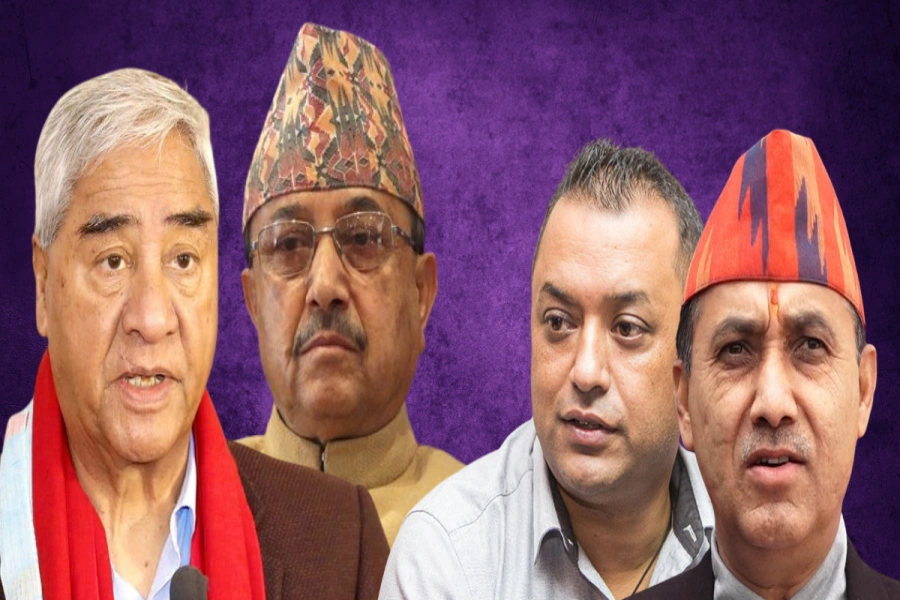
When King Gyanendra Shah usurped state power ousting Prime Minister Sher Bahadur Deuba publicly disgracing him as "incompetent" in 2002, people responded with applause. Don't call them stupid. There was a reason to celebrate Deuba's dismissal. Maoist insurgency was at its peak, law and order situation was deteriorating and corruption was crossing all limits. Deuba presided over the cabinet that watched all this doing nothing significant. Dragged in 2001 palace massacre (many still believe Gyanendra had his hands in it) though, people gave new king the benefit of doubt. Gyanendra's takeover seemed like a break in series of monotony of misrule. They thought he would not repeat mistakes of NC and UML, bring warring Maoists to negotiation table and put an end to the era of misrule. So when he made nationwide trips to Nepal's countryside, people asked him to restore peace, help educate their children, build bridges and hospitals and end corruption. Four years down the line, Gyanendra was already among the most unpopular rulers. When he vacated Narayanhiti palace in 2008, people cheered his departure. Again don't call them naïve. They had enough of him as well. Gyanendra had promised to do hundreds of things. He accomplished none.Same goes for Pushpa Kamal Dahal. He had promised to right all wrongs and vowed to build New Nepal under his leadership. At one time he appeared to be a metonymy of progressivism. In less than six months, comparison started to be made. PKD's rule looked much worse than Girija Prasad Koirala's. NC and UML appeared much better than Maoists. Jhalanath Khanal and Madhav Kumar Nepal could not earn different reputation.
Hope was revived when Baburam Bhattarai took over in 2011. When he rode Nepal-made Mustang Max, spoke to people through radio and Television, took their concerns through Hello Sarkar and made it a point to visit peasants once a month (none of these otherwise good initiatives are in operation now), people hailed him as a hero. By May 2012, however, Bhattarai had built the image of being incompetent PM who expanded cabinet to the largest possible size (with ministers of corrupt image), who dissolved first Constituent Assembly and who could not provide even fertilizers to farmers.
Today Bhattarai is struggling to salvage his battered image through Naya Shakti. Last time this scribe met him at his Sanepa residence for an interview, he looked serious, resigned and repentant. "How badly we are failing!" he told us during the informal conversation referring to plight of earthquake victims battling with cold and snowfall in the high altitude districts. He was referring to KP Oli government's failure and lack of preparedness to help earthquake victims cope with winter adversity. "As if the government did not know winter would come and there would be snowfall in the high hills." "What have become of us? Why cannot we (politicians) do anything?" he rued.
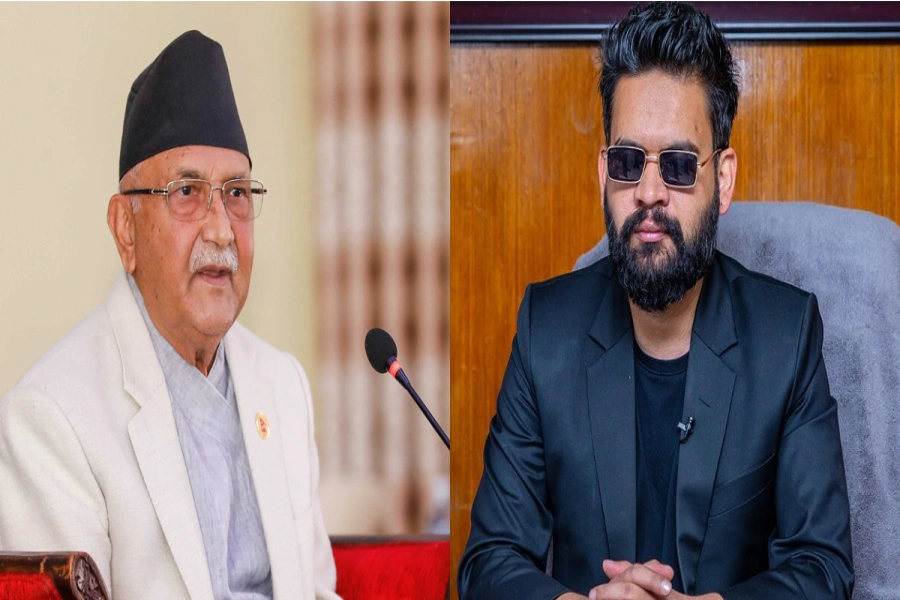
More recently, Sushil Koirala's rule was expected to be different because this was the first time Congress had taken government leadership after 2007. It was after many years that the country had found a prime minister who paid tribute to BP Koirala's democratic socialism in every public gathering. One and half years in Singha Durbar, Koirala proved to be just as bad. Coming down to K P Oli, he has become a butt of jokes. He is called a comedian, a joker and, some suggests, a mad man. Oli's madness (even if it is) should be put in a different context. Oli cannot control black market because if he does the country will come to a stand still and his relevance will come to an end. Black economy is byproduct of Indian blockade and Madhesh agitation, both of which are beyond his control. Black marketing, soaring prices of essential goods, corruption, scarcity of essential goods (oil, gas, fertilizer) have become the defining feature of each government. Each PM post-2007 faced these problems, degree and intensity may be different, which they failed to tackle.
Heads of government in Nepal fail in such a way in such a short span of time that every PM proves to be worse than his immediate predecessor. Today Koirala appears to be better than Oli. Madhab Nepal used to appear better than Bhattarai. Once Oli goes, perhaps he will appear to be better than his successor. But people expect each government to be different from its predecessor. We expected this of Pushpa Kamal Dahal when he took over GPK, of Bhattarai when he succeeded Madhab Nepal and of Oli when he succeeded Sushil Koirala.
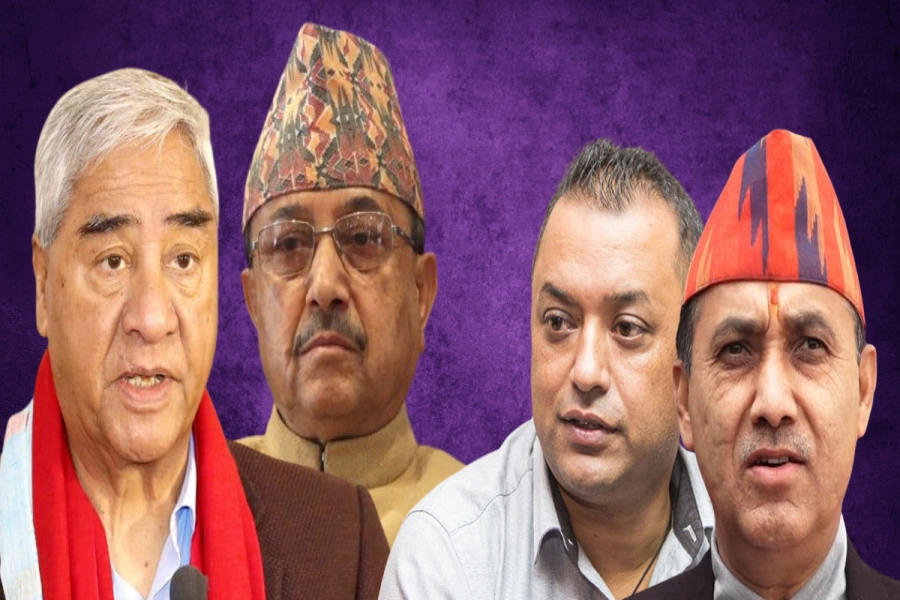
This short review of half a dozen PMs has been brought here to set a context to highlight how governments are failing and what repercussions of government failure, perceived or real, will be in larger socio-political picture (my next column will be on causes of government failure and ways to make it work). How these PMs contributed in political and constitutional processes makes for a different article. The focus is on how these PMs fared on basic day to governance. There is broadest consensus among all that each of them has been a failure.
Governments or government heads post-2007 have not been able even to create the impression that it is trying to do good. Perhaps except for Mana Mohan Adhikari led government of 1994, no government has left such impression. He was made to resign from hospital bed just in nine months of his popular rule.
Each government has only reinforced perception of failure. There is not a fixed parameter of this perception. Government's failure or success is judged on the basis of its performance in simple day to day governance. When it cannot keep vital supplies smooth and running, cannot punish wrongdoers, cannot make people and institutions abide by rules, cannot control corruption, cannot regulate and control market, the government becomes a failure.
The cost of success on failure on collective psyche is huge. First of all, the government loses popular legitimacy. The government is derided, scorned and mocked. Say that you will end load-shedding, control black market, jail the criminals and will have zero tolerance towards corruption, people will respond by saying "are you kidding me?" There are various aspects to public mockery of K P Oli. People have not made fun of him for failing to lift blockade, implement constitution and bring agitating Madheshi parties on board. They understand that these are parts of greater design to perennially destabilize this country. They are jeering at him because he says he will end load-shedding within a year, bring cooking gas to every household kitchen and generate electricity from wind and solar energies. They know Oli can do none of this. They have faced so many buffoons in the garb of politicians. Broadly, however, this is the expression of lack of trust in the government as an institution.
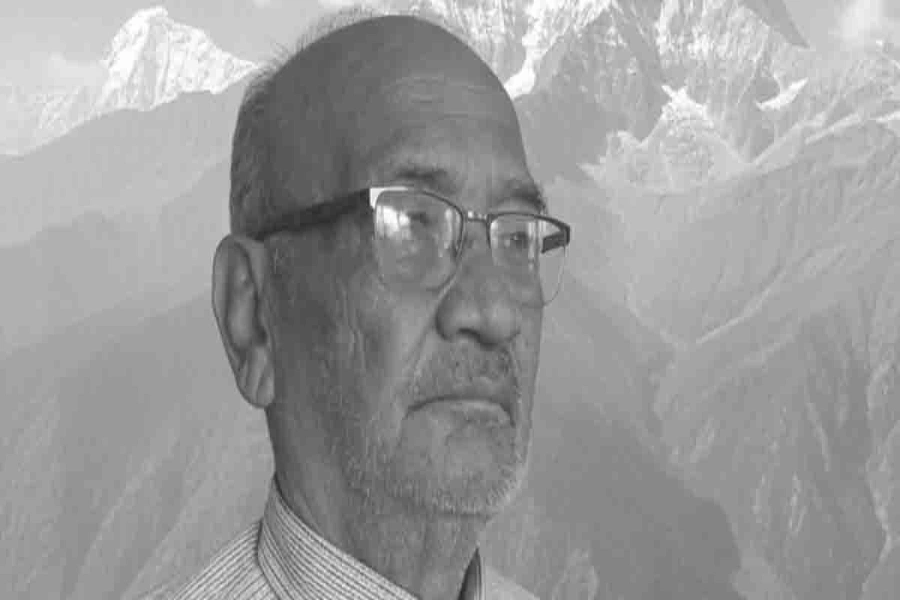
When exposed to the misrule for long time, people become used to it. They give up and accept the status quo as a norm. When people respond with indifference, there is a real danger of misrule being institutionalized. Where will this lead to? "First people will become frustrated, they stop giving credit to the government even for taking good initiatives," says Bhojraj Pokharel, former secretary of Government of Nepal. "The government as an institution becomes very weak, distance between the government and people widens. Non-state actors run the state."
These conditions have become norms already. But surely it does not stop here. "Then follows complete anarchy," Pokharel adds. It is there for us all to see. Where does state of anarchy lead to? "Failed state status," he warns.
You may take consolation from the fact that we have not reached there yet. But for how long?
mahabirpaudyal@gmail.com
Related story
Worth of stories