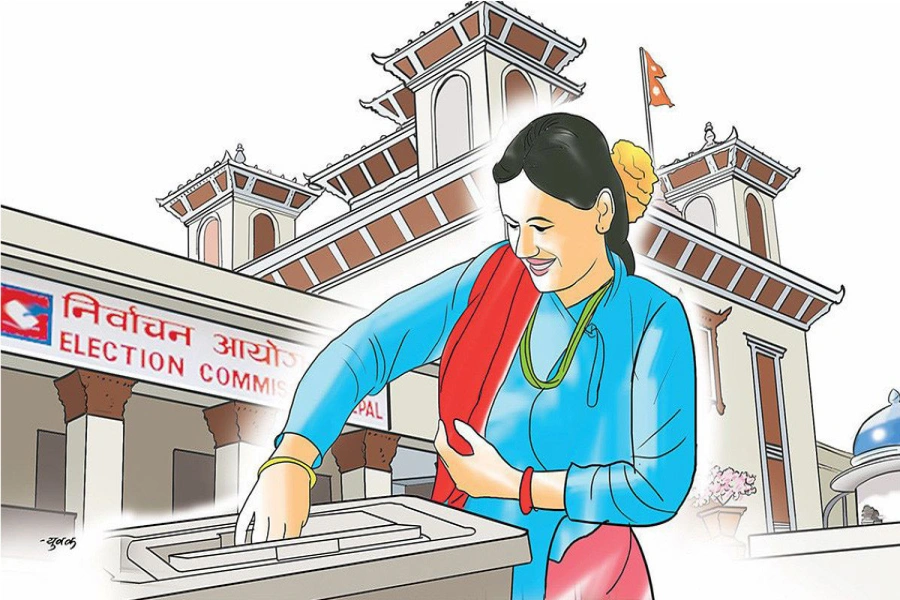
With the code of conduct coming into force from midnight on Monday and nominations for the candidates of First Past the Post (FPTP) system set to be filed on Tuesday, the country has formally entered the House of Representatives (HoR) election scheduled for March 5. The Election Commission (EC) said the code of conduct was enforced following consultations with Prime Minister Sushila Karki. After the conclusion of the Nepali Congress (NC)’s Special General Convention, attempts have been made to lodge objections against the party’s new leadership with the EC and even to seek judicial intervention. Nevertheless, the EC has sent a clear message that the election schedule will not be altered. With the enforcement of the code of conduct, speculation that the election date could be postponed has been decisively dispelled. The election is the need of the hour to break the current political deadlock. Since the Gen Z movement in September last year, the Sushila Karki-led government has worked relentlessly with the singular objective of holding elections. The government has even made efforts to bring dissenting parties together to create a conducive electoral environment. Despite persistent doubts among some sections that the election might not be held on time, breaking through such scepticism and preparing the ground for the polls is a serious and commendable achievement.
Ballot box security is polling officer’s responsibility: Home M...

Almost all political parties have already finalized their candidates for nomination. According to the EC’s schedule, nominations will be filed on Tuesday. If the process moves forward as planned, no party—except the faction opposed to the NC’s Special General Convention—appears to face major obstacles. Internal disputes within political parties should not be allowed to undermine a national exercise like an election. Political parties must come together for the sake of the electoral process. Failure to resolve internal conflicts should not be permitted to disrupt the election timetable. If elections are postponed every time parties are mired in internal disputes, such uncertainty could plague nearly every future poll. With the enforcement of the election code of conduct, the country has entered a phase of certainty, effectively putting an end to lingering doubts. That said, this election is being held under slightly more challenging circumstances than in the past. First, a group that emerged after the Gen Z movement could attempt to obstruct other parties from participating smoothly or engage in arbitrary actions. To prevent such situations, the EC must draw the government’s serious attention. If anyone engages in activities aimed at disrupting the election or attempts violent acts, the EC must intervene firmly. The current government does not represent any particular party; therefore, whether perpetrators are supporters of the Gen Z movement or any other group, the state must exercise utmost vigilance to prevent violence and ensure security.
Equally important is the growing risk of misuse of information technology during the election. The EC must closely monitor parties or candidates who attempt to misuse digital platforms. Failure to penalise those who seek to influence voters through technological manipulation could set a dangerous precedent. For this reason, the EC needs a strong, technically competent team to monitor social media and digital campaigning. There may also be attempts to send targeted campaign materials to specific individuals or regions, raising concerns about fairness and equal opportunity. Ensuring a level playing field for all candidates will therefore be a key challenge. The EC has demonstrated its capacity by successfully conducting numerous elections in the past. The country has also been holding periodic elections regularly. There was a time when local elections could not be held for an extended period, particularly after the Maoists launched the so-called ‘protracted people’s war’ in February 1996. However, following the 2006 movement, parliamentary, provincial and local elections have been conducted regularly. In this context, the EC is well equipped to manage the electoral process. It has also been effectively monitoring the implementation of the election code of conduct. Therefore, the code of conduct enforced from Sunday night must be implemented strictly. Only then can the election be made fair, clean and free from malpractice. To prevent elections from being won solely through muscle power and money, the EC must play a firm and proactive role by using the code of conduct as a decisive instrument.


.jpg)