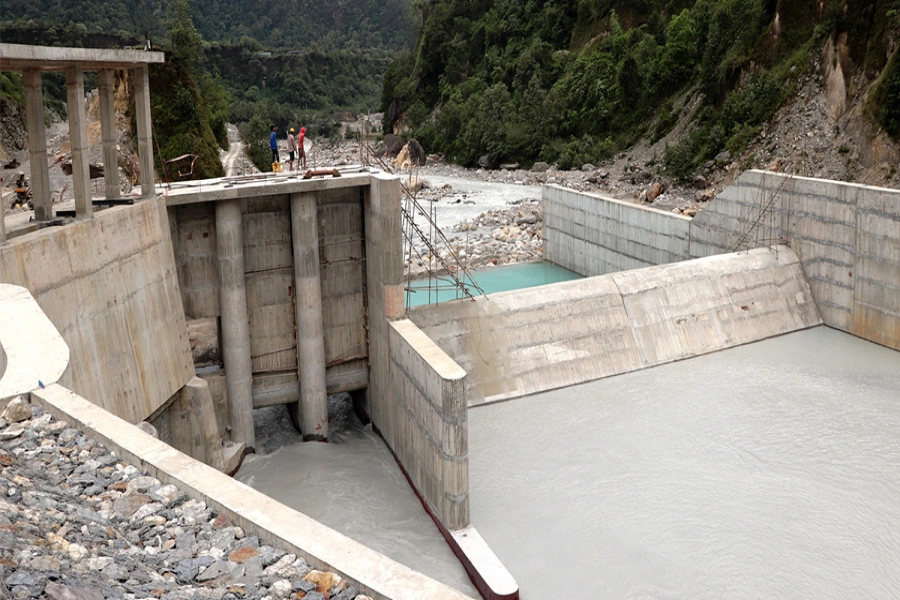
The government’s decision to cancel contracts worth over Rs 2 billion—projects that have shown little or no progress for years—was long overdue. With nearly 250 projects declared “sick,” some languishing for more than a decade and a half, it is only reasonable for the state to act against contractors who bag contracts but abandon worksites. Such actions send a necessary signal that the culture of impunity in public contracting cannot continue. But while termination may be justified in cases of blatant non-performance, the recent crackdown also risks treating only the symptoms while ignoring the deeper disease. The truth is that Nepal’s project delays rarely stem from contractors alone. The government must confront the uncomfortable fact that its own bureaucracy often plays an equally damaging—if not greater—role in turning projects sick.
Musk's Neuralink to start human trial of brain implant for para...

Over the past months, the Prime Minister’s Office under Sushila Karki has moved swiftly to annul non-performing contracts. Government agencies have issued public notices, summoned contractors to explain themselves and threatened blacklisting under the Public Procurement Act. When a bridge over the Kamala River remains incomplete for 15 years, decisive action is indeed warranted. Yet, as several construction entrepreneurs have pointed out, the story is far more complex. Rabi Singh, president of the Federation of Contractors’ Associations of Nepal, has accused political interference and bureaucratic lethargy of causing repeated delays. In some cases, officials have reportedly taken up to 29 months to approve project extension requests—delays that can cripple even the most willing contractor. When milestone payments are held back by officials despite work being completed, projects inevitably stall. This is not mere defensive posturing by contractors. Even Minister Kulman Ghising has openly acknowledged that many projects turned sick because government officials failed to do their part. Secretary at the Ministry Physical Planning and Transport Management Keshab Kumar Sharma has pointed to another structural flaw: the Public Procurement Act itself. A one-size-fits-all law cannot effectively regulate everything from mega hydropower construction to small-scale supply contracts. Its rigidity, loopholes and lack of sector-specific provisions have repeatedly encouraged haphazard awarding of contracts and discouraged genuine competition. Without reforming this flawed legal framework, repeating cycles of cancellation and re-tendering will continue to waste public funds and delay development.
Therefore, while cancelling chronically sick projects is a step in the right direction, it cannot stand alone. Nepal urgently needs a comprehensive diagnostic of why projects fail. This must include an independent review of procurement processes, payment bottlenecks, political interference, bureaucratic misconduct and the capacity gaps of both contractors and government agencies. Only then can reforms be meaningful and lasting. For too long, Nepal’s infrastructure development has been held hostage by a system where neither contractors nor officials fear consequences. Accountability must finally become a two-way street. Genuine contractors should not be deterred. If the government is serious about ending the culture of abandoned projects, it must pair contract cancellation with institutional reform. It is important to punish negligent contractors, yes—but also confront the bureaucratic inertia, political meddling and legal shortcomings that have long undermined the nation’s development. Only then will Nepal move from perpetual project paralysis to meaningful progress.