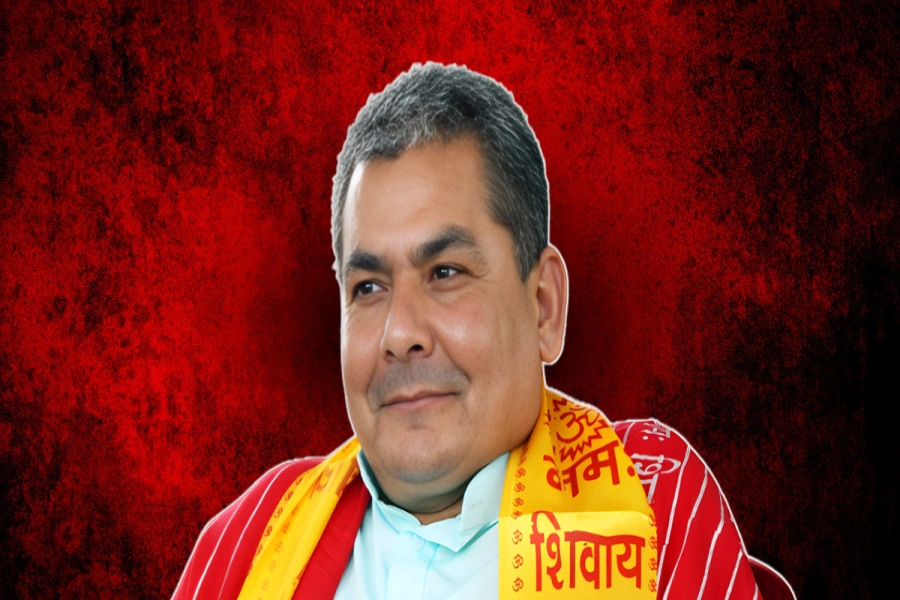
By filing a corruption case related to the construction of Pokhara International Airport at the Special Court on Sunday, the Commission for the Investigation of Abuse of Authority (CIAA) has sent a clear message that its campaign to catch the “big fish” is underway. Concerns about irregularities in this project had surfaced even before the airport was completed. It is evident that the CIAA took an exceptionally long time to conduct a thorough investigation and bring the case to this stage. This is the second case involving the suspended Director General of the Civil Aviation Authority of Nepal (CAAN), Pradeep Adhikari. A separate case regarding irregularities in the Nalinchok helipad construction has already been filed against Adhikari. The CIAA has now charged 55 individuals, including five former ministers, ten former secretaries and several senior CAAN officials. During the airport’s construction, the state is believed to have incurred losses exceeding Rs 8 billion. Although development and infrastructure projects are crucial for the country, this case demonstrates how deeply corruption has taken roots under their cover. Had projects been built at their actual cost and without irregularities, Nepal’s development trajectory would have been significantly more advanced.
Enough is Enough is a movement for social justice

While the CIAA’s move reinforces long-held suspicions that major national projects are riddled with irregularities, it also exposes how slowly investigations proceed. What we are witnessing now is not just suspicion—it is the reality. Residents of Pokhara had fought hard to secure the construction of this airport. The project materialised as a result of their struggle. Now, following allegations of irregularities, locals are saying: “We demanded an airport, not an opportunity for someone to pocket money.” One of the reasons democracy has earned a poor reputation in Nepal is the persistent lack of good governance, which has allowed corruption, malpractice and the stifling of public aspirations for development. Corruption thrives due to the triangular nexus among bureaucrats, contractors and political leaders. If even one of these actors refused to cooperate, irregularities could be curtailed. Bureaucratic resistance alone is not enough; nonetheless, the bureaucracy has failed to prevent wrongdoing. Had the permanent government—the civil service—strengthened monitoring mechanisms for such projects, the outcome would have been very different. The proposal to build an international airport in Pokhara was first made in 2008. The airport, finished in 2022, was inaugurated by then Prime Minister Pushpa Kamal Dahal on 1 January 2023. As concerns about corruption grew, studies and investigations were initiated. A subcommittee under the Public Accounts Committee of the House of Representatives (HoR) concluded that corruption worth roughly Rs 10 billion had occurred and instructed the CIAA to conduct a deeper probe. The CIAA took nearly two years after seizing relevant documents to finally file the case.
The government formed under Prime Minister Sushila Karki after the “Gen-Z protest” of 8 and 9 September helped push the CIAA to take action on long-pending corruption cases. Although the government itself cannot prosecute cases, unnecessary delays are possible if the prime minister is reluctant to allow them to move forward. It is therefore essential for the prime minister to create an environment in which constitutional bodies can operate independently. The current pace of case filings suggests that such an environment has at least partially been created. There had long been grounds for suspicion about corruption in this project. The airport’s estimated cost was initially Rs 12 billion, but was later increased to Rs 22 billion. Doubling the cost for the same project represents a substantial loss for the country. It appears not only that the construction timeline was deliberately extended, but also that the cost was artificially inflated. Almost all major infrastructure projects in Nepal suffer from similar issues. The CIAA must investigate these cases seriously and bring as many as possible to a conclusion. The momentum it has shown in this case should soon be reflected in others as well.


.jpg)