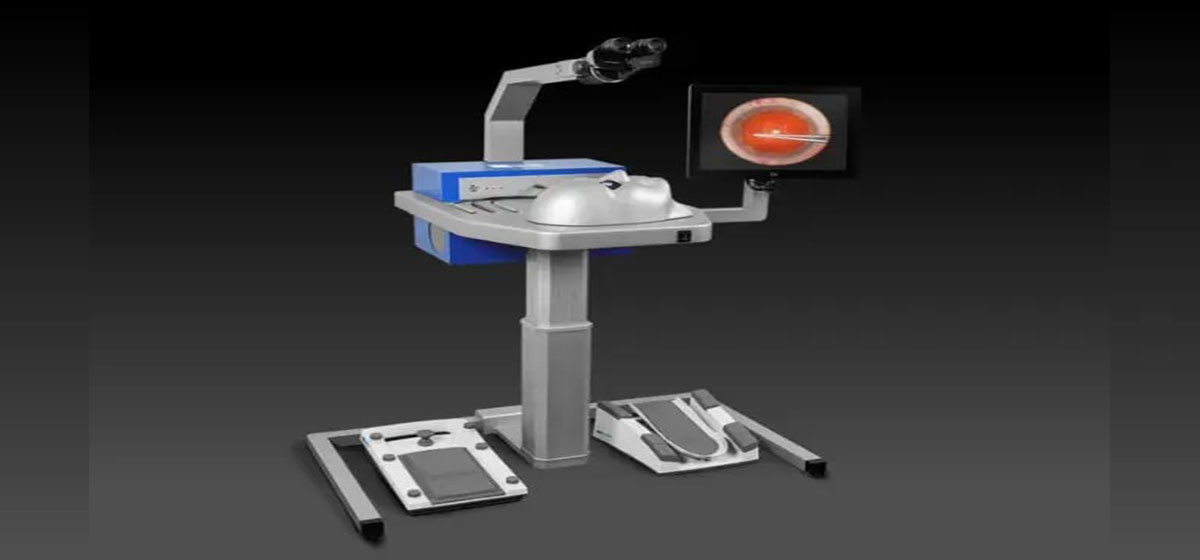
KATHMANDU, May 6: The BP Koirala Lions Center for Ophthalmic Studies at Maharajgunj says it better equipped now to handle ophthalmic surgical education in Nepal, with the introduction of the EyeSi Phaco and Retina Surgery Simulator.
The virtual reality (VR)-based training system allows ophthalmology residents and surgeons to practice and refine their skills in cataract and retina surgery.
The Center stated that the machine was recently purchased at a cost of Rs 30 million.
NPL: Kathmandu Gurkhas register their second victory, beat Lumb...

According to Dr Ashish Raj Pant, a professor and ophthalmologist at the Center, this equipment is used in internationally renowned universities. Similar robotic surgery equipment is used in universities like Harvard, Cambridge, and Oxford for training ophthalmology students in surgical practices. The system is equipped with a robotic device attached to a microscope, and contains a dummy (artificial) eye for practice.
Dr Pant said that with the help of robotic equipment, the risk of damaging a real person's eye during surgical practice is minimized. Additionally, since multiple surgeries can be performed on the artificial eye, trainee doctors gain greater surgical proficiency.
According to him, in Nepal, due to the limited risk of complications, ophthalmology students are allowed to perform only 10 to 20 surgeries during their three-year study as Residents. Moreover, these surgeries are conducted solely under the supervision of expert surgeons.
Dr Pant said that the limited number of surgeries affects the trainees' surgical proficiency. On the other hand, after completing their studies, these doctors may face a risk of eye damage when performing surgeries in real-world scenarios. Since most doctors who have completed limited surgeries still require further surgical training during their careers, Nepal faces a shortage of experienced ophthalmic surgeons.
The only solution to address both of these problems is robotic surgery training and practice. As a result, there is an increased possibility of producing a larger number of skilled ophthalmic surgeons in Nepal within the next three years.