Urban Kathmandu has a mountain of issues to tackle: anything related to traffic-and-roads, hospitals-and schools, open spaces-and-roundabouts, lane dividers-and-illegal parking. Even among these, urban transport management is a crucial but long-neglected issue. There has been no direct government intervention in that sector. The now defunct trolley bus system, run by Nepal Transportation Corporation (NTC), was an exception. But the system was badly neglected and eventually made defunct.Introduction of privately-owned microbuses were thought of as panacea from commuting troubles. While these have filled the void to some extent, it is a pity to see them ply unashamedly putting even sardines to shame. Advantaged by the chronic oil shortages and blessings of patron parties, operators are able to squeeze the uncomplaining public as much as they fancy. The regulating authorities turn a blind eye to the systematic rip-off. It would inconvenience even more commuters, they reason, if they woke up from their slumber.
An example of the level of rip-off was highlighted by Lila Mani Poudyal, then Chief Secretary, who narrated his own "sardine" experience while inaugurating the rejuvenated Sajha Yatayat some years ago. He had shunned his office vehicle and hopped on a microbus as he headed to the Pulchowk venue that day. He revealed that microbuses could break-even with just 9 of the 16 seats taken (which comes to 56 percent occupancy).At full occupancy, it becomes a win-win for both owners (who make good money) and passengers (who can sit comfortably).
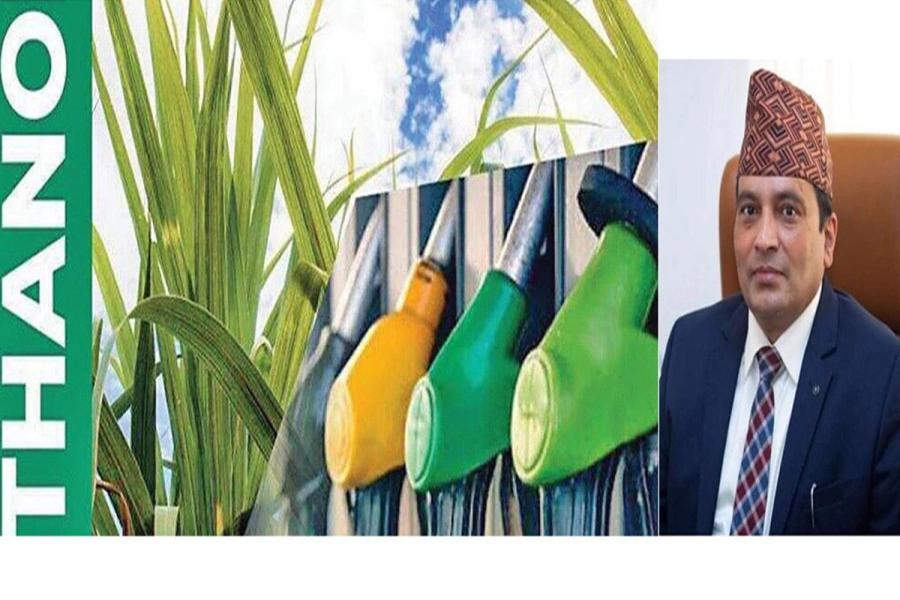
Now, imagine the level of killing made in each trip as no microbus ever moves with a headcount below 21, or until it is nearly a third over the brim. Effectively each trip earns the owner a margin of about 75 percent. That is the level of rip-off that has been going on. The 75 percent does not account for additional money that pours in from constant getting on and off all along the route. Likewise, the effect of major fuel price drop has also not been considered here. The diesel, which was sold at Rs 105.5 at its peak, is now priced at just Rs 81 a liter, a drop of nearly 24 percent.
Shajha's decision to bring additional 30 new buses was good news in itself, as were new buses introduced by Mahanagar Yatayat recently. We can safely assume that there will, in general, be no shortage of travelling public in this over-populated valley.
But reliability is crucial for public transport. This hinges on sticking to the published schedule, not just at starting point, but at every stop on the route. With reliability ensured, price is not as important. But generally speaking, public transports do not make a ton of money, anywhere. They can be considered successful if they can break even, without needing to be subsidized.
In the long run public transport should ideally aim at meeting travelling needs of office and school goers. Buses owned by schools that are on road just two times a day can be treated as wasteful use of resources. There will be no reason for schools to maintain their own transport wing if public transport system becomes more trustworthy.
Lack of credible public transport has led people to rely particularly on two wheelers. A glance is enough to get an idea of the overwhelming density of two wheelers in our roads at peak hours. The situation was ably exploited by business houses promoting their brand of two- or four-wheelers, with attractive loans. This is the cause for quantum jump in demand for fuel, especially petrol, as was seen in long queues at every fuel outlet during (and even after) the despicable nakabandi.
A good road network is prerequisite to run an efficient and swift public transport. The ring-road was built to facilitate faster travel and avoid shorter but narrow and congested city streets. But it has earned a bad name lately because of many-fold increase in traffic volume and traffic conflicts at major junctions all day long. The ongoing ring-road upgrading project is surely aimed at easing the situation but it will only be half work done.
The next logical step should include improvement of radial roads emanating from city core to the outskirts, beyond the existing ring-road. Improving stretches that encircles the city core is no less important. Schematically, a sort of "inner" or smaller circuit route within the existing ring-road will help bring public transport system closer to commercial and residential localities. It goes without saying that the improvements of radial road network linking origin/destination (O&D) spots within the ring-road to spots beyond is as important.
Increasing number of public buses should gradually see the compulsive public urge to get into a micro decline. Nonetheless, they will have a role in connecting outskirts to the main public transport hubs or other areas they deem fit to ply. One fears if the envisaged public transport system ends up being what it was not supposed to be: just another dream sold to Nepali public.
harjyal@yahoo.com
Related story
The daughter of God