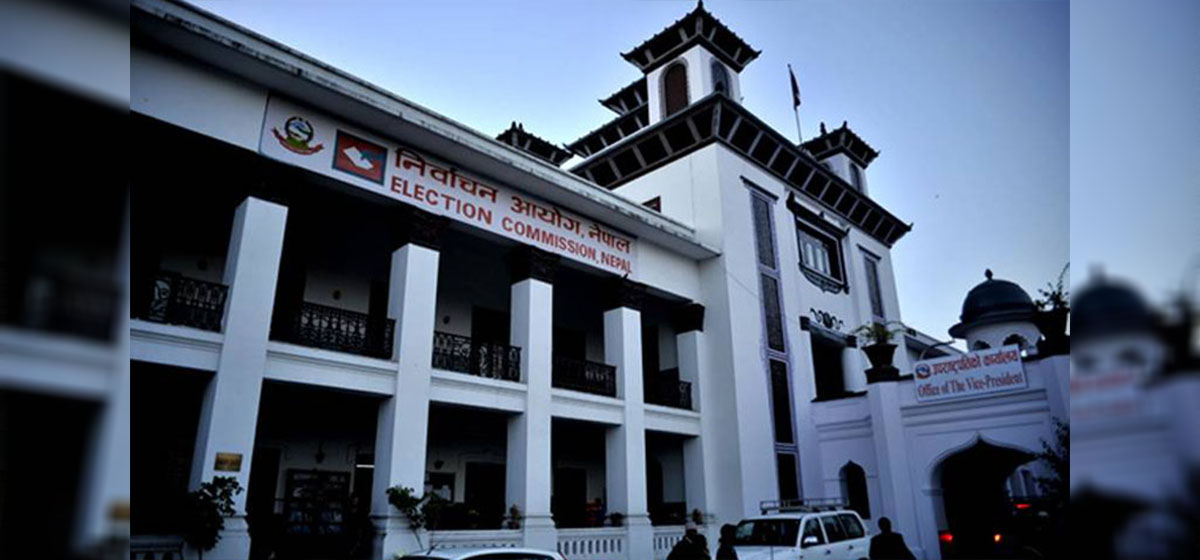
KATHMANDU, Jan 10: The Election Commission (EC) is set to enforce the Election Code of Conduct from January 16, ahead of the House of Representatives election scheduled for March 5.
According to the EC, the code will come into force 47 days before polling day, coinciding with the commencement of operations of the Office of the Chief Election Officer. The code will be implemented following a formal decision by the commission. After a brief preparatory period, it will be enforced once the EC finalises its decision, officials said.
Earlier on Friday, Acting Chief Election Commissioner Ram Prasad Bhandari, along with other commissioners, briefed Prime Minister Sushila Karki on the key provisions of the code.
The EC has also scheduled a meeting with political parties on January 14 to seek their formal commitment to comply with the code. As part of the process, parties will be invited to share their views and pledge adherence to its provisions, a standard practice during elections.
EC committed to ensure effective implementation of election cod...
Once the code comes into effect, federal, provincial and local governments will be barred from introducing or implementing new policies, plans or programmes, except those already approved in the annual budget.
The code prohibits foundation-laying ceremonies, inaugurations, surveys, feasibility studies and the distribution of grants during the election period. It also restricts new political appointments and the filling of vacant positions.
Similarly, governments will not be allowed to increase allowances, provide additional financial benefits or distribute awards while the code remains in force.
The EC has also tightened rules on foreign travel by public office holders. Ministers and other officials at all levels of government will require prior approval from the EC for overseas visits during the election period.
Under the code, foreign travel will be permitted only for official representation of the country, and not for other purposes.
The code introduces stringent provisions on election expenditure. Candidates will be required to disclose their estimated election expenses and sources of funding at the time of filing their nominations.
Candidates must conduct all election-related spending through a separate bank account and appoint an individual responsible for managing campaign expenses. Transactions exceeding Rs 25,000 must be carried out through the banking system.
Political parties are also required to maintain separate bank accounts for election expenses, to be operated by designated officials.
The Election Code of Conduct will apply to all levels of government, public institutions, civil servants, political parties, candidates and voters, as well as office bearers and employees of private and non-governmental organisations during the election period.