As indicated above, 1970 was seen as the milestone year of the first decade of the uninterrupted Panchayat Raj that was imperially enshrined in the Constitution of the Sovereign Hindu Kingdom of Nepal whereby every Nepali had been converted to a Pancha and every Pancha was a Nepali by birthright. A series of nationwide celebrations were, therefore, chalked out and one hundred and one committees with as many subcommittees, as envisaged or required, were to be formed. Every line agency of His Majesty’s Government of Nepal was to be assigned a noble task to initiate and fulfill to make the anniversary a resounding success.
Radio Nepal received an unprecedented official order to have as many new patriotic and Panchayat-punctuated nationalistic paeans broadcast in order to have highlighted and celebrated the first ten years of the only Hindu kingdom of the world’s unique self-governance system called the Partyless Panchayati Prajatantra of Political Principles and Pragmatics of Nepal.[break]
In my fourth year at Radio Nepal, I at last saw unprecedented activities of lyricists, composers, music directors, and arrangers assembling one after the other at the radio station. Singers, popular, current and dormant, appeared to learn new songs to record in the studios. The theme was “Rashtraprem Sangeet” with songs on the Raja and Rani, the Shah Bangsha, the Raj Sanstha, the Raj Mukut, the Shreepech, Nepal as a Hindu Adhirajya, and the “ek desh-ek bhesh: ek raja-ek bhasha” gyroscope governing the airs at Radio Nepal. There was a rash of melodies and words sweeping the premises of Radio Nepal, wordsmiths inking their songs on pages and tunesmiths fingering their harmonium keyboard and transcribing the melodies and music for the arrangers and instrumentalists while male and female soloists, duos and ensembles of singers rehearsed the lyrical verses and melodic strains. The dash and rush soon turned into a busy-bee cottage industry of nationalistic and patriotic music all around. For instance, I played guitar for the group formed by Koili Devi, Chiniya Rana and other ladies who had a number of loyal group songs; later, they teamed up with Janardan Sama for a host of “rashtriya geet.”

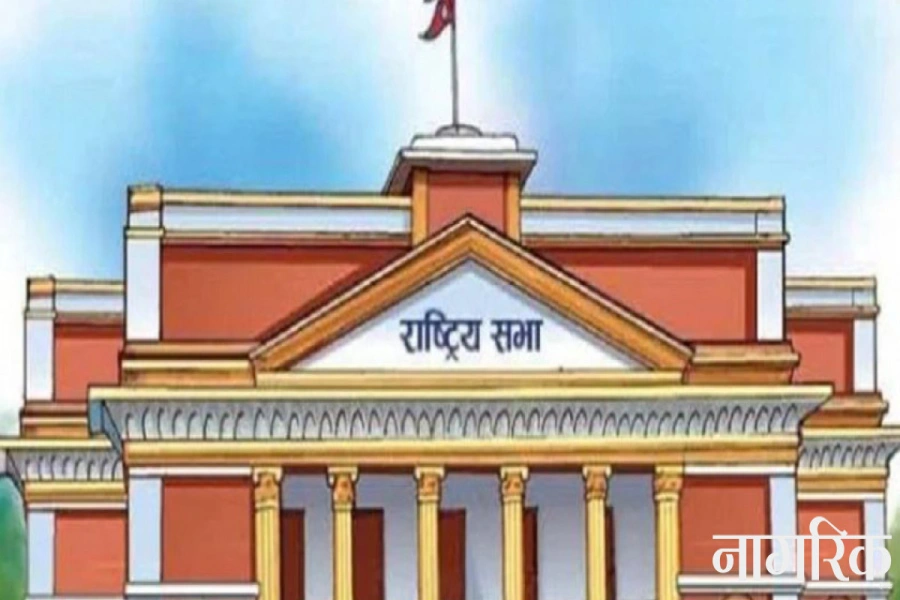
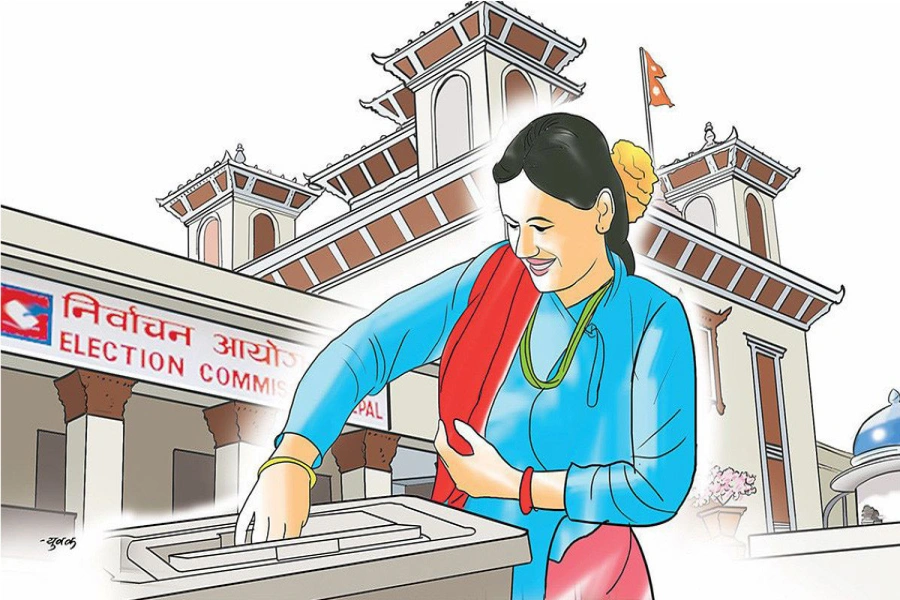
Illustration: Sworup Nhasiju
There were artistes from Birgunj, Biratnagar, Dhankuta, Chainpur, Dharan, Pokhara, Hetauda, Bhairahawa, all bee-lining to Kathmandu and Radio Nepal to record their Panchayat-accentuated songs and music. Recording of modern songs, bhajans and folksongs were sidelined for many weeks, and nationalistic music a la Panchayat was the standing order of the day in the recording studios. Within an hour one afternoon, for example, I saw Laxman Lohani finessing three verses of a song called “Naseeb Kahan?” and Nati Kazi fine-tuning the melody and Ramlal Joshi and “sathiharu” recording it by 4 o’clock. I played double bass in the “rashtriya geet.” So there! Energetic flurries flew around, throwing sparks, and I think seamless budget was at the disposal of the recipients, too. The industriousness of one and all showed some ameliorative auras, in addition to the Panchayat government’s clarion calls to “Jaga he, Nepali……!” That is, in other words, the Shree Panchko Sarkar had read the riot act to Nepal’s composers, singers and musicians to produce “Panchayati rashtrabadi gaurabshali sangeet” – or else!
To a curious postgraduate-level student of literature and language like me – who had “embarked” on his Master’s studies as his version of MFA Program with the aims and objectives to write a novel in Nepali as soon as his studies would be over – the genres of Panchayat-centric lyrics heard in the recording studios of Radio Nepal were something of a discovery, too. There were two distinct streams of values-added sentiments to the words of the songs:
One corpus of songs had such ingratiating nouns as Raja, Rani, Raj Mukut, Shreepech, Raj Sanstha, and infrequently Pancha, Panchayat and other sycophantic synonyms dedicated to particular royals and the institution of monarchy. The other group of lyrics sang of the loftiest Sagarmatha, the pure Himals, the sacred waters of Mechi and Maha Kali, beautiful Munal, colorful Danfe, unblemished Sayapatri, striking Gurans, Lord Buddha, Goddess Sita or Nepal’s own daughter Janaki, sacrifice for and devotion to Mother Nepal, and such verses of national sentiments. The former body of compositions displayed hideous bootlicking, unashamed fawning, open obsequiousness, and crass toadyish kowtowing to the Vishnu-incarnate monarch as the steadfast father to his subjects, his consort as the kindest and most affectionate mater to the people, the monarchy as an invincible citadel, and the incomparable Panchayat System enshrined in theses living symbols as nothing short of pluperfect.
Such wallowed hero-worship already had precedents. Early on in the nascent days of Panchayat, a particularly nationalistic song was played on Radio Nepal. In it, a group of singers asks the other chorus, both converging on a village crossroads, what could be inside the bag carried by one of the members? Pat comes the answer, “Raja ra Raniko tasbir chha yo mero rato jholama.” There is a portrait of the king and queen inside my red bag! Nobody in his right mind would listen to, much less accept, such a preposterous song – patriotic, or monarchic, or whatever! But it was broadcast so nauseously frequently anyway.
Truth must be told that it was Nepal-born music composers, songwriters and singers who made a willing party to pay their panegyrics and sing hosannas to the king, queen, the monarchy, the Panchayat. Others hailing from outside had their own highest regards for Nepal: Amber Gurung would not only compose an original song entitled “Hoshiyar!” (recorded by Bhaktaraj Acharya), he also borrowed the nationalistic verses of Gopal Prasad Rimal entitled “Rato ra Chandra Surya, Jangi Nishana Hamro,” which he set to music and sang with Fatteman. Gopal Yonzon paid similar homage and tributes of his own in words, music and rendition to Mother Nepal and sang her glories.
Repercussions: Fast forward to 1990 and the arrival of the Kathmandu Spring, and most of these ingratiating and groveling “Rajabadi” and “byaktipuja” hymns and “Panchayati” propaganda bhajans recorded on Akai tapes, and produced at considerable costs, were literally vandalized to smithereens in the archives and library of Radio Nepal, and many spools of magnetic tapes storing such “chakari” songs were reportedly found in the gutters of New Road. But the universally proactive works of Amber Gurung, Gopal Yonzon, Bhaktaraj Acharya, Deep Shrestha, the Lekalis and other non-partisan artistes are still broadcast on the FM stations of Kathmandu and their linkups to other parts of the country because their music has the all-Nepal sentiments, sense of identity, national definitions, cultural essences and collective meanings.
I can’t leave this section without mentioning an innocuous casualty of Nepal’s Democracy’s vengeance against Panchayat. Amber Gurung and Aruna Lama had recorded a Devkota Sangeet modern folk duet while in Darjeeling. This was a Pasang Wangbal lyric called “Ghaam Joon Pancha Raakhi Baachaa Maara,” set to music by Gurung and recorded at Hindustan Records in Calcutta in the early ’60s. It was a perennial hit. However, it still remains censored to this day since 1990, since the day of the reinstatement of democracy in Nepal, simply because of the word “pancha” (meaning ‘witness’ in the song) in the first line, which has not the faintest connection to the “Pancha”yat System of Nepal.
To be continued in the next edition of The Week.
The writer is the copy chief at The Week and can be contacted at pjkarthak@gmail.com
Related story
Kathmandu Cantos