

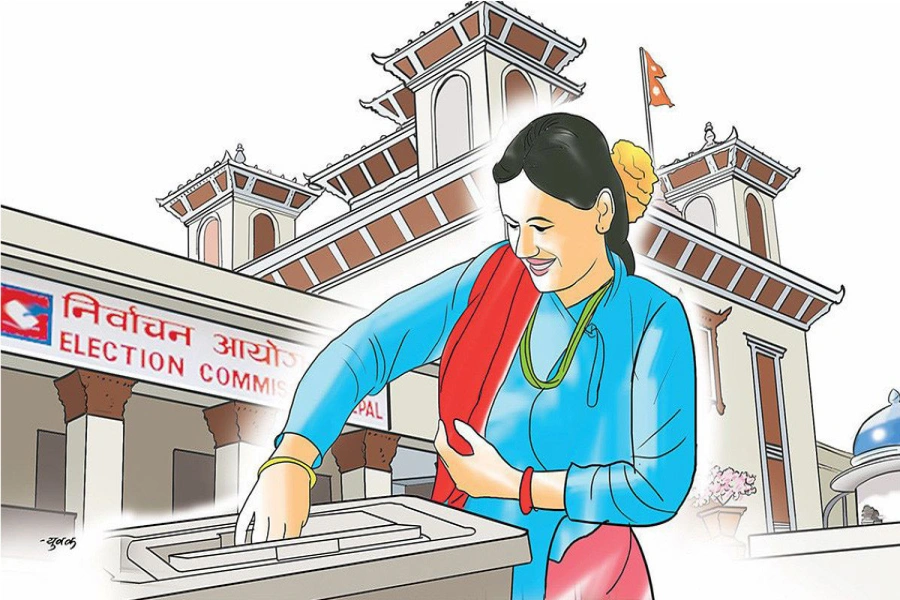
KATHMANDU, Dec 24: With the House of Representatives (HoR) election less than three months away on March 5, Nepal’s political landscape is increasingly shaped by energetic new political forces riding on Gen Z support, while established parties appear to be proceeding more cautiously.
Prime Minister Sushila Karki, whose government emerged in the wake of the September 8–9 Gen Z protests, has repeatedly expressed confidence in the government’s preparedness to hold the elections on time.
Encouraged by these assurances, several political parties formed after the Gen Z movement have stepped up their activities. Among them is the Shram Sanskriti Party, which has intensified its organizational and political outreach. Similarly, Rastriya Swatantra Party (RSP) has intensified its campaign, insisting that there is now no turning back from the electoral process.
Libraries established in jails of Karnali

RSP Chairman Rabi Lamichhane, after being released on bail on December 18, quickly shifted his focus to election campaigning. Addressing supporters in Chitwan—his constituency—Lamichhane described the upcoming election as a generational turning point rather than a routine political contest.
Senior RSP leaders, including Vice President Swarnim Wagle, have also fanned out to districts such as Baglung and Myagdi, addressing rallies and mobilizing supporters. The party is simultaneously finalizing names and quotas for proportional representation candidates, further intensifying its election preparedness.
Another new political force, Ujyalo Nepal, which is linked to Energy Minister Kulman Ghising, has been holding meetings and expanding its organizational network from eastern Nepal toward the west. Although Ghising does not hold a formal position in the party, he has been actively supporting identity-based movements, particularly in the eastern region, and has begun forming committees across multiple provinces.
Likewise, the Shram Sanskriti Party, chaired by Dharan Mayor Harka Sampang, has started expanding its district-level structures and holding election-focused assemblies, largely concentrated in eastern Nepal.
Among older political forces, the Nepali Communist Party—formerly the Maoist Centre—and its allies have also increased their activities. Unity meetings and rallies organized across the country are increasingly resembling campaign events. Party coordinator Pushpa Kamal Dahal has publicly warned against postponing the election, signaling readiness to go to the polls.
In contrast, the Nepali Congress (NC) and the CPN-UML—the two largest parties in the dissolved House—appear more cautious. Both continue to raise the issue of restoring the dissolved parliament, even as they quietly recommend candidates and make technical preparations.
Lawmakers from both parties have jointly filed a writ petition at the Supreme Court, demanding reinstatement of the House of Representatives and challenging its dissolution as unconstitutional. While the NC has described the move as an individual initiative by party leaders rather than an official party decision, the CPN-UML has formally challenged the dissolution, giving top priority to House reinstatement. The UML has yet to formally launch its election campaign.






-1782125987.webp)
-1200x560-1782120651.webp)


