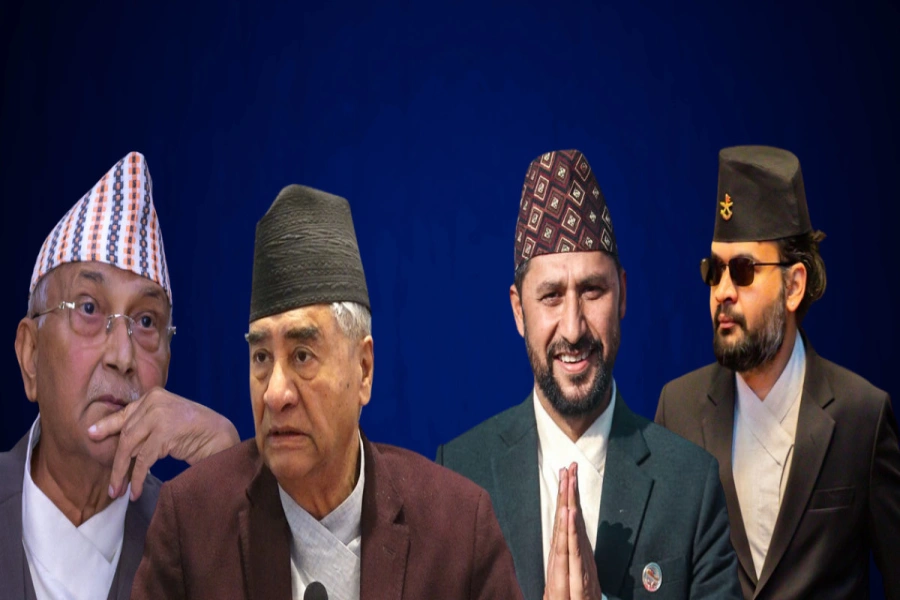
KATHMANDU, Dec 24: Newly formed political parties positioning themselves as alternatives to traditional forces have begun dialogue aimed at cooperation in the upcoming elections.
Leaders of these parties initiated talks soon after Rastriya Swatantra Party (RSP) Chair Rabi Lamichhane was released on bail in a cooperative fraud case.
As the Nepali Congress (NC) and CPN-UML—the first and second largest parties in the dissolved House of Representatives (HoR)—struggle to prepare for elections, RSP, Kathmandu Metropolitan City Mayor Balendra (Balen) Shah, and other newly formed parties have stepped up discussions to unite. Their aim is to present themselves as a viable alternative to the NC–UML dominance.
On Monday evening, RSP Chair Lamichhane held a lengthy discussion with Mayor Balen. Reports suggested that Lamichhane proposed Balen as a prime ministerial candidate on behalf of the RSP. However, Lamichhane later denied this claim while speaking in Chitwan.
Addressing journalists on Tuesday, Lamichhane said there had been no discussion about a prime ministerial candidacy. “We have not entered into that topic at all. First, we need to understand the situation, hold discussions and assess the circumstances. We need to exchange information,” he said.
JSP Nepal, LSP agree to unite as Rabi-Balen alliance signals wi...
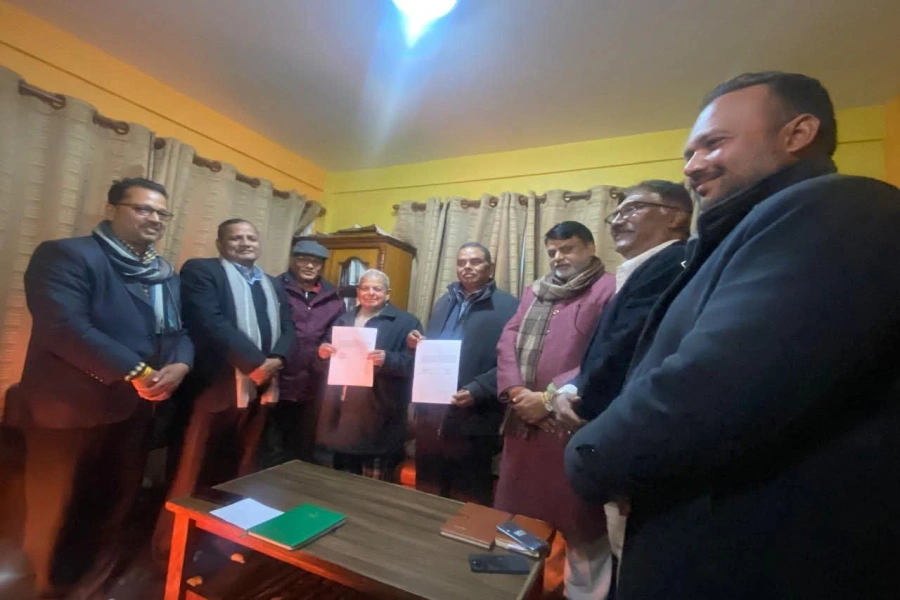
Lamichhane also said he plans to hold talks with the Ujyalo Nepal Party and its leader, Minister for Energy, Water Resources and Irrigation Kulman Ghising. RSP, Ujyalo Nepal Party, Shram Sanskriti Party and others are presenting themselves as alternative political forces.
Calling for unity among alternative forces, Lamichhane has been facilitating dialogue. Reports have suggested that Mayor Balen supports Ujyalo Nepal, though he has made no public comment. Ghising, who had met RSP leaders on several occasions, later registered a separate party after talks failed to make progress.
Earlier, RSP leader Pukar Bam had signalled possible cooperation among alternative forces through social media. As a member of RSP’s dialogue committee, Bam had held discussions with Ghising and other leaders. Following Lamichhane’s release from jail, prospects for consolidating alternative forces appear to have strengthened.
In a Facebook post, Bam questioned opposition to unity by citing Lamichhane’s imprisonment alone. He warned that similar allegations could be levelled against other leaders in the future, arguing that such reasoning would undermine any effort to build a united alternative political force.
Based on these developments, the likelihood of cooperation among newly formed parties appears to be increasing. Bam, who had earlier attempted to mediate between Ghising and Lamichhane, had failed in that effort.
The government is preparing to hold elections on March 5, and new parties appear to be actively gearing up for the polls. While the RSP has intensified its campaign, Minister Ghising has been touring the country using government resources, and Harkraj Rai has also been campaigning nationwide.
Just hours before the Lamichhane–Balen meeting, NC President Sher Bahadur Deuba met CPN-UML Chair KP Sharma Oli. Oli, accompanied by UML General Secretary Shankar Pokhrel, visited Deuba’s residence, though details of the meeting were not fully disclosed. The discussions reportedly centred on National Assembly elections, HoR restoration and the upcoming polls.
Following the Deuba–Oli meeting, NC and UML lawmakers submitted a supplemental petition to the Supreme Court, demanding restoration of the HoR.
The Gen Z movement of September 8 and 9—which led to the fall of the then NC–UML government and attacks on leaders’ residences—has put traditional parties under mounting pressure. Even the government led by Sushila Karki, formed with Gen Z backing, remains uncertain.
Confusion persists over the legitimacy of elections if NC and UML do not participate, while political parties themselves question the suitability of March 5 as the polling date. This has prompted renewed efforts to restore the HoR.
If new parties succeed in forging cooperation, traditional parties such as NC, UML and the Nepali Communist Party (NCP) may also move towards alliances. With dialogue intensifying on both sides, Nepal’s politics appears set for a contest between old and new forces in the coming elections.