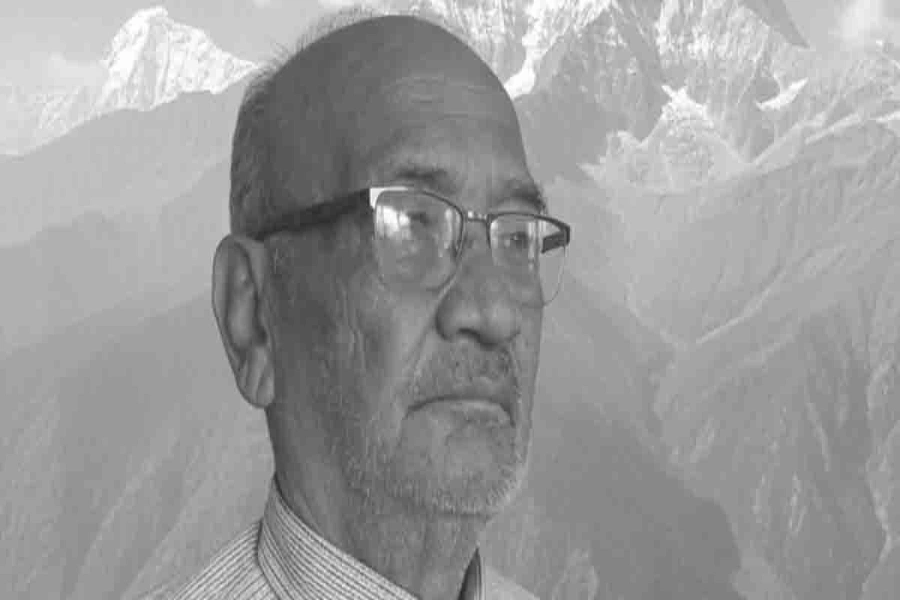
Judicial Council had forwarded a roster of three justices along with their seniority last week to the Constitutional Council. The roster had included Justice Girish Chandra Lal and Sushila Karki along with Shrestha.
Speaker Subas Nembang, emerging from the Constitutional Council meeting, informed that Shrestha has been recommended for the position. Before he is appointed chief justice by the president, Justice Shrestha will have to undergo parliamentary hearing.If the Parliamentary Hearing Special Committee endorses the council's recommendation, Shrestha would become the 24th chief justice of the Supreme Court. Shrestha, if appointed chief justice, will lead the apex court until the mid of the April, 2016.
Shrestha was born in Baglung in 14 April, 1951 and joined government service in 1972 as a local development officer. He joined the Supreme Court from 1974 to 1979 as a section officer and served as the district court judge from 1979 to 1983. He was under-secretary at the Ministry of Law and Justice from 1983 to 1985. He was judge at the zonal court from 1985 to 1990 and also served various appellate courts from 1990 to 2005. He then served as the chief judge of Jumla Appellate Court in 2005 before being appointed Supreme Court justice the same year.
Shrestha, who has completed post graduate diploma in international law and development from the Institute of Social Studies, Netherlands, also holds master's degree in Nepali literature and political science from the Tribhuvan University. He had completed bachelor in law from the Tribhuvan University in 1976.
Shrestha, who was on the 1990 constitution drafting committee, is the chairman of Justice Society Nepal. He is also the chairman of the SAARC Law, an organization of judges, legal practitioners and legal experts from South Asian countries.
Shrestha is the coordinator of a committee at Supreme Court that prepares strategic plans for judiciary. He was also the coordinator of the taskforce that drafted five codes, which are under discussion in parliament.
Shrestha has a reputation of issuing landmark verdicts. Providing citizenship rights to third gender, defining marital rape as well as preventing the first Constituent Assembly (CA) from inordinately extending its term, barring political cadres from securing nomination for 26 seats of the CA and curtailing discretionary powers of the Truth and Reconciliation Commission and Commission for Investigation of Enforced Disappearance are some of the landmark verdicts given by Shrestha.
Shrestha's career path
1972 - 1974: Local Development Officer
1974 - 1979: Section Officer at Supreme Court
1979 - 1983: District Court Judge
1983 - 1985: Under-secretary at Ministry of Law
1985 - 1990: Judge at Zonal Court Janakpur
1990 - 2005: Judge at various Appellate Courts
2005: Chief Judge at Jumla Appellate Court
2005 - till date: Justice at Supreme Court
Related story
Karki's 50-day tenure as Chief Justice: Can he fulfill his prom...