KATHMANDU, Dec 31: The powerful earthquake in April claimed over 9,000 lives and caused billions of rupees of damage to public and private properties.
Although many people had thought that the government would devote itself to the task of reconstruction and rehabilitation as soon as the initial chaos precipitated by the devastation receded, nothing of the sort happened.
Despite the fact that the quake struck in the early part of the year, no serious steps were taken toward reconstruction and rehabilitation in 2015. In a way, the year was a lost opportunity in terms of putting the nation and, particularly, the worst-hit areas back on track.
Even eight months after the disaster, over 600,000 earthquake victims in the 14 most-affected districts and several other places are still living in temporary shelters in the freezing weather.
Although the government recently appointed the chief of the Reconstruction Authority after several months of political bickering, the task of reconstruction and rehabilitation is still mired in partisan interests.
Soon after the disaster, the Sushil Koirala-led government held a donor conference to collect funds for rebuilding earthquake-ravaged infrastructures and resettling the victims. In the conference held on June 25, various countries and development partners pledged financial support of over Rs 400 billion to Nepal, which was 60 per cent of the estimated amount necessary for the overall tasks of reconstruction and rehabilitation. The Post Disaster Needs Assessment (PDNA) prepared by the government before the donor conference estimated that Rs 669 billion would be needed for the task.
Immediately after the conference, the government issued an ordinance for the establishment of National Reconstruction Authority. The way the government acted in the first few months gave hopes to the victims that the reconstruction and rehabilitation work would take place with similar urgency.
But the government was able to appoint the first head of the reconstruction authority only 111 days after the April quake as major political parties were at odds over whom to appoint the CEO.
Owing to the inter-party disputes, the authority was dissolved as the previous government couldn't replace the ordinance with a regular bill on reconstruction authority to be passed by the parliament within three months of the issuance of the ordinance.
The then major opposition UCPN (Maoist) showed reservations over some provisions in the ordinance and did not let the parliament endorse it. As a result, the ordinance expired, making the Authority defunct.
On August, a bill on the Authority was tabled at the parliament. But the wrangling among major political parties, including Nepali Congress, CPN-UML and UCPN (Maoist), delayed its passage.
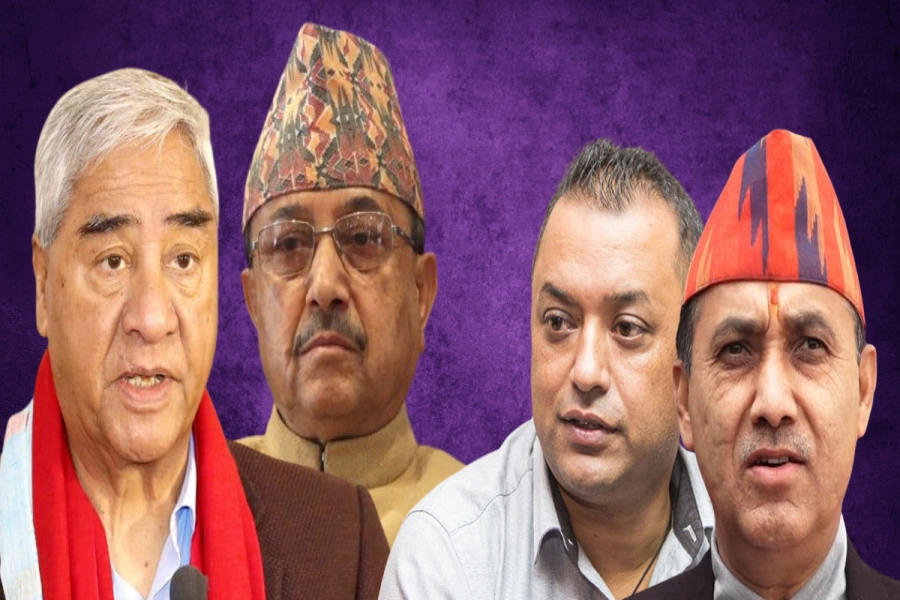
While Nepali Congress was for giving continuity to the same CEO appointed by the then Koirala-led government, CPN-UML and UCPN (Maoist) were for formulating new act that would require appointing a new CEO.
As it took a long time for the bill to get endorsed, the government decided to entrust National Planning Commission (NPC) to oversee the tasks related to reconstruction and rehabilitation until the authority was formed and a new was CEO appointed. But as it was not mandated to carry out real tasks of reconstruction and rehabilitation, the NPC was limited to carrying out only administrative tasks.
The major political parties, especially the NC and the CPN-UML, continued to bicker over the appointment of the chief of the authority who would enjoy sweeping powers while carrying out the reconstruction of the quake-ravaged infrastructures such as heritage sites and public and private buildings.
The reconstruction authority bill was passed on December 17 after major political parties reached a deal, paving the way for carrying out the tasks of reconstruction and rehabilitation.
On December 25, a week after the endorsement of the bill, the government appointed Sushil Gyewali as the CEO of the authority. But Gyewali himself has said that it will take some time for the authority to begin the tasks of reconstruction and rehabilitation as the body is yet to recruit staff and formulate necessary regulations in accordance with the relevant bill endorsed by the parliament.
Related story
People not building quake-resilient houses