



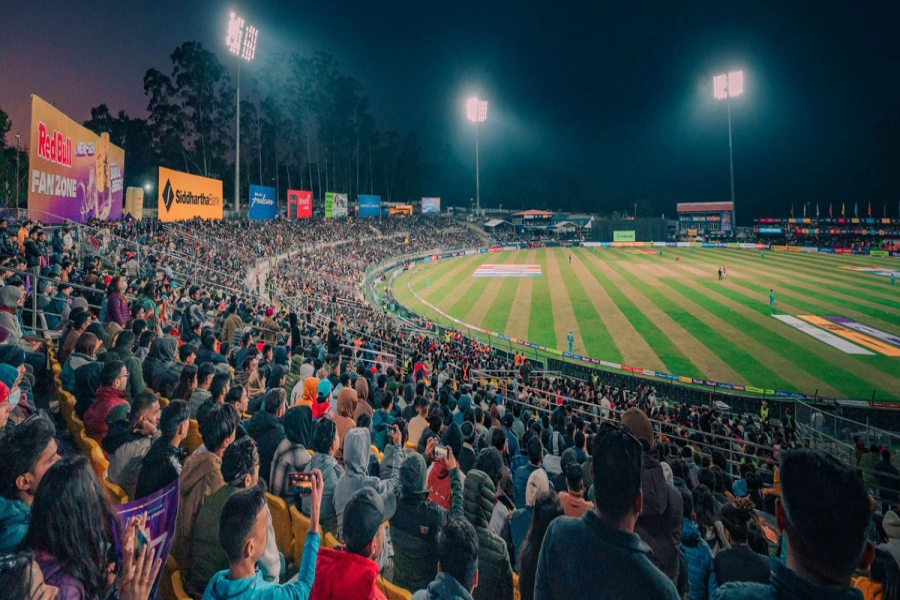
KATHMANDU, April 3: With the clock ticking on a 25-year agreement, uncertainty looms over the future of Nepal’s premier cricket venue—the Tribhuvan University International Cricket Ground.
The lease agreement between Tribhuvan University (TU) and the Cricket Association of Nepal (CAN), signed on April 14, 2002, is set to expire on April 15, 2026. With just days remaining, TU has made its position clear: it will not renew the deal under the current terms.
At the center of the dispute are disagreements over rental provisions and broader concerns about institutional interests. The TU Cricket Association has called for a comprehensive review, warning that failure to reach an agreement could disrupt Nepal’s cricket calendar.
“We are not trying to put the sport or players at risk, but the agreement must move forward properly,” said Anil Adhikari, former president of the TU Cricket Association and director at the Bagmati Cricket Association.
TU argues that cricket activities at Kirtipur frequently disrupt academic operations. Despite heavy government investment in the stadium—including a 10,000-seat capacity, floodlights, and a multi-billion-rupee master plan—the university says it has been sidelined, even though it owns the land.
Tribhuvan University cricket ground to be built as an internati...

It has also raised concerns over revenue transparency, alleging that income and royalties generated from the ground have not been properly accounted for, allowing irregularities to persist over the years.
CAN, however, maintains that it has fulfilled its obligations. The board says it has been paying rent as per the agreement—initially Rs 300,000 annually, later increased to Rs 900,000.
“We are keen on renewing the deal and are still in discussions,” said CAN central member Durga Raj Pathak. “We will sit with the university and work this out.”
Under the existing agreement, CAN pays Rs 300,000 for land use, Rs 200,000 in scholarships for TU students, and Rs 100,000 for university sports activities.
Still, TU says the arrangement no longer reflects the scale and commercial value of modern cricket.
“Our goal is to integrate education and sports, but the lack of serious engagement from CAN forced us to submit a memorandum,” Adhikari said.
The university’s seven key demands are:
- Revenue Share: Review the existing agreement and ensure TU receives a share of income and royalties to support sports science and development.
- Judicial Probe: Form a committee to investigate alleged irregularities in tournaments such as Nepal T20 and NPL.
- Seat Allocation: Reserve 30 percent of seats for TU students, faculty, and staff during matches, with proper ticket and pass management.
- Cricket Development: Provide grants, equipment, and coaching support to TU’s cricket team.
- Research Funding: Allocate revenue from the ground for sports science research and development at TU.
- Security & Management: Ensure proper management and safety during large-scale tournaments in coordination with all stakeholders.
- Noise & Academic Environment: Form a joint committee to scientifically manage noise and disruptions without affecting TU’s academic environment.
The issue has now reached the National Sports Council (NSC), where TU has submitted its memorandum. Member Secretary Ram Chandra Mehta said the council is ready to facilitate dialogue.
“We are positive about resolving this issue and will soon bring both sides together,” he said.
The stakes are high. The TU ground remains Nepal’s most well-equipped cricket venue and has hosted most major domestic and international fixtures. With newly installed floodlights, it is currently the only ground capable of hosting day-night matches.
Nepal is also scheduled to host ICC Cricket World Cup League 2 matches at the venue, although the fixtures are yet to be announced. If the agreement lapses without renewal, those matches—and others—could be forced to shift elsewhere, dealing a blow to the country’s cricketing ambitions.
Despite the standoff, both sides signal willingness to negotiate. CAN is expected to discuss the issue in an upcoming board meeting, while TU says it remains open to a new agreement—provided its concerns are addressed.
“The TU cricket ground is a matter of national pride,” Pathak said. “We are optimistic. This will be resolved through dialogue.”
For now, however, the future of Nepal’s cricketing hub hangs in the balance.





