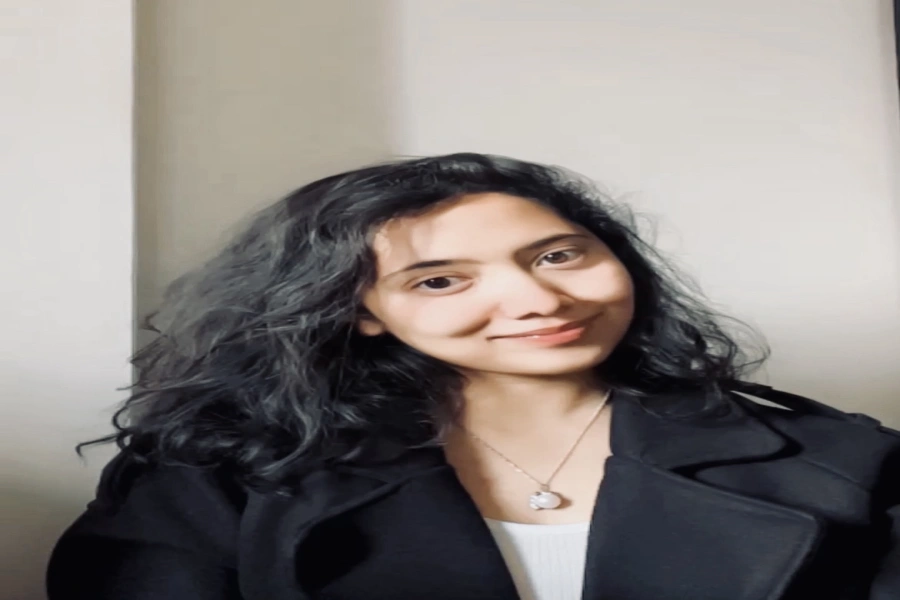
The children of SOS Nepal have been practicing for the play “Tapu” for the last couple of weeks. Prior to that, they were involved in a workshop and then understanding the characters for almost two years with Suman Rayamajhi.[break]
Rayamajhi, 28, a theatre actor, has worked in 12 plays and directed three others. This is his fourth play and the third featuring child actors.
“It’s kind of difficult to explain what the story exactly is. There are a lot of layers. I would like to call it a journey,” says he. The play is a journey that children take to a magical land where they learn life lessons. “It’s a bit complex because it has factors such as capitalism in it. But I’m convinced that there’s something for each age group that comes to watch the play,” he explains.
“Tapu” includes Diya Maskey’s choreography, Night Band’s music set and light design by Bimal Subedi; costume, props and make up by Deepti Sherchan, and Binita Adhikari is an assistant director. Its release on May 2 will also mark the inauguration of Theatre Village, a new theatre house, in Lazimpat. The play will be held for 10 days.
The play features 15 children from eight to 14 years of age. Among the only two adults involved in it, one is Bhola Raj Sapkota – of the “Barfi” fame – and the other being Rayamajhi himself, as the narrator.
The play was inspired by a line from Indian theatre personality Sudhanva Deshpande’s “Bahut Raat Ho Chali Hai.” “The line spoke of a magic island where there is an abundance of all things that children love, a guardian who takes care of them,” he says. Taking the concept further, the script was materialized by Ayush Niroula. “We added subplots as time went on,” says Rayamajhi.
The two years spent in workshop, choosing the actors and the months of explaining and convincing each child of his character was a challenging experience for him. “There have been fun moments, but there were equally challenging moments where I almost gave up. The most challenging part is to have the children hold on to their characters. They do really well when they’re saying their dialogues but, like all children, they get bored easily. They laugh sometimes. I don’t want children just acting for the sake of it. I want actors. I think they’re getting better each day, and I’m hopeful they’ll be very good when it’s time to perform on stage,” he says.
He devised a way to hold their attention by making them dream. He says, “I told them that with the play they have a chance to be someone else and have a different life. There will be a lot of people coming to watch them. Their life is always going to be there but this will only be for a few days.”
The children are boisterous, but when the director calls out, they immediately quiet down and slip into their characters. They’re not self-conscious. When asked if they feel shy, they reply negatively, explaining that they’re all brothers and sisters. What about in front of the audience? “We won’t see them,” is the cheeky reply.
The children call out to him to start with the rehearsal. “There was a time when I had to call them,” remembers Rayamajhi fondly, “But over time, they’ve come to have fun and now they remind me.”
The workshop started with 30 children and Rayamajhi picked up the 15 who showed potential. The rest are still eager to join in. They peep in through the window and watch the rehearsals.
Rayamajhi had worked with children in two other plays, ‘Green Finger’ and ‘Inside the Brain.’ For the first play, he brought in five visually impaired children from Laboratory School to act for him in a motivating story of youth, and in the second one, Rayamajhi had children from Prisoner’s Association Nepal to present the psychological impact on their upbringing.
The way to deal with children is to scold them, love them and make them dream in equal measures, he says. “I want to believe that with this play they’ve started understanding things better. This is because I’ve taught them to understand their characters in depth and I hope this helps them in their daily life,” he says.
What is it, the theme that binds his works? “‘Bhogaiko yatra.’ I’m attracted to stories that have a life-changing element in them. I think everyone’s life includes one important life-changing event. I also make short movies and there’s a similar element in them, too. I like it when the character undergoes an extreme experience. He should change. I want him to cross the threshold and I will follow him till he does,” he shares.
Related story
Worth of stories