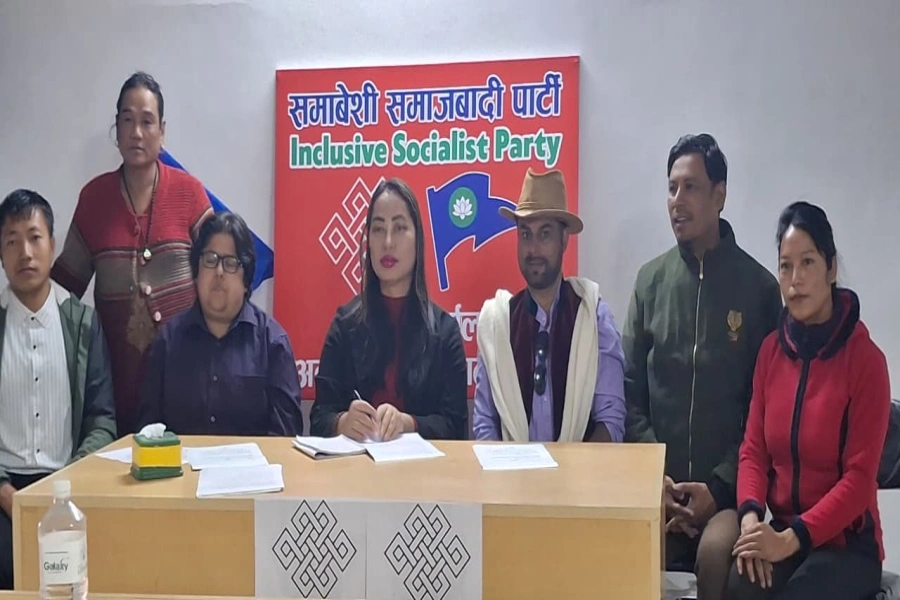
KATHMANDU, Dec 12: The Samabesi Samajwadi Party (SSP) on Thursday unveiled an ambitious election manifesto calling for a new political model it terms “Cybernetic Democratic Federalism,” which seeks to shift real state power from Singha Durbar to citizens and local governments.
Formed by Nepal’s LGBTIQ+ community along with other marginalised groups, the party says this new model envisions Nepal functioning as a people-centred system where leaders act as facilitators, local governments hold full sovereignty, and the federal state limits itself to broad policy direction. The party says its idea of “cybernetic” refers to a governance structure driven by continuous public feedback and technology-enabled participation.
The manifesto promotes a compassionate leadership style and a “care-based economy,” arguing that municipalities should serve as guardians of citizens’ wellbeing. It promises financial autonomy for local bodies, granting them control over more than 65 per cent of national resources while reducing federal authority to policy guidance and major national responsibilities.
Rastriya Janamorcha unveils election manifesto with agenda to a...

A major feature is a proposed “liquid voting platform” allowing citizens to vote directly on policies or delegate their voting power to experts on specific issues. The party believes this will increase transparency, curb corruption, and make governance more participatory.
To address discrimination faced by Dalits, women, Madhesis, LGBTIQ+ communities, and persons with disabilities, the manifesto introduces an intersectional quota across state and party structures. It also proposes rotational leadership to prevent power concentration and promote leaders who serve rather than command.
Environmental justice is presented as a central pillar. The party commits to circular economies, strong local stewardship, and a shift away from what it calls patriarchal and destructive global development models. Presenting the manifesto, Party President Numa Limbu (Chanchala) said development should be measured in compassion and care, and that technology must empower rather than control citizens.
General Secretary Manindrasingh Danuwar said the party represents a historic political initiative led by gender-diverse groups, persons with disabilities, and women from the entertainment industry. He announced that the national assembly unanimously elected transgender rights activist Numa Limbu as party president and credited Sunil Babu Pant, former Constituent Assembly member and prominent LGBTIQ+ advocate, as the party’s guiding figure.
Positioning itself as an alternative to patriarchal politics, extractive development, corruption, and outdated thinking, the party says Nepal needs a homegrown development model rooted in balance between humans and nature. It argues that shifting towards participatory democracy—where citizens directly help shape policy—is the only sustainable way to prevent corruption and political intimidation.
The Samabesi Samajwadi Party has urged gender-diverse and sexual minorities, persons with disabilities, women in entertainment work, youth, farmers, workers, and all conscious citizens to participate openly. Provincial and district committee formation is underway, and liaison offices will open in all seven provinces. The party plans a nationwide social media campaign and says the enthusiasm of marginalised communities is its greatest strength.
Party spokesperson Pritika Chapagai said the organisation will contest both proportional and direct seats, promising accessible healthcare, education, and justice at the municipal level while confining Singha Durbar’s role to diplomacy, foreign currency management, and military mobilisation. She said the party prioritises a green economy based on Nepal’s ecological identity.
The Inclusive Socialist Party welcomed the agreement between the government and Gen Z representatives, urging swift implementation.