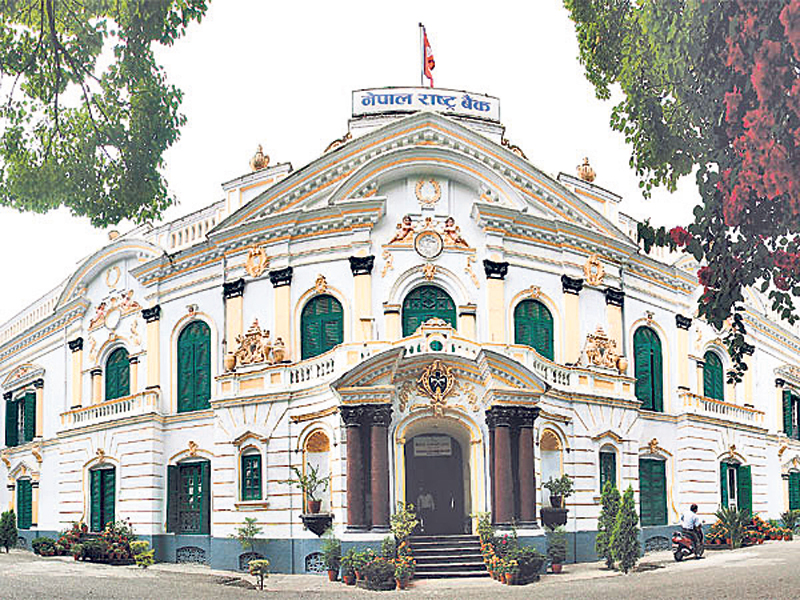
IMF mainly expressed concern over the limited tools available for NRB - the central monetary authority -- in managing crisis. Currently, the law allows the central bank to liquidate insolvent banks and financial institutions (BFIs). But if crisis surfaced, IMF officials said mere single tool of liquidation will not help safeguard the financial system.[break]
“The NRB will need to adopt a number of intervention actions for effective results and that demands stronger intervention powers than what the law provisions at present,” said John Nelmes, deputy division chief of Asia and Pacific Department of IMF.
Referring to experiences in the wake of 2008 global financial crisis, Nelmes said governments of many countries have empowered their central banks to execute forceful mergers and closure of BFIs, and create new and bridging banks.
If risks deepened, IMF officials said the NRB might need to create a bridging bank wherein it could transfer deposits and assets of troubled institution to safeguard them. “It might need to adopt other tools too to safeguard the financial system. The law in Nepal should allow the central bank to do that,” said Nelmes.
Nelmes, who was in Kathmandu for the two-week long Article IV review, met top government and NRB officials, and private sector representatives. He suggested the NRB not to provide liquidity support to all the BFIs at this juncture.
“Liquidity crisis that hit Nepali financial system is just a symptom, and not the root cause of the problem,” he said, adding that the root of the problem lies in excessive exposure of BFIs to the real estate sector.
“The problem surfaced because an asset price bubble has burst,” Nelmes said, suggesting the NRB to provide liquidity support to only the well-capitalized institutions.
Talking to media persons at the end of the mission, Nelmes on the day said Nepal faces immense challenges on the macroeconomic front as well.
IMF mainly expressed concerns over slackening of non-agricultural sector and high inflation. “Sharp turnaround in balance of payment, from deficit to surplus in 2010/11, is a welcome development, but latest problems in the United States and the European countries could affect Nepal in terms of exports and remittances receipt in the new fiscal year,” said Nelmes.
Given such apprehension, IMF has projected Nepal´s GDP growth in the new fiscal year to remain below 4 percent. The projection is lower than the government target of 5 percent.
IMF has also expressed wariness over government´s optimistic revenue target. If the target is missed, IMF says the government may mobilize additional domestic borrowing, thereby violating prudential norms of limiting such borrowing at 2 percent of GDP.
“To avoid such situation, we have suggested the government to develop contingency plan and prioritize spending to match with resources,” said Sanjaya Panth, IMF´s senior representative to Nepal and India.
The IMF mission also raised serious concerns over soaring oil loss and strongly recommended the government to adopt automatic pricing mechanism.
Related story
Revised interest rate corridor system introduced