



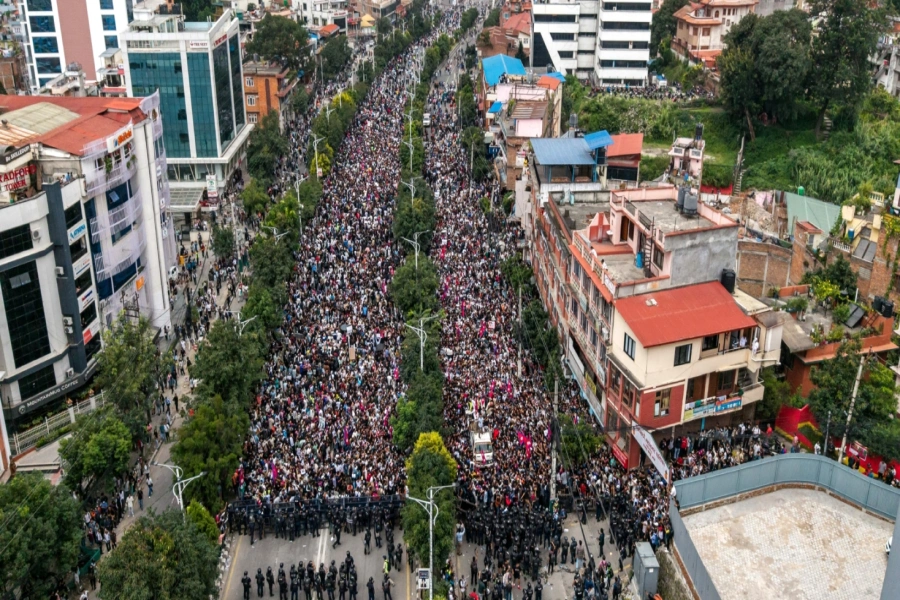
KATHMANDU, Dec 9: Amnesty International (AI) has concluded that Nepal’s security forces committed unlawful killings and repeatedly used unnecessary and excessive force during September’s youth-led “Gen-Z” protests, leaving at least 76 people dead and more than 2,000 injured across the country.
The report, titled “We Went There to Raise Our Voice, Not to Be Killed: Nepal’s Deadly Crackdown on Protesters,” documents what it describes as systemic failures in policing, including the reckless use of live ammunition, dangerous deployment of less-lethal weapons, and widespread violations of international human rights standards.
According to the AI report, the protests in Kathmandu on 8 September began peacefully but escalated after a group of demonstrators dismantled a police barricade less than 500 metres from the federal parliament building. Security forces responded with high-pressure water cannons fired at close range, a tactic Amnesty says raised serious concerns about proportionality and necessity. Eyewitnesses described growing panic as security forces intensified their response, launching tear gas grenades from elevated positions — a practice prohibited under UN guidelines — and even firing gas in and around hospital premises, affecting patients, including children and the elderly, and disrupting emergency medical care.
Amnesty International calls on Washington to investigate UAE ‘w...

The report states that police also fired rubber bullets and rubber-coated metal bullets directly into dense crowds without warning or attempts at de-escalation. Among the injured were teenagers as young as 14. Doctors who treated the wounded told Amnesty they had removed rubber bullets from patients’ skulls, describing injuries far more severe than typically seen in crowd-control situations.
AI found that the use of less-lethal weapons violated multiple international standards, including the UN Basic Principles on the Use of Force and Firearms, the UN Human Rights Guidance on Less-Lethal Weapons, and Nepal’s own legal obligations.
However, the organisation’s most serious allegations relate to the unlawful use of live ammunition. According to the report, security forces opened fire in situations that posed no imminent threat to life, shooting into crowds that included protesters, bystanders, journalists and children.
A journalist near the main parliament gate told Amnesty: “The firing began wildly — from inside the parliament compound, from outside, and from armed units near the main gate.” Doctors recounted treating gunshot wounds to the head, chest and vital organs. One physician said the pattern of injuries resembled a mass-casualty disaster: “Typically we expect 10–20% severe cases. But this time it was reversed — perhaps 50–60% were severe.” Another doctor described the emergency ward as “blood everywhere… It felt like a butcher’s house.”
According to AI, the two days of protests and the six days of unrest that followed left at least 76 people dead and more than 2,000 injured nationwide. Amnesty concluded that many deaths amounted to arbitrary deprivations of life, stating that the “deliberate or reckless” use of live ammunition, rubber bullets, water cannon and tear gas against largely peaceful demonstrators “cannot be justified under any circumstance.”
Nirajan Thapaliya, Director of Amnesty International Nepal, said the government’s response reflected “a shocking and callous disregard for human life.” He added: “All those responsible for ordering, enabling or carrying out these abuses, regardless of rank or position, must be brought to justice through a fair and transparent process.”
The report argues that the deadly crackdown was enabled by longstanding failures to hold security forces accountable for protest-related abuses. Amnesty warns that unless the government undertakes urgent reforms in policing practices, strengthens oversight mechanisms, and ensures that the use of force complies with international standards, similar tragedies are likely to recur.
Thapaliya said the young people killed and injured during the Gen-Z movement “deserve truth and justice,” adding that impunity has allowed violations to persist and eroded public trust. According to Amnesty, Nepal must ensure that investigations are independent and transparent, and that justice is delivered for victims and their families.





