Every monsoon, our country is hit by the diarrhea epidemic but so far nothing significant has been done that could prevent its recurrence. On scrutinizing the latest emergency response, it is clear that we are not at all prepared for emerging global pandemics such as swine flu—how can we address the menace of epidemics like swine flu when we get shaken by an easily curable disease such as diarrhea?
We saw a couple being charged a staggering Rs 2,000 for a single packet of ‘Jeevan Jal’ and a few antibiotic tablets.
To me, as a part of the relief team sent by the Nepal Medical Association (NMA) in Jajarkot, it was very clear that feeble management was the prime culprit behind the spread of the disease. Due to problems of co-ordination at the local level, the relief team could not be deployed at the affected areas for four days. After many endeavors, the team was deployed in various parts of Rukum and Jajarkot, namely Bhagawati, Dashera, Bhure, Khalanga, Archane, Gukhakot and Majhkot. Initially, the team faced lots of challenges as there was no definite protocol to administer uniform treatment and no means of communication for feedback or demanding access to more medical personnel and resources.
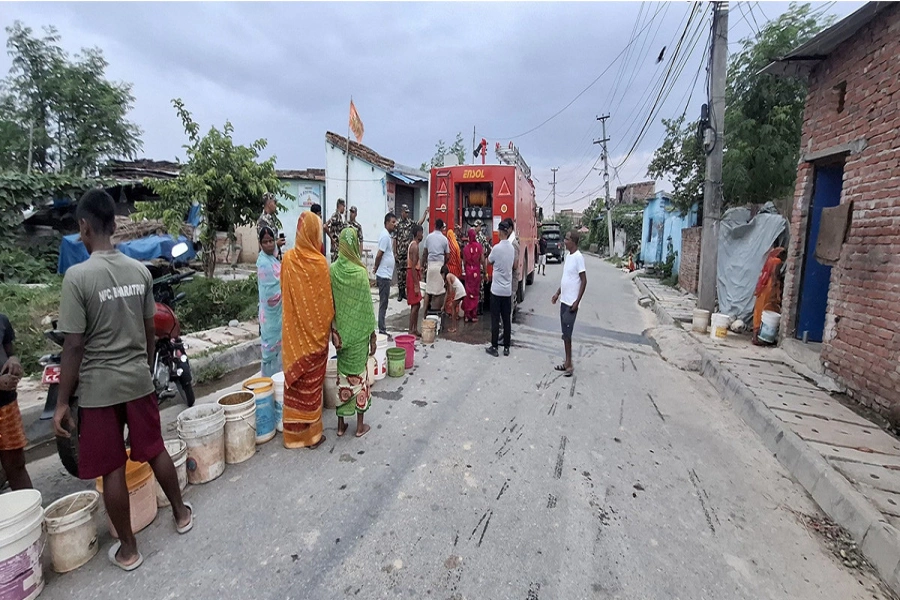
Also, during the course of our treatment, we found that locals were mostly unaware about basic sanitation practices such as boiling drinking water, washing hands before preparing food and after defecation. We noticed that most of the sources of water supply were polluted with faeces, the major source of infection.
We also saw a young married couple being charged a staggering Rs 2,000 for a single packet of ‘Jeevan Jal’ and a few antibiotic tablets. A few individuals charged Rs 500 for a bottle of ringer lactate, which is distributed free by the government.
To make matters worse, the affected areas have been hit hard by the food crisis. The local people rely mainly on subsidized food supplies most of which, they believe, is contaminated. However, this hasn’t been independently verified. It is essential to supply quality food and pure drinking water to meet the nutritional needs of the starving populace.
When I was there, no deaths were reported among the cases treated in the health camps. Almost all deaths occurred at home among those unable to reach the health camps on time.
Media, civil society, district representatives of various political parties, volunteers and the Nepal Army lent a helping hand but the most important part can be played by door-to-door campaigns, which, sadly, is difficult due to logistical limitations.
In the long run, preventive measures, focused awareness campaigns, waste and safe drinking water management and mobilization of local resources through local health personnel are essential, together with curative services. The Ministry of Health and Population (MOPH) has to ensure sustainability of the medical teams deployed in an outbreak area with incentives, food guarantee and shelter, so that they don’t just stack up in the capital.
Emergency Disaster Management Team (EDMT) should be deputed to manage such crisis for which the government should allocate budget for doctors, paramedics, medicine supplies and transportation of human and other logistics. The EDMT should be decentralized in the districts to be coordinated effectively during the time of emergency. Health posts should be well-equipped and accessible to everybody. The focus should not only be on in-hospital care but also on pre- and post-hospital care to avoid delay in treatment.
Notwithstanding the shortcomings, innovations on policy and regulation front and creation of a common platform for various agencies to work efficiently are some appreciable gestures on the part of the government. But the implementation is poor as the mechanisms to translate these strategies into actions are not robust enough.
These obstacles must be overcome to materialize the slogan “Health for all”. Remembering the past is not enough: Taking lessons is extremely important. It is the only tool we have to make our future response more rapid and effective. As long as substantial preventive reforms are not made in health strategies and plans, it will not be long before another such epidemic strikes again.
(Writer was a member of the Nepal Medical Association team that was deployed in Jajarkot.)
reena_pink@hotmail.com
Related story
Coliform behind diarrhea epidemic in Nainhi village