The problem here is above and beyond what a few media houses ought or ought not to do. The nub of the issue lies in how ‘national interest’ is perceived in Nepal’s domestic and foreign policy. Somehow we seem to believe that “anti-China activities” and “dignified treatment of Tibetans” are mutually exclusive. As barter for aid from China, we are willing to go to any extent to terrorise and ‘pacify’ Tibetans.
China’s problem with Tibet has historical roots, and both sides have fair points. However, most nations adhere to One China policy, including India, China’s main adversary in the region. It needs to be kept in mind that even moderate Tibetans do not dispute One China stand if Tibet gets enough autonomy. Nepal has neither the diplomatic clout nor economic mettle to break free from or oppose One China policy. However, a dignified treatment of the Tibetan diaspora with temporary legal documents so that they can be treated at par with foreigners, and provisions for repatriation into a third country, would at least prevent Nepal from being called a client-state of China. Moreover, it would ensure Nepal’s commitment to human rights and international law.
Nepal should have explored multiple avenues to capitalize on China’s impressive economic growth but so far we have relied almost exclusively on detaining Tibetans as the foundation of our China diplomacy, apparently to reap economic benefits of China’s rise. The inability of Nepal to realign its foreign policy posturing with the changing times has stunted Nepali-China policy to a mere perpetual begging bowl syndrome.
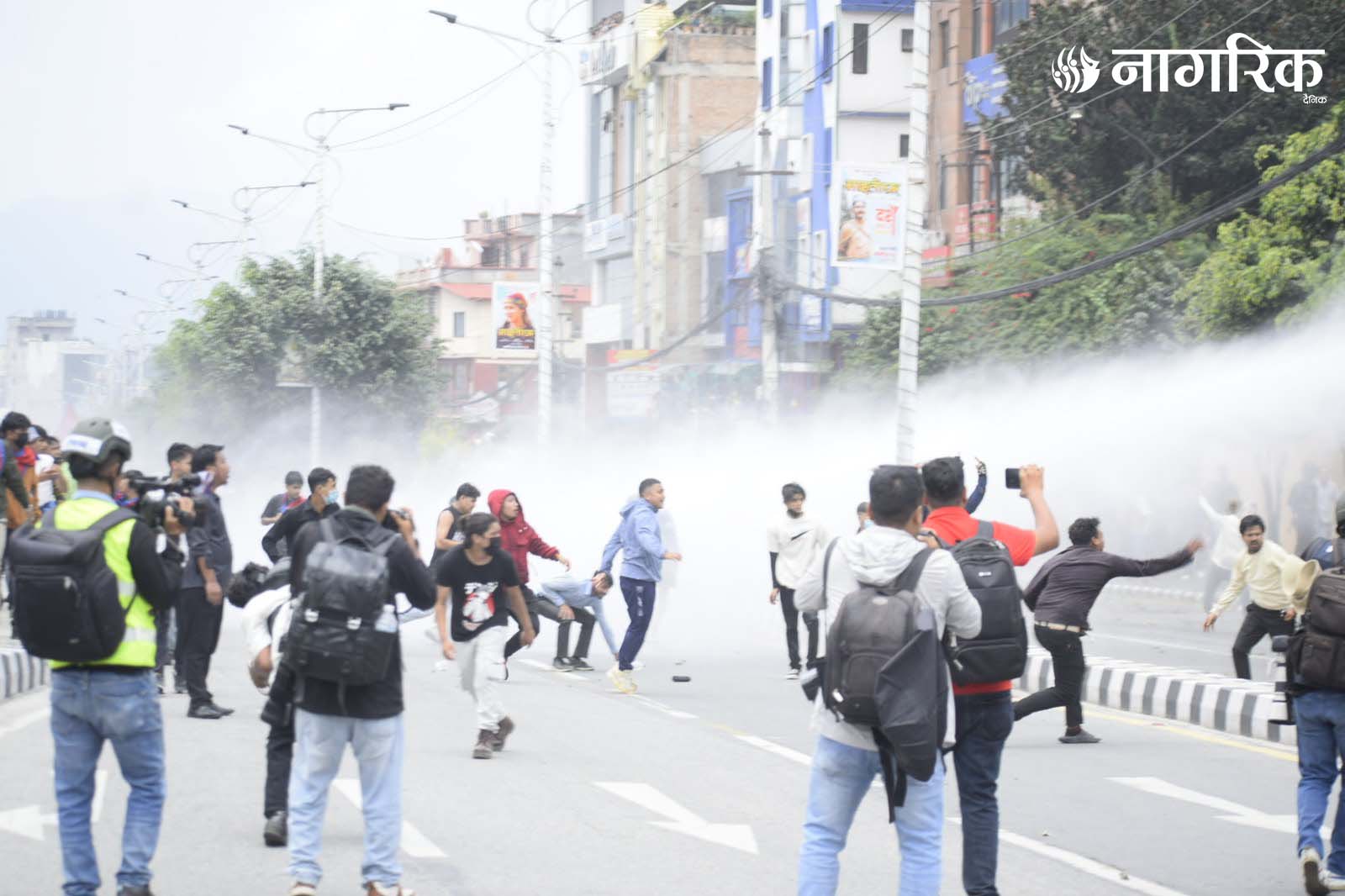
Self immolations, demand for religious freedom, and international calls for respect of human rights with regard to Tibetans peaked in the period before the Chinese Premier’s proposed visit. Moreover, 200 plus Tibetans were detained by Nepali Police as they were reportedly trying to cross the Himalayan Tibetan frontier into Nepal while the Premier landed in TIA. Expectedly, it raised fears of another cancellation.
With its policies dissociated from socio-cultural realities Nepal has a hard time curbing Tibetan protests despite its avowed One China stand.
Despite ardent espousal of the One China policy, Nepal has had a hard time curbing Tibetan protests. This is because our China policy is dissociated from our domestic, socio-cultural realities—one of them being that we host 20,000 Tibetan refugees across 12 settlements in Nepal. The Chinese on the other hand should have realized with the events in Myanmar that a mere “chequebook diplomacy” discounting political risks is not likely to reap better outcomes.
Nepal’s policy of appeasement might go on but it cannot control the life, religion and culture of the Tibetans that have embedded in the Nepali society for decades. This would, in the long run, threaten the existing harmony. Arbitrary arrests, whenever we have state visits from China, shall motivate a culture of impunity where the security authorities have a free hand in the name of “misusing the Nepali soil for anti China activities”.
This is not to suggest that we should overlook China’s security fears or vouch for Tibetan autonomy/independence. But our own experience, in recent times, shows that the harder our government is on Tibetans, the graver the situation becomes regarding self-immolations and protests. A more relaxed approach might be a better way to ensure strengthened security for China vis-à-vis Nepali frontiers. There are sceptics who would say that we cannot bargain with China on the issue of Tibetans. But the question is: have we even tried to put the issue on the table?
From a country obsessed with internal growth to a country whose arms have been flexing to the far corners of Africa, China has made international engagement its dominant feature these days. However, it is a double-edged sword. China faces a dilemma between its quest for economic gains (often against principles of international law) and reforming its global image. Its concerns about internal security seem to trespass into other countries when it comes to controlling Tibetans outside Tibet, as in the case with Nepal. This runs counter to the Chinese insistence on non-interference as the bedrock of its foreign policy.
Although non-interference in Nepali politics has earned China a popular opinion among Nepalis, indifference to Nepali socio-cultural realities might erode that hard-earned goodwill. While China, recently, has helped Nepal enhance its diplomatic bargaining vis-à-vis India, we would do well to recall that China was the only country to supply arms to King Gyanendra to suppress the Maoist insurgency when India, the US and the UK had refused to provide any such help. And public memory is, often, not short lived.
China needs to realise that with increased power comes increased responsibility. On its journey to the superpower status, it needs to define its core interests and delineate limitations. Being too hard on Nepal in pushing the Tibetan issue might backfire on the Chinese. This is not to reinforce high sounding moral rhetoric but to prevent ruptures in its international engagement and add to its opposition in the region. A softer approach in dealing with Tibetans within the ambits of its One China policy, coupled with emphasis on infrastructure development, is needed. This would help elevate China’s global image of being a responsible player, and also give it a more sustainable leverage in Nepal.
Lastly, Wen Jiabao thanked Nepal’s government for its adherence to the One China policy. However, how realistic is that adherence in a country that has close cultural, social and ethnic ties to Tibet? The embarrassment is complete if we realize that a country that has recognised the state of Palestine remains silent on violence upon Tibetans. That silence is deafening.
(Note: We are aware of our limited alternatives in foreign policy design with China. However, this article wishes to raise a discussion via Republica on how our foreign policy can evolve to accommodate contradicting interests. Discussion on “One China” policy is endorsed by the Government of Nepal. But, as rational political beings in a democracy, it is essential to discuss, analyse and not bracket opinions into simplistic dichotomies of pro-China or anti-China.)
The writer is a graduate in International Relations from Jawaharlal Nehru University, New Delhi
adhikarimonalisa@gmail.com
Related story
Side effects from COVID-19 booster shots more common than from...