The globalization of the world economy with the liberalization of trade in goods, services, investment and capital affects countries in different ways, ushering in changes in the traditional methods of doing business and at the same time, creating a compelling situation of competition in the international market. Gradual dismantling of barriers to trade and investment enhances market access on the one hand, and poses a challenge to developing and least developed countries of sustaining the level of export and investment on the other. Thus, countries need to create a competitive business environment in the domestic market in order for them to be able to cope with the challenges of competition in export markets.
 Ensuring healthy competition in the economy is imperative as it assures one of predictability and fairness in doing business, which helps in building confidence among potential investors. Various countries have adopted competition policies and have promulgated acts and regulations to check unfair trade practices.
The Nepali consumer, however, has fallen prey to the anti-competitive behavior of various businesses, producers, distributors, retailers and service providers. The situation has worsened over the past decade because of constant political instability. Cartels and syndicates raised by transporters, distributors and retailers of petroleum products, agricultural goods and vegetable vendors largely harm the common consumer and low income groups.
Various transport corridors across the country have been captured by transporters’ syndicates who fix their own prices for transporting goods and do not allow new entrants to operate in the corridor they ‘control’. A case in point being the transportation charges between Tatopani and Kathmandu highway, which are ten times the normal rates for a truck load of cargo.
In the highways and road network in the far western region, there have been several clashes between the truckers and goods traders as the latter demand fair competition in transportation of their goods to the interiors of the region.
Nepal was recently a witness to the open cartel behavior of LPG bottlers as they resorted to strikes and halted the bottling and distribution of cooking gas to the despair of a large number of consumers, to demand a higher profit margin for themselves. The government was forced to enforce the Essential Commodity Act, 1956, which allows the government to imprison the offender for obstructing the supply of essential goods.
Similarly, middlemen in the wholesale vegetable market in Kalimati are making handsome profits by fixing exorbitant retail prices, the burden of which falls on consumers. Farmers, however, are deprived of a fair price for their produce and are compelled to sell them at lower prices. These are just a few of the many cases of anti-competitive trade/economic practices in Nepal.
The Parliament of Nepal passed the Competition Promotion and Market Promotion (CPMP) Act in 2006 and the government of Nepal introduced competition regulations in 2009. However, implementation of these legislations continues to remain slack as the unfair behavior of businessmen and traders has only risen in the past few years. There is growing tendency among traders and industries to organize themselves into associations, which basically become cartels, in the name of protecting the rights and interests. Some of the worst forms of such behavior are tacit fixing of prices by sellers or distributers in the distribution of goods and services, creation of syndicates in the transport sector and allocation of markets by imposing the queue system, while rigging bids.
All these are unacceptable since they limit the consumers’ choices and compel them to pay higher charges without any justifiable reason. The substantial increase in the price of rice and sugar by importers and distributers recently without a valid reason is such an example. The market inspection and monitoring by the department of commerce and supply management reveals that traders cheat consumers in weight and measurement by doling out less quantity, providing adulterated food and selling food items even beyond their expiry date.
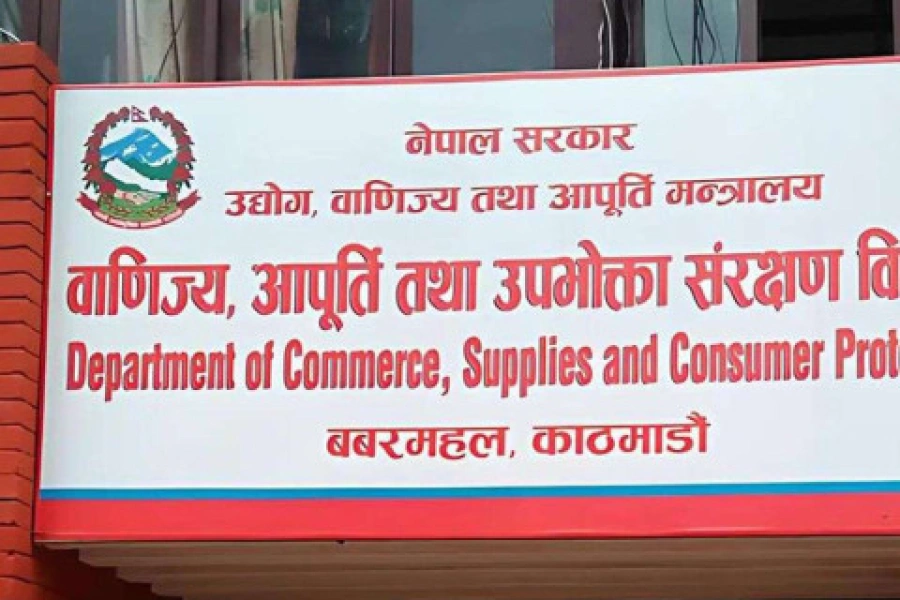
The effective implementation of the CPMP Act is the remedial instrument that can tackle this issue. It, however, requires political will and commitment to punish unfair trade practices and promote healthy competition. This is contingent upon the capacity of law enforcing agencies, particularly the department of commerce and supply management, department of food technology and quality control and the department of transport management. The current organizational structure of these departments needs to be modified to include an adequate number of inspectors and market protection officers to deal with the anti-competitive behavior of firms and enterprises.
Training and skill development and sharing of experiences of best practices elsewhere are important ways of dealing with burgeoning market failure issues. Besides, provisions of some of the existing acts and regulations need to be reviewed and revised to include stringent penal standards to discourage such behavior. The competition act merely provides for imposing a fine in cases of such offences.
It is natural for traders and businesses to seek to maximize their benefits, but it is the task of the regulatory authorities to ensure they do not infringe upon the prevailing law of the country, and do not burden the consumer. This, on one hand, calls for building necessary organizational and legal infrastructure for enhancing the enforcement capacity of the government and on the other, requires the collaboration and cooperation of business organizations to help them adopt sound business practices. Public-private dialogue between the government and representative businesses and traders’ forums should include a component of promoting healthy competition among producers and suppliers of goods and services.
There are several cases of unfair business practices that have come to light only after being highlighted by some conscious consumers. Hence, consumer education and awareness on a wider scale should be a part of such reform initiatives. Well informed consumers are in the best position to assert their rights, ensuring the market functions properly.
The author is former secretary, Ministry of Commerce and Supplies
puruojha@gmail.com
Related story
Cooperation for trade