For the first time in the last three decades of gharial breeding history, the first lot of gharials that have been trained to catch live fish inside the center would be released in the rivers within a month. "About 50 gharials that have been kept in a separate pond and are being trained to catch live fish will be released in the rivers by the end of next month," said Bed Bahadur Khadka, assistant conservation officer, Chitwan National Park who is also an expert on gharials.[break]
A pond has been dug near the breeding center where the fish are grown and each day live fish from the pond are released in another pond where gharials have been kept. "We cannot feed all gharials live fish as we don´t have enough fish now so the group that will be released in a month are now being trained to prey on live fish," added Khadka.
According to him each day 8 to 10 kg of fish are captured from the pond and put in gharial pond as their food where they have to struggle to catch those live fishes. In the past they were fed with dead fish only.
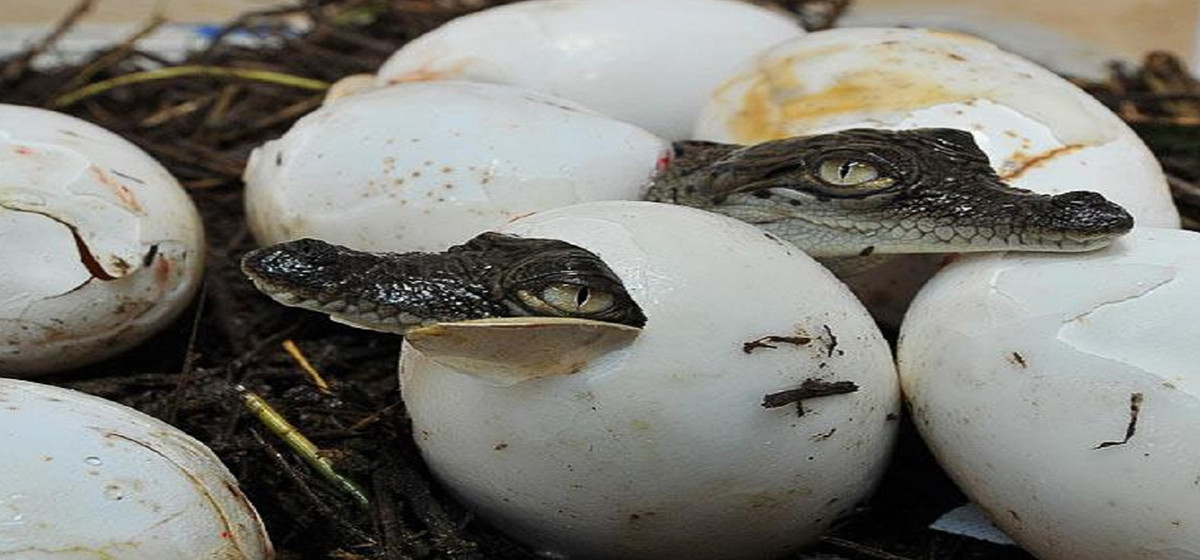
At the Gharial Breeding Centre, the gharial eggs are kept under heating lamps to maintain an appropriate temperature and after three months the baby gharials break their leathery eggshells. Gharials are raised at the breeding centre for up to five years and then released in various rivers. The government has released 861 gharials in the rivers in the last three decades. The gharials are mostly released in Narayani and Karnali rivers.
There are over 700 gharials of various ages ranging from three months to five years at Kasara Breeding Center.
Gharial breeding was started in Nepal in the late 1970s following fears that they were about to become extinct in the wild. Gharials are found in the wild only in Nepal and India now but before 1960s they were found in the rivers in Bhutan, Pakistan and Myanmar as well.
Though about 861 gharials have been released in various rivers in Nepal in the last three decades, only about 100 gharials remain in the rivers as most of them move to India but can´t return due to various dams and barrages on border. "If the breeding center had not been set up, the gharials would have become extinct much earlier," added Khadka.
According to experts, habitat destruction due to growing population and construction of irrigation canals, water pollution by factories near rivers like Narayani, deaths due to fishing nets, construction of various dams in the rivers and the flooding of egg-laying sites during high water period are some of the major threats to the species.
Related story
When the bully is the boss