Lenin’s declaration also underscores the importance of the energy sector in shaping the outcomes of an economy that is undergoing a systemic change. Nepal is not an exception to it. The significant contribution of power sector toward the nation’s Gross Domestic Product (GDP), the strategic aspect of supply security and the high politicization of the sector are some justifying factors to perceive the power sector as being inherent within the political framework rather than being independent from politics in Nepal.
In 2008, Nepal also experienced some form of communist leadership and nationwide electrification was the major agenda of reform. The Maoist government had an awesome plan to generate 10,000 MW of electricity within a decade starting 2008. No doubt, the Maoists were inspired by Lenin’s ideology that worked during the yesteryears. Hence, the motive was certainly right but the execution in present times was false. One of the hallmarks of electrification under Leninism was the autarkic expansion of the sector. Foreign wealth and expertise in the energy sector was not entertained. Energy prices were subsidized and were cheap so that no individual was deprived from accessing the much-needed power. As a result, the industries overtly rode on energy making the economy highly energy-intensive.
The Maoists with their vocal dislike of foreign intervention of any sort decided to oppose foreign investment in the hydro sector. The investment ambience also exacerbated with the Maoist openly claiming Indian vested interests and interference into several domestic affairs of the country. While domestic expansion of the electricity sector was possible in the Soviet Union as they had the required financial and managerial resources, the Maoist fantasy could not materialize due to resource constraints. The increase in gross installed capacity of generation under the Maoist was marginal or negligible. An important lesson to be learned from the Maoist fallacy is that emulating foreign reforms without taking country-specific characteristics into account can be fatal. Theory- and ideology-driven reforms cannot perform better than priority- and objective-driven reforms.
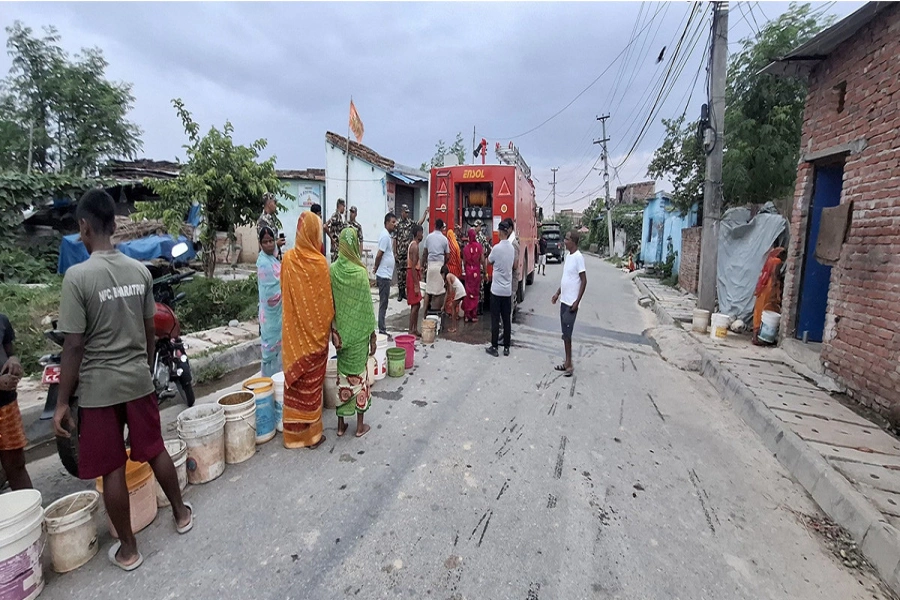
But, the power sector has performed poorly under all previous government leadership, so it is wrong to solely blame the Maoists. More than 40 percent of the population do not have access to electricity while the demand for electricity is in itself growing at approximately 11 percent annually. With a lowering of electricity production level, Nepal Electricity Authority (NEA) is expecting 14 hour power cuts per day. This is a major setback for a country like Nepal which is in the process of transition toward a more market-oriented economy with an ambition of an export-led economic growth. The Nepali power sector has thus become another example of a ‘resource-rich but policy-poor’ sector. The set policies have largely failed because they are hard to implement in the first place.
The Nepali power sector has become another example of a ‘resource-rich but policy-poor’ sector. The set policies have largely failed because they are hard to implement in the first place.
Communism or capitalism, for the power sector reforms to succeed, it has to follow a certain sequence largely reflecting resource availability and constraints. Resource-assessed reforms are sustainable. The Soviet Union eventually collapsed because the economy could not sustain on state finance as its resources were limited. As a result, these countries began a lurch toward open market and increased foreign and domestic investments. Likewise, it is imminent that Nepali power sector remains friendly to domestic and foreign investors. Small-scale privatization of our power sector is also justified on the grounds that it is very difficult to implement reforms in a state-owned industry when there is no political stability. Political instability may also lead to right reforms producing wrong results. The goal should be toward liberalizing the electricity generation segment and allowing the market to have a major say than the government. Given that our river encompasses both rural and urban areas, rural electrification would be automatically taken care off as investors get the right signals from the competitive market. An incentive-based reform should be the future discourse of the power sector reforms in Nepal to lure foreign investors under growing political instability.
It is urgent that we learn from various power sector reforms experience around the world. History is evident that many Latin American and Central Asian countries have been able to turn the tide in their favour through meaningful energy reforms. Electrification did flourish under communism in a politically-stable environment but we cannot be sure that the results would repeat. What matters most is the political will to commit priority-oriented reforms. The nation should devote more resources toward reform-absorbing and absolutely necessary energy sector than wasting scarce resources in reform-inelastic and economically-futile aspects like race, religion and ethnicity.
Writer is a PhD Candidate in Energy Economics
rabindra.nepal@gmail.com
Related story
Private sector's role sought in power sector development