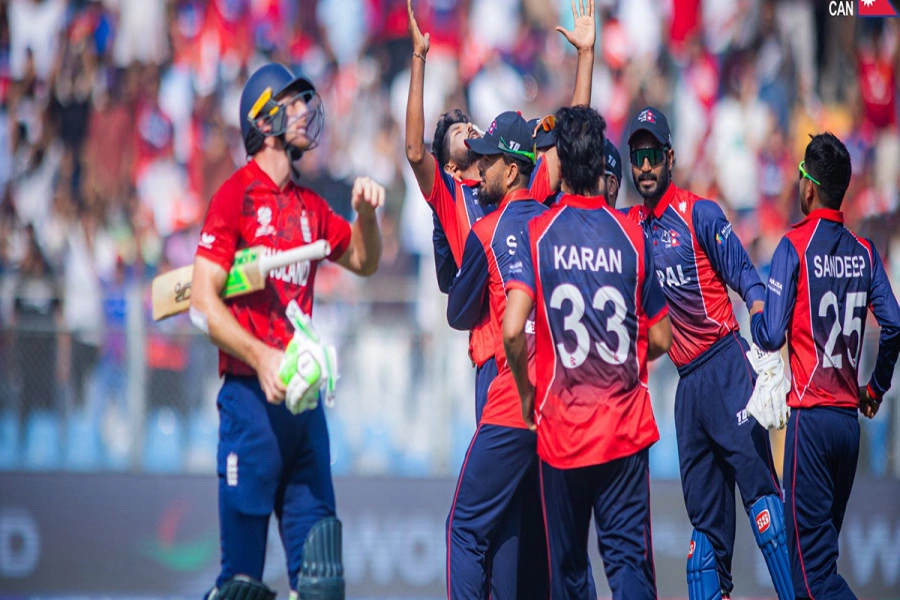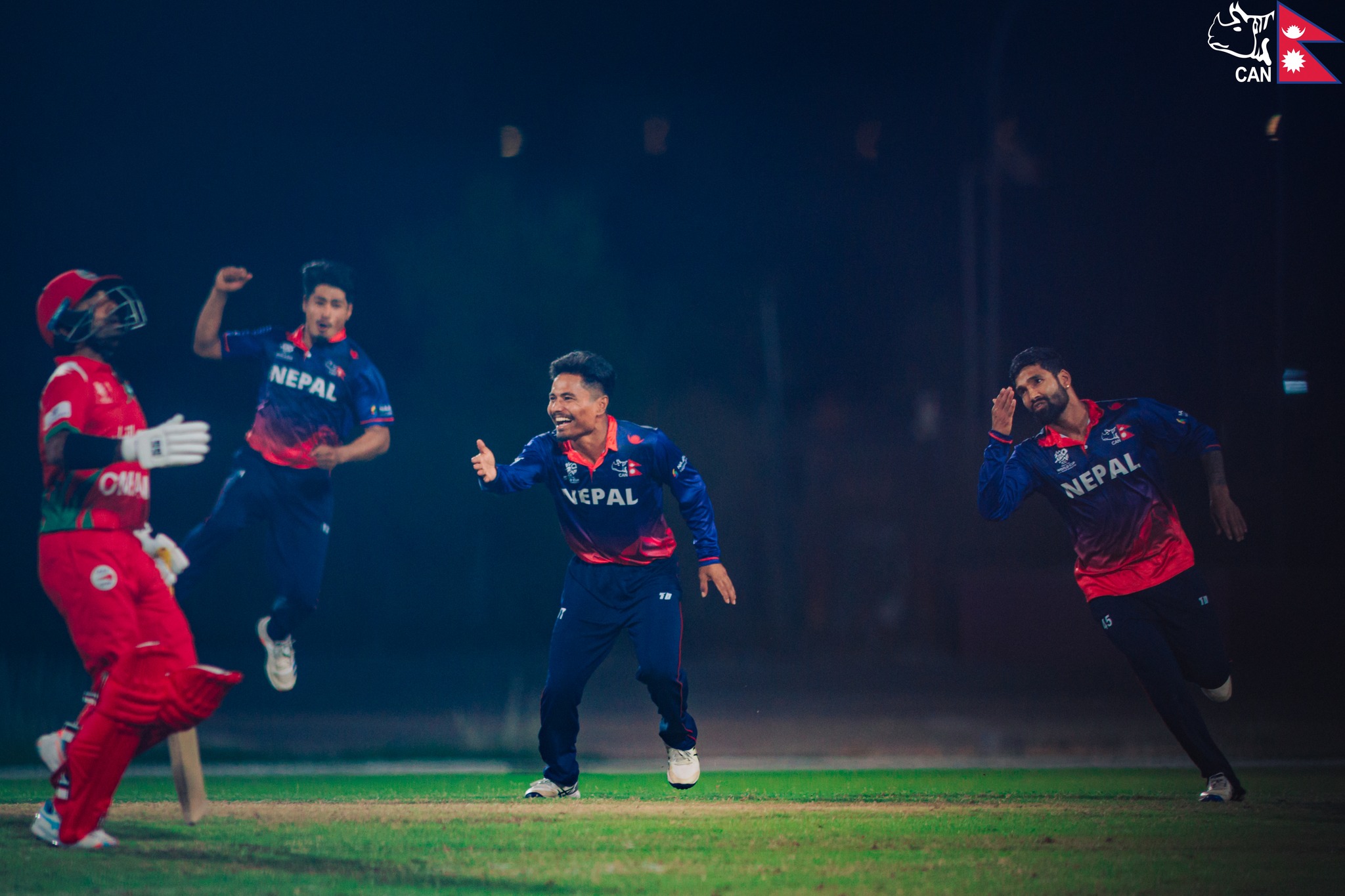
Nepali cricketers have achieved yet another impressive milestone. The Rhinos have qualified for the 2026 ICC T20 World Cup—their second consecutive and third overall appearance on the global stage. Having made their debut in Bangladesh in 2014 and returned to the big league in 2024 in the US and West Indies, Nepal has now earned a well-deserved place in the next edition, to be co-hosted by India and Sri Lanka. Their qualification came after a series of high-class performances in the ICC Asia-East Asia Pacific Qualifier held in Oman, where Nepal not only booked their World Cup spot but also advanced to the final with dominant victories over stronger opponents. At Oman’s Al Amerat Ground, Nepal’s discipline, consistency, and self-belief were on full display. The team arrived in Oman riding high after a 2–1 T20I series victory over the West Indies in Sharjah—a win that significantly boosted their confidence. In the ongoing tournament, Nepal controlled the group stage, winning two matches and collecting bonus points to reach the Super Six round.
World Bamboo Day: Rethinking Bamboo for Nepal

One of the defining moments came in the thrilling one-run victory over the UAE, a match destined to be remembered for Dipendra Singh Airee’s heroics in the final over as Nepal defended a modest total of 140 runs. The UAE had long been Nepal’s bogey team in major tournaments, but this time the Rhinos turned the tables and ended that jinx. With victories over both Qatar and the UAE in the Super Six, Nepal had already sealed its World Cup qualification even before facing Oman. The win against Oman not only cemented Nepal’s position at the top of the points table but also reflected the side’s growing maturity. Kushal Bhurtel’s 69 off 51 balls, supported by excellent bowling, led Nepal to another convincing win. For a team once criticized for inconsistency, this progress stands as proof of how far Nepali cricket has come despite being an ICC Associate member. Led by captain Rohit Paudel and coached by former Australian cricketer Stuart Law, Nepal has made a remarkable turnaround. The team’s success reflects the rise of a vibrant cricket culture in Nepal. The enormous support at home and abroad shows how passionately Nepalis back their players—thousands glued to live streams, while many braved adverse conditions to watch and cheer for their team in stadiums.
As Nepali cricket continues to make remarkable strides on the international stage, the time has come for the authorities to establish a professional cricket structure that enables Nepal to compete consistently against top teams. This means investing in new stadiums, quality training camps, experienced coaches, fitness trainers, and fair financial rewards for players. The Cricket Association of Nepal (CAN) must work closely with the government and the private sector to strengthen the foundation. Without robust infrastructure and sustained investment, Nepal’s momentum could fade before it reaches its full potential. With back-to-back World Cup qualifications, Nepal’s chances of competing at the top level have increased exponentially. Beyond inspiring thousands of young Nepalis to pursue cricket professionally, this success could open doors for players to feature in international leagues abroad. Let’s hope this triumph becomes a launchpad for producing world-class Nepali cricketers for decades to come.