Of course not much of the Wall’s original length exists today, but the mile-long stretch in front left me speechless – perhaps more for the political and historical weight it carried than for its aesthetics alone. One mural after another depicted pictures of a life East Berliners envisioned with quotes that loosely translate in English to “We have many more walls to break” and “Politics is the continuation of wars with other means”. There is hope for humanity after all, I thought. I was moved to tears to have arrived at a monumental treasure cove, or so I thought.
You can imagine my horror when another friend, Simon, explained that it is entirely permissible according to the legal ways of Berlin to contribute our own lay of expression on top of that of history’s. Here I was ooh-ing and ah-ing at the great volumes the graffiti spoke and now I couldn´t be sure if the ideas expressed in front of me was painted pre-1989 and therefore, “genuine” or not.
It seems Berlin is one of few cities in the world where graffiti is legal. Of course street artists generally prefer to distinguish their works from graffiti, but as the latter is perceived by the city as “modern art” it only ensures the former is wholeheartedly embraced. A recent article published in the The New York Times (Admirers Call It Art, but the Police Call It a Problem, April 22, 2011) explores the difference between street art and vandalism and captioned a photo, “Is graffiti a legitimate form of art?” Since vandalism is a criminal act against property it’s hard to say if artwork on property can be considered vandalism or not. A friend adds, “if it’s done tastefully then it’s al right” – but tastefully is a rather subjective term.
However, for the emerging cultural capital of Europe perhaps street art to be called modern art is of little surprise. There is no need to enter fancy galleries to enjoy the art the city offers. Walls, bridges, poles and pillars are all (usually) magnificent displays of expression and pose many a thoughtful questions to all who care to look around.
And that is exactly what is at the heart of street art, to directly communicate with the public. Not with tacky pictures, explicit images or egoists who write their names over and over again.
Still struck by the fact that any visitor can graffiti and paint not only on any public building and site in Berlin, but on the famed Wall itself, it was all the more exciting to note the first rendition of “street art” in Kathmandu. John Fekner, the famed street and multimedia artist, after all claims street art is “all art on the street that’s not graffiti.”
While for many street art is a crude form of expressing oneself, that too on unsanctioned walls and faces of the city, it is perhaps still every bit justifiable when it intrigues the mind of passerbys, as is so needed in this era of uncertainty and confusion.
Taking his cue and dismissing the ‘Do not want world donation’ scribbled on the pink walls of the Supreme court back in 2001 and the all too many political directives – yo sunaschit gar to kunikeko murdabaad announced on the walls of the Himalaya Hotel today, the first I found would have to have been the “Baje” on the back walls of Chai Chai café over in Jhamsikhel.
The stencil (now sadly painted over) isn’t signed and perhaps that’s what adds to its allure. It’s simply a beautiful piece of work left behind by an artist for the ordinary of us to view and reflect upon. As the baje squats and ponders, the simple stencil begs even the non-artsy of us to stop our brisk urban stride and look up into nothingness as he is.
Perhaps he or she (or maybe it, the e3 company which you can find on Facebook) is the Nepali equivalent of the English Banksy or the Italian Blu (both of whom make a sincere effort to hide their identity) or the German El Bocho who is the most visible and recognized street artist in Berlin. It’s hard to say, but suffice to add that it’s perhaps more about their work and contribution to the cityscape of a mismanaged concrete jungle than it is about who the artist is anyway.
Perhaps in the future a walk about Kathmandu will soon pose environmental, cultural, social and political questions that is the essence of street art, as is found along all major urban sites of the modern world. Our city’s made a good start - a quick flash of Che spotted while zooming by on a bike in Old Baheshwar, Gandhi saying “May I live simply so others may simple live” in Pulchowk and a girl adding “bandh ruined my life” give me much hope for more thoughtful ideas to float about the city.
Of course not everyone, from gallery owners to the state, approve of such forms of “art” or even consider it legal, but that may be because by definition street art is usually anti-state. While for many it is a crude form of expressing oneself, that too on unsanctioned walls and faces of the city, it is perhaps still every bit justifiable when it intrigues the mind of passerbys, as is so needed in this era of uncertainty and confusion.
With a strong sense of activism, of questioning the otherwise accepted social ways and a means to communicate with the public, it is a slowly appearing mark on the otherwise scarred face of Kathmandu. Here’s to hoping our Valley will soon become the open air gallery with an invitation for all that Berlin so beautifully is renowned to be.
Please visit http://dalbhattarkari.com/2010/09/09/artistic-stuff-in-kathmandu/ to view a collection of street art captured by a local blogger
sradda.thapa@gmail.com
Related story
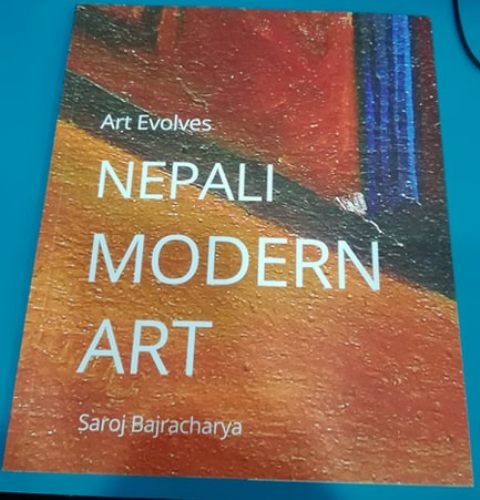
‘Art Evolves: Nepali Modern Art’: Review