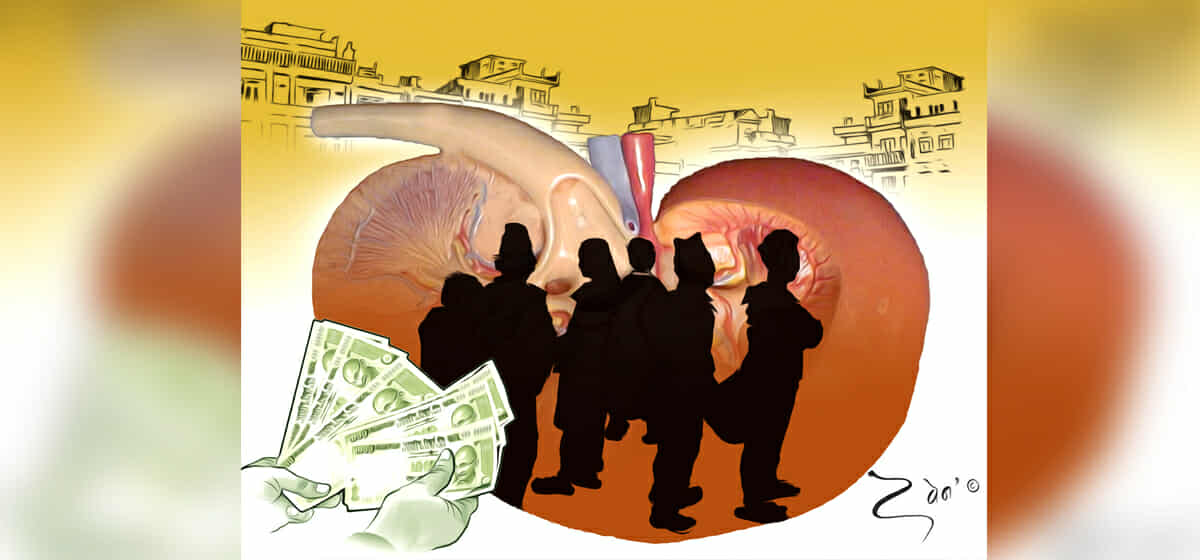
Human kidneys are not supposed to be traded like commodities, but in Nepal and across the border in India, they are sold to needy patients for hefty sums of money. Kidney traffickers and racketeers in Nepal prey on the poor, the desperate, and the uninformed, persuading them that selling a kidney will earn them good money and end their troubles. Some victims are so unaware that they do not even realise they have lost a kidney, receiving nothing in return. Prakash Nepali of Nuwakot, lured by the promise of a job in India, one day woke up disoriented in a Delhi hospital bed in pain. He was falsely told that he had undergone intestine surgery. It was only upon his return home that he discovered the truth — one of his kidneys had been removed. Such stories abound in our country. Police records and recent arrests show how organised and systematic these rackets are. From identifying potential “donors” to arranging travel, forging medical and government documents, these gangs are meticulous in their approach, as the entire operation brings them large sums of money. The racketeers target desperate and uninformed youths in impoverished villages near Kathmandu and in urban slums, where hundreds live without a stable livelihood.
Cooperation for trade

Greedy racketeers even prey on adolescents, pursuing them for months with promises of decent accommodation, good food, and reassurances that donating a kidney is not dangerous. The practice of kidney racketeering takes an unsettling turn when individuals who were once deceived into losing a kidney join the trade themselves, luring others into the same trap. Also disturbing is the fact that most victims suffer from deteriorating health, constant pain, and increasing medical expenses, without any compensation or assistance. Nepal's kidney racket is both a health and a human rights emergency. It delivers a devastating blow to the poor, leaves them physically weakened and vulnerable to other diseases, and worsens their lives after a vital organ is gone forever. Although the law in Nepal prohibits the sale of human organs — making it a punishable crime with prison sentences and large fines — the persistence of such rackets shows that law enforcement has not been effective enough. Police have made some arrests, but they have failed to stop the problem.
Awareness among the poor and desperate, who are often in search of a handful of cash, can play a significant role in reducing victimisation by kidney racketeers. Most victims admit they fall prey to the false belief that a kidney can be sold safely. Public awareness campaigns, especially in rural areas and urban slums, can help alert people to the dangers of kidney trafficking and warn them about its telltale signs. Those at risk need to understand that once an organ is gone, it can never be regained, and the promises of quick, easy money rarely come true. Proactive surveillance of vulnerable groups, increased border checks, and monitoring suspicious travel arrangements are essential to stopping this menace. Ending kidney racketeering will require joint efforts from the police, community leaders, medical institutions, and the public. Without stronger preventive action, traffickers will continue to find new victims, and more Nepalis will continue to suffer at the hands of greedy kidney traders.