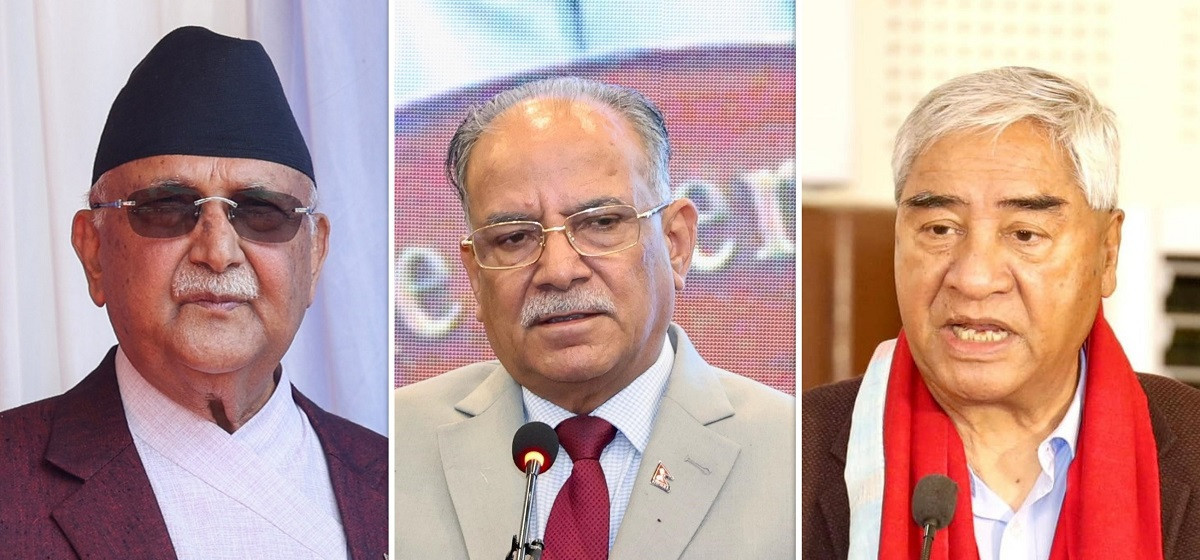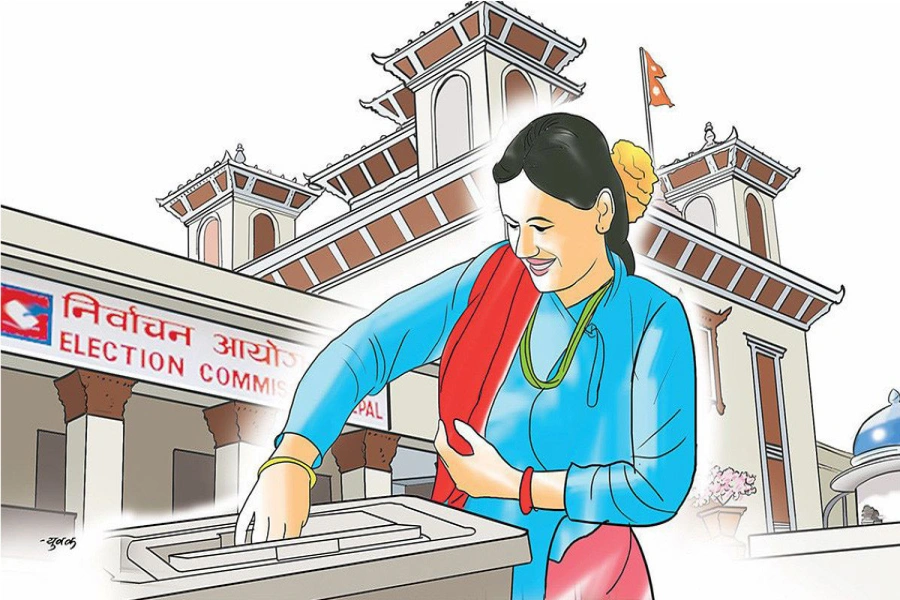
Vote banks have been shattered. Core areas have been dismantled. Pocket votes have disappeared. What has now unfolded was unprecedented until the day of the polls and more so to those who believed that the loyal partisan base of older parties would never falter. They believed that their cadre base would forever remain faithful and never disown them. But this time, the opposite happened. From what has been, it appears that not only the youths who were voting for the first time, but also those who always voted “one way” throughout their lives, opted for a change this time around.
Gen-Z-led protests and the political vacuum that followed in September of last year called for fresh polls conducted by a citizen-led interim government under the leadership of former Chief Justice Sushila Karki. Given the surge in youth engagement and political participation following the Gen-Z protests, it was widely anticipated that a larger number of young voters would turn out to the polls. It was expected that newly emerging parties would gain more control and many new faces would gain entrance into the legislature. But as we read the final verdict of the people, the results have surpassed all expectations, beyond belief for many. In the new reality, the alternative has become the new mainstream and is set to take full control of the lower house after attaining a near to impossible two-third majority.
Some call it a Tsunami. Some call it a landslide. Some call it the Balen effect.
Balendra Sah, the rapper turned ex-mayor of Kathmandu, aka Balen, is set to take oath as Nepal’s youngest Prime Minister. He is 35 years old. Nepal’s median age is 26 years old.
Why is it important?
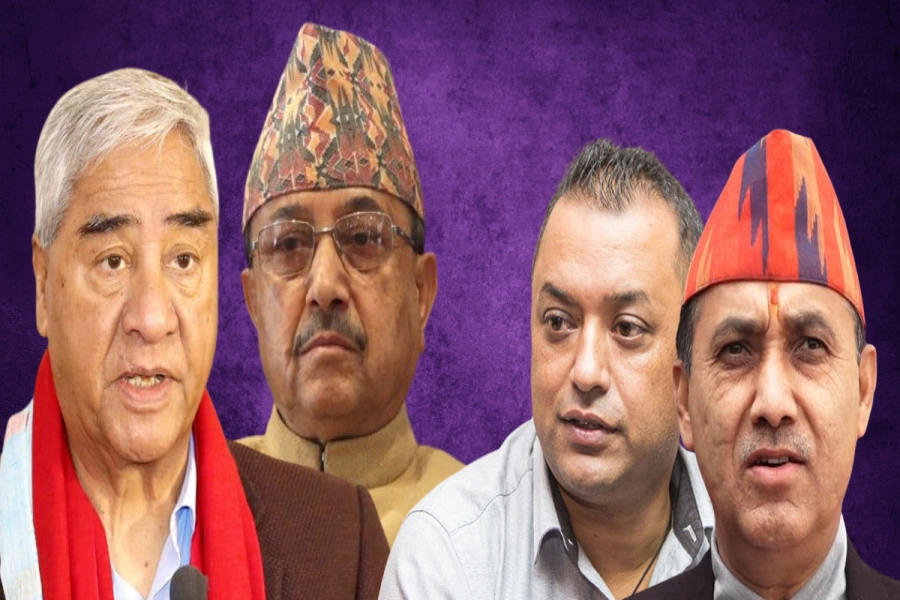
NC embraces generational change, sidelines senior leaders in ti...
Balen, since the first day he set foot into politics, has identified himself as a structural engineer. He neither projected himself as a politician through his choice of words, actions, or appearance, nor does he seem to care. In May 2022, he ran as an independent candidate to win the mayoral race in Nepal’s capital city of Kathmandu. He showed how independent actions can challenge the status quo. He proved that elections can be won on individual merit. It inspired the masses, mainly the youth. Many youths were drawn into politics following his victory, as they had finally found someone in politics whom they could relate to. A young man, despite being introvertish and somewhat avant-garde, quickly started gaining a massive fan following and became a symbol of hope.
Drawing from the inspiration, a new party emerged, in the chairmanship of famous TV journalist Rabi Lamichhane, slightly ahead of Nepal’s federal polls in November 2022. It was named Rastriya Swatantra Party (RSP). RSP, with only a few months of preparation, surprised many and succeeded in securing 21 seats in the federal parliament. Their rise solidified the case statement for the brewing public dissent against the mainstream parties, rampant corruption, and poor governance in the country.
Fast forward to 2026, RSP had become the most promising political alternative for the voters, and Balen had become the most popular political figure. Just ahead of the snap polls, RSP chair Rabi finds a way to join hands with Balen and projects him as the party’s Prime Ministerial candidate. That moment became the turning point.
This time, the Gen-Z was waiting to take vengeance through the vote. The parents whose children had been martyred by the bullets of the state were desperate to respond through the ballot. Millions of migrant workers who wanted to return home to their families and work locally were finding hope among the alternatives. They wanted to see change.
The partnership between probably the two most controversial and yet the most popular political actors in the present-day politics in the country, Rabi and Balen, has proven to be a powerful mix that has not only struck an upheaval in Nepal’s political landscape and uprooted the legacy establishments, but has also indicated a complete paradigm shift for elections and the future of state governance.
What does it mean?
In RSP’s candidate selection, two patterns stood out for me. First, the majority of candidates were young, who proved to be more effective in appealing to the young voter base that constitutes half the country’s entire population. They appeared more relatable to the young voters in the way they could sell themselves or their agendas. Second, they fielded the largest number of candidates with professional or business backgrounds, which proved to be more effective in convincing voters that they were financially independent and would not succumb to corruption. In this election, being held as an abrupt consequence of youth-driven anti-corruption protests, people preferably leaned toward candidates with professional resumes over political ones.
This election was also different in terms of the role of the algorithm. The trends suggest that successful social media campaigns have become more important than ever to particularly reach the swing voters. Positive social media engagements and online support for Balen did contribute significantly to boosting his popularity and overall public approval. As we navigate the digital media and technology landscape, just as every other aspect of our lives, election campaigns and politics are bound to be more tech-driven and online-based in the future.
Victories or losses are an intricate part of elections. Those who won today will have an equal chance of losing tomorrow, and those who lost can also come back stronger. Beyond elections, what should make us proud as a nation is the fact that our democracy, over time, has become more resilient, more progressive, and more promising. It is a win for all of us. Let us remember that since the nightmare of September 9th, when the state institutions and functionalities had completely collapsed, and the constitution was in the void, we chose to defend our constitution as a nation, went on to conclude peaceful polls together, and agreed to follow a democratic path for a successful transition. It is a testament that our democracy can survive despite the hits and setbacks. It is an indication that our democracy is slowly evolving, maturing, and delivering. It is a sign that our society believes in its growing ability to decide for its own future. Our democracy is winning.
Conclusion
As democracies stabilize, mature, and take root, power fundamentally decentralizes to local levels and essentially reaches individual citizens. It is the law. Conversely, when systems, institutions, and political actors attempt to obstruct its natural course through illicit capture, explosions in the form of public outbursts become more likely. The success of democratic governance should be measured by the actual empowerment of individual citizens and their liberty to choose, and should be defined by the rise in our collective consciousness and capabilities. With the course of time, democracy will not merely remain as our constitutional promise, but will become our way of life itself. We will think independently and act independently, including our decision to vote. It is our goal to allow every individual citizen to lead an independent life with freedom, dignity, and hope. Voting in a democracy represents a pristine process of transferring people’s power to a public representative under oath. Therefore, votes are not given; they are earned.
As we hold our faith in the process of democracy, we shall stick true to one principle - Vox Populi, Vox Dei. The voice of the people is the voice of god and we shall always remain guided by our common consciousness and shared obligations.