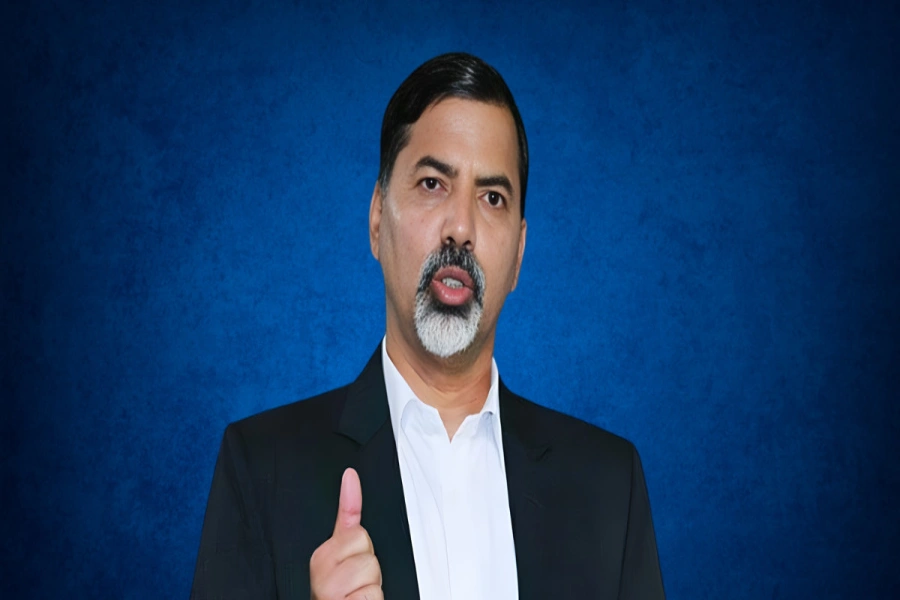
His friend, Pradip Pariyar, President of Association of Youth Organization Nepal (AYON,) offers an inside look at their friendship and journey as young Nepalis making a difference.[break]
I first met Suvash in 2001 in Kavre where a Dalit girl married a Magar boy and were kicked out of the village.
At that time, the media did not cover Dalit issues and we were both working in the media – he was with Jagaran Media which had just started and I had a radio program with Dalit Welfare Organization. We met through this incident and then our correspondence continued.
Around then we had considered working together but we didn’t.
However, we were always in contact any time there were issues and incidents.

We would sit together to talk and discuss and in that way we worked together although we worked for different organizations. We were friends but I always looked at him as a mentor, even now when I think back of the conversations we had, it’s mostly all advice – him asking for mine, and me asking for his.
Age-wise, he was young, he passed away at 31 but he’s lived 100 years because he’s brought so much progress through his work.
He didn’t come from an educated background but Suvash passed his SLC and took it upon himself to come to Kathmandu and study which clearly shows the willpower he had.
For a while he worked at other organizations, but he always had this idea of ‘I want to do something, I’ll take initiative.’ I started working in 2000 when I was 17, but it wasn’t until 2006 that I realized I had to do something.
In 2002 he had already established Jagaran which plays a large role in how Dalit issues have been established in the media.
All the years he worked there, he set the leadership transformation process – when most Nepalis get a leadership position they don’t see other horizons and they hold on to their title but Suvash broke that.
There is no doubt about his leadership, though young he believed in moving on and starting new things.
Even when with Jagaran, he started COCAP, and though he represented a Nepali community he saw a large horizon and he did a lot of work at COCAP to release civil society movement especially during the time of the Jana Andalon. For every initiative he took we would consult each other.
In 2006 when I was 24 and in Accham, I saw the situation of the youth, and since I was also a youth I wanted to do something and left my work to start Nepal Youth Forum. Even then I’d always go to him, with his experience he advised me on building an organization.
We frequently talked about what we could do and what we needed to do next and we constantly discussed what we, as young people, could do.
Our relationship always took a mentorship role where we supported each other and helped each other. When I joined AYON in 2008 he taught me how to work at the association.
We would connect each other to our networks, I went to American University for a peace building course and when he got a fellowship he stayed with a fellow Nepali I knew.
After that fellowship there was the option of getting other opportunities and we had talked about not returning but he always said he wanted to come back and do something.
When it was time for him to return, before Samata was established, we discussed making Samata non-profit without being an NGO.
Much time in Nepal is spent being demanding and blaming each other but Suvash started something new by using facts-based on research – what he’s started with Samata is historic in my opinion. What he started hasn’t been complete yet but hopefully in the days to come friends and those who want to see social justice in this country can work towards it.
I don’t want to say his work at COCAP combined with the new perspective that Jagaran offered Dalit issues in media is enough, but it’s a milestone.
There are few people who have done what Suvash has, coming from a government school in a village, he came to Kathmandu and built himself.
You have to keep in mind that this country runs on networking, but when he didn’t have family or relatives to help him, he did all of the networking by himself with his willpower.
Even without initial connections and without an optimistic future, he made it so far.
We don’t have a choice in birth and death, but youth have the power to do what Suvash did, in fact they can do even more.
A lot of us spend time focusing on what we don’t have and think we can’t move ahead. We need to leave that behind and it’s essential that you believe in yourself and say “I will do something starting from where I am.”
A lot of the advice we took from each other, especially in the beginning, was how we didn’t have networks and people didn’t have faith in youth. If you’re trying to challenge a thought and society, it takes a long time for it to be accepted.
We didn’t spend time yelling at people, we thought about how we could take our work forward. Being young, fundraising was a difficult as well as the lack of media attention in trying to address cases like in Kavre.
There were lots of difficulties then but through all of it both of us had this willpower and the belief that we had to, and could, do something.
We scold previous generations for what they didn’t do and the next generation will yell at us for our shortcomings, so we focused on what we can to save ourselves from being reprimanded by the future generation. Older generations saw each other as competition, but Suvash and I believe we need to help each other.
If the youth can have this dream to work with what they have, if they ask what they can do for themselves, their families, and for society, then we can achieve this dream.
If Suvash and I hadn’t thought in this way we would never have come to where we are today. This way of thinking was a turning point in our lives, at the end, the road that Suvash was on, a lot of us are on it, I’m on it too.We’ll always miss him and we’ll remember him forever.
As told to Shreya Thapa
Related story
Suvash Darnal remembered