

Why has The Banker awarded you as the best finance minister?
I think the award was in recognition of our efforts that we made in mobilizing international support in the aftermath of the massive earthquake. In the citation, the magazine has said: “Mahat has been awarded for the initiative made in Baku Ajarbeijan during the ADB meeting”. I addressed about six meets, including the press meet and plenary, in Baku and briefed the world about the disaster. They thought it was the first initiative I made for the international efforts for relief, rehabilitation and reconstruction after the earthquake. After that event, we prepared an outstanding document, the Post Disaster Needs Assessment (PDNA), which made an assessment of the loss, damage, and investment requirement for reconstruction. We organized the International Conference on Nepal's Reconstruction (ICNR) amid various difficulties.
General opinion was not in favor of holding international conference in Nepal. But we took the risk with the belief that it will give an opportunity for the international community to get firsthand knowledge of the damage. Secondly, we felt that the conference will boost the morale of the private sector and the confidence of tourism industry which was shattered by the earthquake. Our long-term friend Japan had offered to hold the conference in Japan, whereas wanted to hold the event in New Delhi. Similarly, World Bank had offered to facilitate to hold the event in Paris. But we felt that the delay could evaporate concern toward Nepal. We were determined to hold the conference within 60 days and we did it very successfully. We were able to mobilize $401 billion for Nepal's reconstruction. I think it was the major reason behind my selection for the awards. It was also the recognition of the efforts to reform our economy.
Some blame you for the current sorry state of the economy. What do you say?
It is not the work of a single minister. Various non-economic factors like political stability have taken a toll on our economy. We had eight governments in the last nine years. In the face of instable political situation, where bureaucracy is highly politicized and power grab becomes the primary objective of political forces, how can one man improve the economy? Despite this, I am proud to say that the economic reforms that we brought in the early 1990s created the foundation for economic development. It is because of this that private sector and foreign investors have put their money in different sectors like banking, aviation, telecommunications, education, and health. It expanded the economy and created economic opportunities. As services are now closer to the people; they have choice. At the same time, the government treasury has also ballooned. When we had prepared the first budget post-1990 movement, our annual revenue was US$ 13 million only. Today it is close to $500 million. Revenue has gone up. As a result, the government is in position to invest in social security and development activities. We spend about 3 percent of GDP in the social security which is the highest in South Asia. This became possible become of liberal economic policy unveiled by the Nepali Congress-led government in the early 90s. One cannot overlook these achievements. This has happened despite long insurgency and political instability and not so good governance that we have seen in Nepal.
Not just economic front, we have seen improvements in social sectors as well. United Nations Development Program (UNDP) report and many international communities have revealed that Nepal is the star performer in social sector. Average age of Nepalis has increased by 15 years in the last two and half decades. Literacy rate has almost doubled and access to drinking water, road and electricity has improved tremendously. Even poverty has gone down. These are tangible achievements which we could be proud of. Likewise, dependency on foreign aid has also decreased. We are the least indebted countries in the world.
We could have done better definitely, if we had more political stability and continuity of economic policy. We could have done much better.
Will the second generation reforms that you started complete?
We had tabled half a dozen bills and amendments like BAFIA, NRB Act and Banking Crime in the parliament. We brought Procurement Act through ordinance, but it is stalled now. Drafts of many new acts like PEFA and development expenditure transparency were ready. We have started so many reforms. But it gets delayed and stalled when there is political disruption. The main problem in Nepal is governance which is the outcome of political game.
Don't you think the international support you generated for quake victims is slowly evaporating due to delay in reconstruction works?
It is very sad that the reconstruction work has been delayed. We had prepared PDNA and organized ICNR within 2 months of the earthquake. But the formation of Nepal Reconstruction Authority was politicized and it delayed reconstruction work. Still the government can give designs to the victims so that they can start construction on their own. Many people are not waiting for the government's help. The government can release the first installment immediately. The main problem is that people put their vested interests firsts. They do not see from the national perspective. This is the problem. Though the incumbent government is blaming the erstwhile government, they are themselves politicizing the reconstruction authority. There was no change in system during my time. But the incumbent government recently transferred joint secretaries before they completed their term. The government is taking problems lightly. I don't think people in the government are serious. They do not understand the gravity of the problem.
Politicization of institutions, including private sector, is common in Nepal. What do you think?
Yes, politicization of institutions is high in every sector in Nepal. When there is high frequency of change in administration, how can you create a strong institution? There must be continuity and predictability of the policy. Similarly, right man should be placed in the right place. This is not happening here.
Why we failed to move ahead with economic agenda?
Because the bureaucracy is highly politicized. Also we have weak governance.
Don't you think Nepali Congress, the proponent of liberal economic policy, needs a strong leadership to lead Nepal to prosperity?
I think the 13th convention of the Nepali Congress will choose a new leadership that is development-oriented and is capable of providing strong leadership to the country. It is the values started by Nepali Congress that is prevailing in Nepal, whether it is multiparty system or pluralism, which has now been accepted by all the parties. The economic policy that we started has been vindicated. It was our policy that has stood the test of our time. The new leadership elected by our convention will lead the country toward economic prosperity.
How about fighting for leadership to lead the country toward economic prosperity?
Of course I will file candidacy. But I have not decided in which post. I am in discussion with my friends. Some of my friends are pressing me to file candidacy for the post of president. I also have not ruled out the possibility to filing candidacy for the post of president. Nepali Congress must have a strong leadership with a vision of development and prosperous Nepal. I am holding consultations regarding my candidacy.
Related story
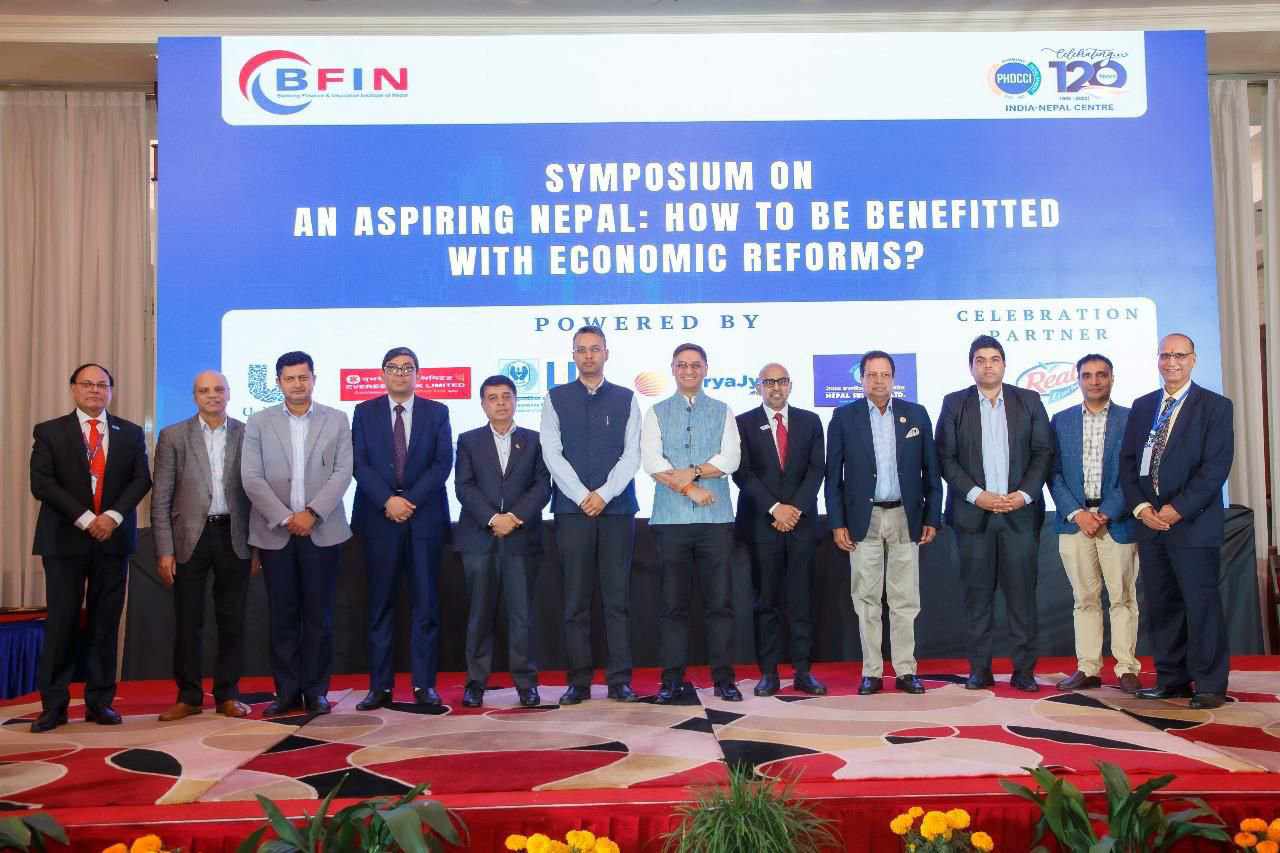
BFIN and PHDCCI India-Nepal Centre host symposium on leveraging...





_20191222200001.jpg)





