

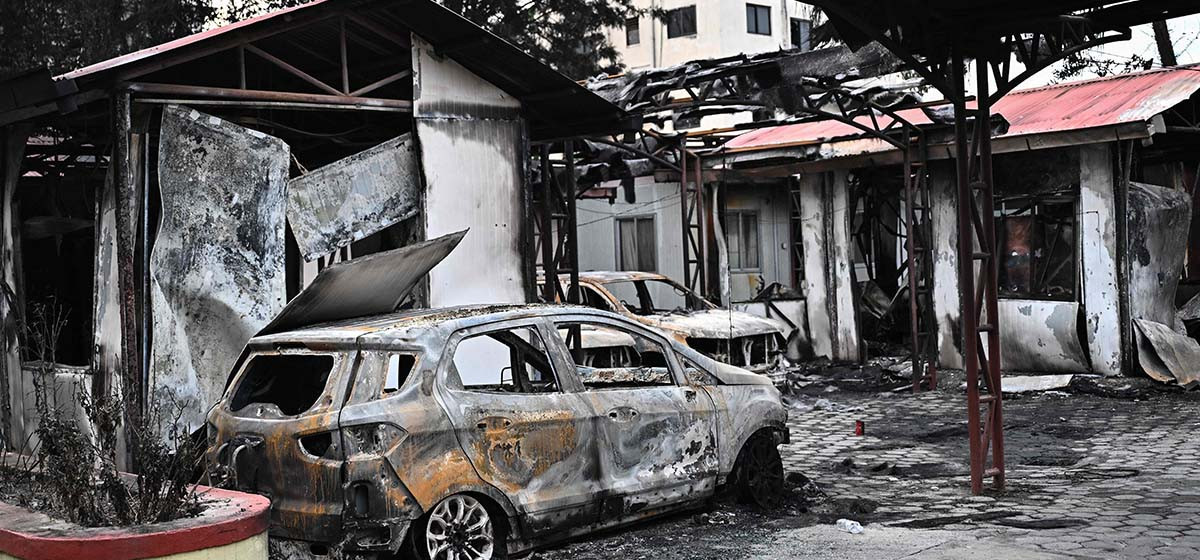
Repeated political instability has heightened the risk of capital flight from Nepal. The Gen Z movement on September 8 and the violent incidents that followed on September 9 — including vandalism, arson and attacks on private and public property — have discouraged even those willing to invest domestically. When hotels, industries, businesses and private homes come under attack, investor confidence naturally erodes. In an environment where investments are not secure and assets can be destroyed overnight, entrepreneurial motivation collapses. Former finance ministers have expressed concern over the growing risk of capital flight and urged the government to respond urgently. The Finance Ministers’ Forum recently discussed the issue with incumbent Finance Minister Rameshore Khanal, who as a former finance secretary has long worked to bolster investor sentiment through policy engagement and reform efforts. The recent targeting of private sector establishments in the name of protest has left business owners convinced that meaningful economic activity in Nepal is increasingly untenable.
10 arsonists, vandals arrested

The festive months of Bhadra, Asoj and Kartik, according to the Nepali calendar, are traditionally the most lucrative period for businesses and the peak tourism season. Yet, this year, protest-driven attacks on hotels — the backbone of the tourism industry — have sent shockwaves through the sector. Even without direct assaults on tourists, the fear generated among visitors forced to flee hotels at night will linger, threatening Nepal’s image as a safe destination. Consumer spending also dropped sharply during the major festival season as uncertainty drove households to save rather than spend, weakening both demand and business confidence. Failure to hold accountable those who vandalise and loot in the name of protest will only embolden impunity. No economy can thrive when private property is unsafe and mobs act without consequence.
The role of Home Minister Om Prakash Aryal is critical — inaction will deepen insecurity and erode faith in the rule of law. The state must guarantee protection of private property, ensure perpetrators pay for damages — or compensate victims if necessary — and consider temporary financial relief such as interest or loan installment support to affected businesses. Restoring public confidence requires clear actions and renewed economic momentum. With national elections scheduled for March 5, 2026, a large share of public expenditure will go toward election management. Still, the government cannot afford to neglect development spending, which remains essential to sustaining economic activity. Without a stable and predictable environment for business, Nepal risks accelerating capital and talent flight. Retaining domestic investment — and preventing the outflow of ideas and human capital — is crucial for safeguarding the country's economic future.


