KATHMANDU, Aug 4: The Online TV Journalists' Association (OTVJA) of Nepal has called for guaranteed representation of online television journalists in the Media Council.
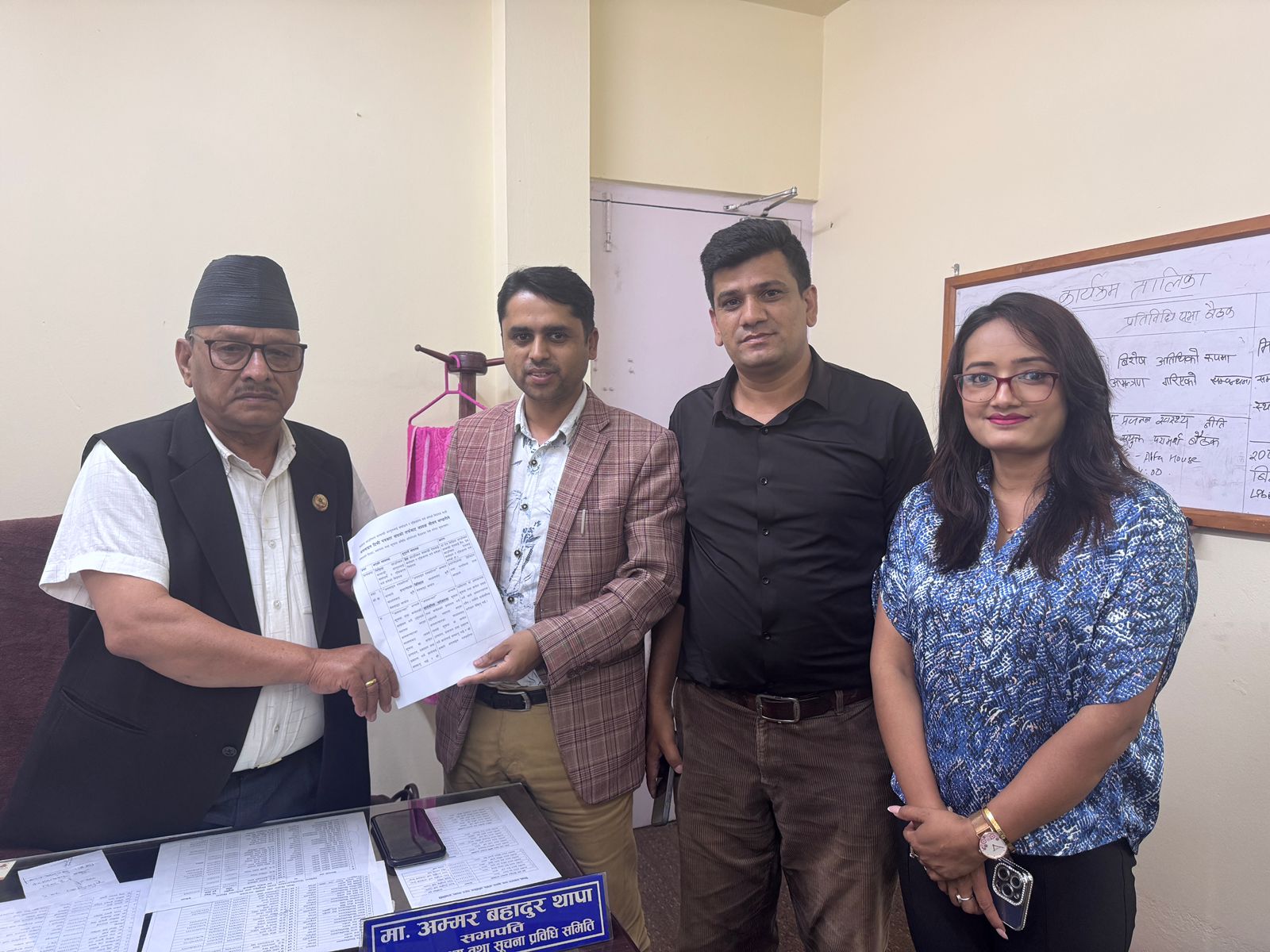
Submitting a recommendation letter to Ammar Bahadur Thapa, Chairperson of the Education, Health, and Information Technology Committee of the Federal Parliament—which is currently deliberating on the Media Council Bill 2080 BS—the OTVJA raised its demand for inclusion.
Although Clause 6 (D) of the bill provides for the representation of publishers, editors, and working journalists from print, online, radio and television media, the OTVJA pointed out that online television has been left out, drawing the committee’s attention to the oversight.
Mr Speaker, Either Prove or Apologize!

A delegation led by OTVJA President Jeevan Bhandari met Chairperson Thapa at his office in Singha Durbar and demanded that the Media Council ensure representation for online TV, which has become one of the most influential and rapidly growing platforms in recent years.
President Bhandari noted that most of the complaints and disputes submitted to the current Press Council are related to online television. He argued that to address and reduce such issues, it is essential to have online TV representation in the Council.
He further contended that those representing traditional media are not equipped to deal with the challenges of new media, and that someone with technical knowledge of online TV is now indispensable in the Council.
According to Bhandari, based on last year’s Press Council data, there are 779 regularly published print newspapers across the country, 1,192 licensed radio stations, and 246 television stations. In comparison, there are 4,622 registered online media outlets—and the number of online TVs exceeds that.
Stating that emerging media platforms deserve greater representation than those in decline, he warned that excluding online TV could create practical challenges for the Council and render it irrelevant. He also emphasized the need for appointing a dedicated full-time director to oversee the increasingly technical field of online TV.
Bhandari added that since both the Media Council and the Federation of Nepali Journalists (FNJ) have recently decided to bring online television under the purview of journalism and regulate it responsibly, representation in the Council is a natural next step.
The OTVJA has also proposed 28 amendments to the bill, including provisions related to the recommendation committee, board formation, and disciplinary procedures, to make the Council more autonomous.
After receiving the recommendation letter, Committee Chairperson Thapa said he welcomed the suggestions and assured that the committee would discuss them and incorporate practical recommendations.