KATHMANDU, Jan 9: Nepal’s first Fish Sanctuary has been announced in a historic move toward the conservation of aquatic biodiversity and the sustainable management of fish resources.
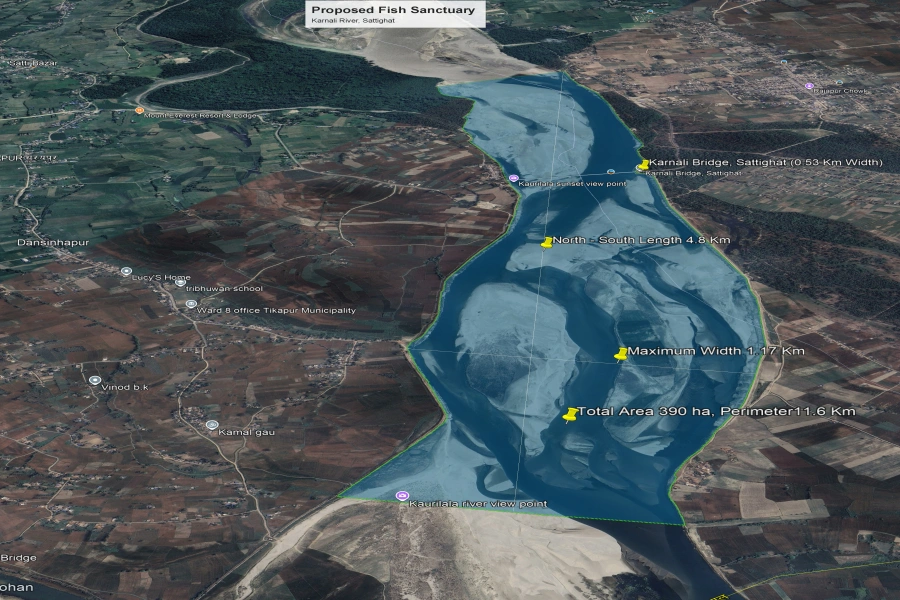
Rajapur Municipality in Bardiya and Tikapur Municipality in Kailali have jointly declared a Fish Sanctuary in the lower stretch of the Karnali River. The sanctuary covers an area of approximately 3.9 kilometers, extending from Tedhiya in the southern part of Rajapur Municipality–3 and Chhediya of Tikapur–4 to Anarhawa of Tikapur–8.
The river stretches included in the sanctuary have been identified as ecologically significant zones, as they serve as breeding, spawning, and nursery habitats for indigenous fish species. In addition, these areas provide essential habitats for nationally and internationally important aquatic animals such as dolphins, gharials, and otters.
According to Tikapur Municipality Mayor Ramlal Dagaura, the joint decision reflects the full support, endorsement, and ownership of both local governments—Rajapur and Tikapur municipalities. He stressed that the initiative highlights collective responsibility, beginning at the local level, for the conservation of aquatic wildlife.
“This is a historic step taken by the people of Rajapur and Tikapur to protect aquatic animals and biodiversity for future generations,” he said.
When the bully is the boss

The announcement has been made in accordance with the Aquatic Animals Protection Act, it is said.
Rajapur Municipality Mayor Dipesh Tharu said the local government has fully embraced the initiative, emphasizing that conserving the lower Karnali belt is its responsibility.
“This step marks the beginning of long-term conservation and responsible leadership through coordinated collaboration among local governments and communities. It serves a take-off point towards organized, coordinated, and sustainable efforts for the protection of aquatic life,” he said.
Both municipalities have jointly made an eight-point declaration commitment. The management of the fish sanctuary would be done in accordance with the co-management model under leadership of the local government in active partnership of river-dependent communities.
Community-based river segment management groups have been formed to conduct management, monitoring, public awareness raising and facilitation of rule compliance. Such groups would carry out activities coordinating with the division forest office and concerned security bodies at the direction and monitoring of the concerned municipality.
Special emphasis has been given on the meaningful participation of especially river-dependent -Sonaha and Tharu communities whose livelihoods and cultural practices are deeply connected with Karnali river.
Such initiative was forwarded by the WWF Nepal through technical and financial support funded projects under the Darwin Initiative of the UK government. This project is being launched in collaboration with the Government of Nepal, WWF Nepal and local partnership organisations—Sonaha Development Society, Freed Kamalari Development Forum, Dolphin Conservation Centre and Small Mammals Conservation and Research Foundation.
Country representative of WWF Nepal, Dr Ghan Shyam Gurung said the announcement of fish sanctuary was a significant achievement to protect the habitat of iconic wildlife—gharials, dolphins preserving the river ecosystem.
Gurung opined, "In these areas, fishing is not only the basis of livelihood of locals but it is linked to the cultural and religious identity. When we protect fish, we also protect water. When we protect water, we are also protecting life. By doing this, we ensure our future."
It has been expected that the announcement of fish sanctuary would contribute to bio-diversity conservation, food security, preservation of local art and livelihood.
RSS