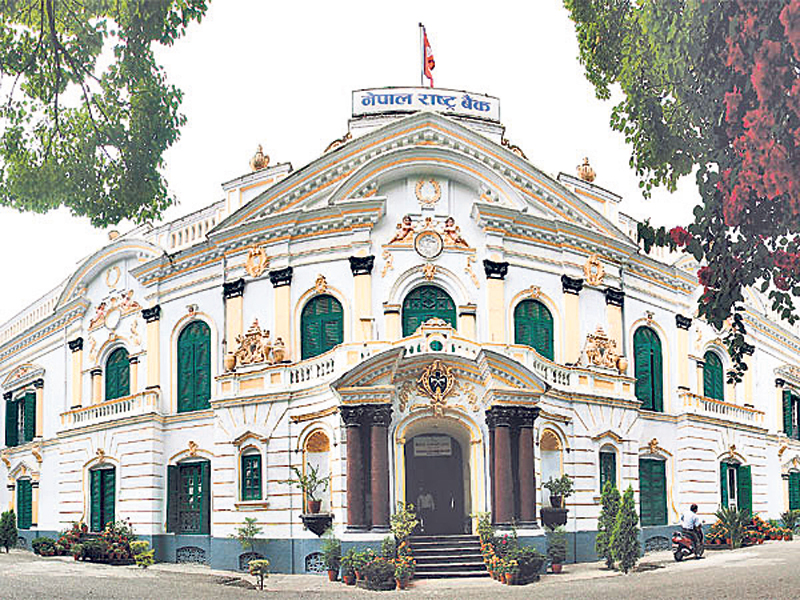
KATHMANDU, Nov 17: Nepal’s economy is largely stabilizing as major macroeconomic indicators posted satisfactory progress in the first quarter of the current fiscal year, according to Nepal Rastra Bank (NRB).
The central bank’s Current Macroeconomic and Financial Situation Report of Nepal released on Sunday shows stability across most indicators, with the exception of those related to banks and financial institutions (BFIs).
Average inflation dropped to 1.67 percent, down from 4.26 percent a year ago, indicating controlled price growth and easing pressure on consumers.
Revised interest rate corridor system introduced
Remittance inflows reached Rs 553.31 billion in the first three months of the fiscal year, marking a 35.4 percent increase compared to the same period last year. In US dollar terms, remittances amounted to $3.94 billion.
Nepal’s foreign exchange reserves hit a record Rs 2.979 trillion (US$21.21 billion), sufficient to finance 16.4 months of goods and services imports.
The balance of payments (BoP) recorded a surplus of Rs 264.03 billion, while the current account posted a surplus of Rs 237.59 billion, despite a sharp increase in trade deficit. These indicators reflect the country’s overall external sector health.
Economist Keshav Acharya said the strong BoP position signals external sector stability. “However, the country needs to utilize the excessive foreign currency reserves effectively to translate this strength into full economic benefits,” he said.
Trade activity also picked up during the review period. Between mid-July and mid-October, exports surged 89.6 percent, while imports rose 19.8 percent, indicating sustained economic momentum.
In public finance, government expenditure stood at Rs 364.59 billion, while revenue collection reached Rs 249.05 billion. Broad money supply increased by 3.2 percent.
Despite improvements in most indicators, BFIs continued to struggle in business expansion amid sharply reduced interest rates. Private sector credit grew by only 1.5 percent, compared to a 3 percent rise in deposits. The interbank interest rate averaged 2.58 percent, while the average treasury bill rate stood at 1.91 percent.