



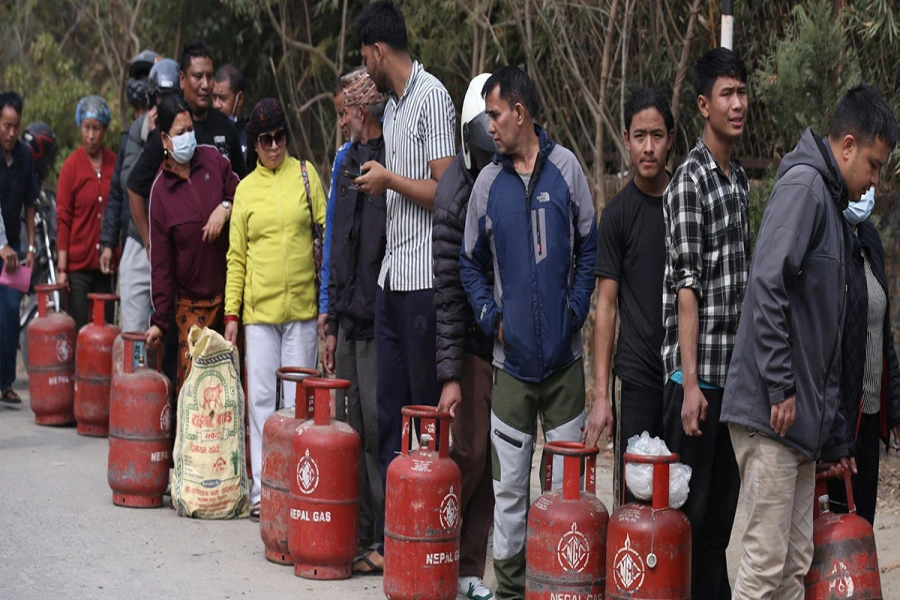
KATHMANDU, Aug 5: The shortage of liquefied petroleum gas (LPG) continues to disrupt households nationwide, despite repeated assurances from Nepal Oil Corporation (NOC) that supplies remain sufficient.
Consumers across the country complain of waiting weeks to refill cooking gas cylinders. After initially denying any shortage, NOC has admitted that the disruption arose during the transition from temporary distribution of half-filled cylinders to full 14.2-kilogram cylinders. Officials said monthly LPG demand has surged to 55,000–60,000 metric tons, far exceeding the normal requirement of about 48,000 metric tons.
The state-owned corporation began supplying half-filled cylinders containing 7.1 kilograms of LPG on March 13 as a rationing measure to prevent panic buying triggered by Middle East tensions. Full-cylinder distribution resumed on July 15, but supply has yet to stabilize.
Farmers get only assurances, not chemical fertilizers from govt...

NOC has blamed delays in LPG transportation caused by the temporary closure of India’s Haldiya and Durgapur refineries, along with increased stockpiling by consumers for the ongoing shortage. However, consumer rights advocates argue that poor planning—not public hoarding—is responsible for the crisis.
Speaking at a meeting of the parliamentary Industry, Commerce, Labour and Consumer Welfare Committee on Tuesday, consumer rights activist Madhav Timilsina said households should not be blamed for trying to secure a basic necessity. “If they had sufficient stock, why would they come to stay in a long-hour queue during heavy rainfall,” Timilsina asked.
LPG bottling companies also criticized the government’s handling of the transition. Nepal LP Gas Industry Association President Diwan Bahadur Chand said the half-cylinder policy was intended only as a short-term emergency measure but was extended unnecessarily, creating imbalances once normal distribution resumed.
Industry representatives maintain that imports have been adequate and that the real problem lies in weak demand forecasting and ineffective management of distribution. They argue that NOC failed to prepare for the sharp rise in demand after lifting the rationing system.
In a meeting with Chief Secretary Govinda Bahadur Karki, LPG bottlers said demand surged massively when the transition was made for the distribution of full cylinders from half-filled cylinders. Bottlers also blamed consumers for stockpiling unnecessarily, further straining the market.
With long queues still common at LPG dealers, households continue to face uncertainty, increasing pressure on NOC and the government to restore reliable supply and prevent the shortage from escalating further.








-1790755544.webp)


