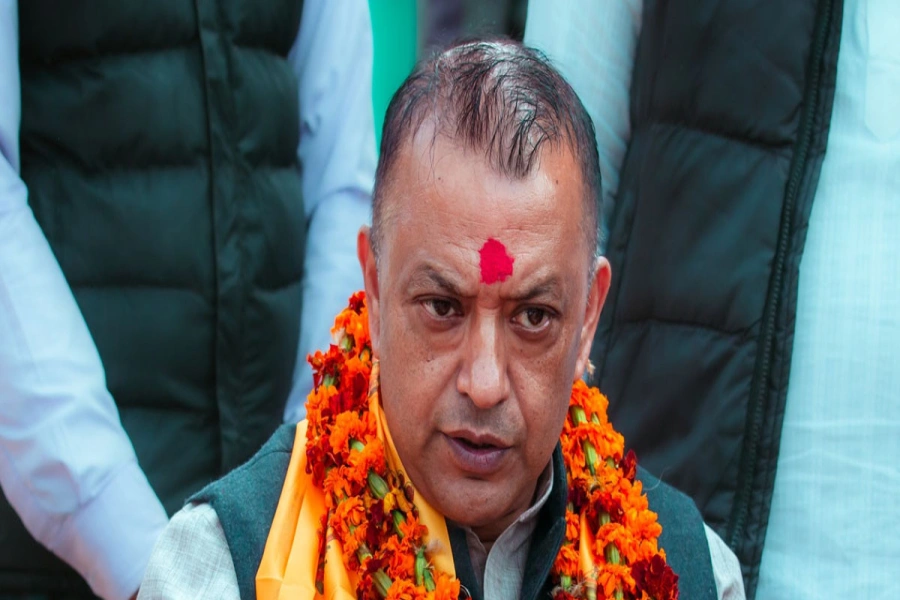
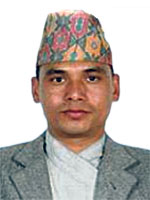
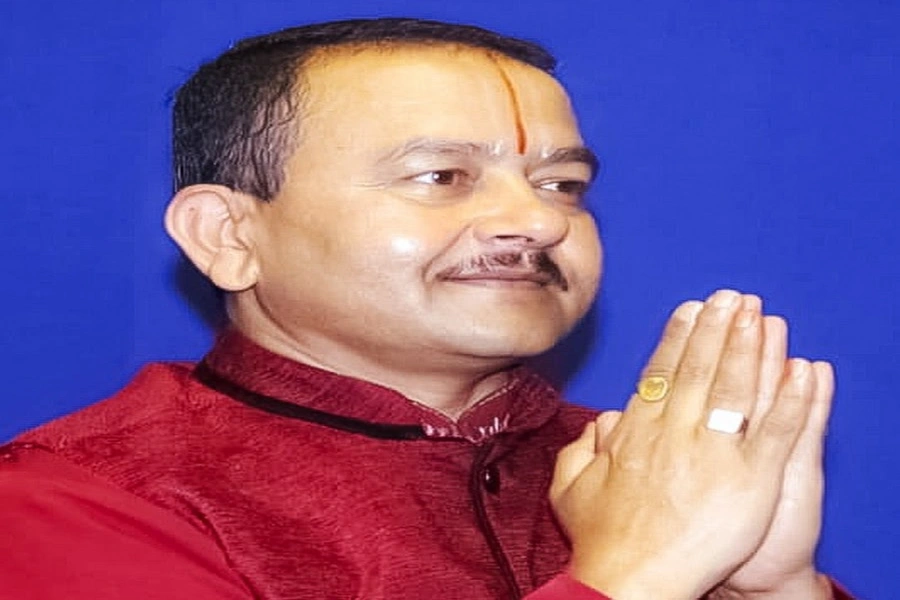
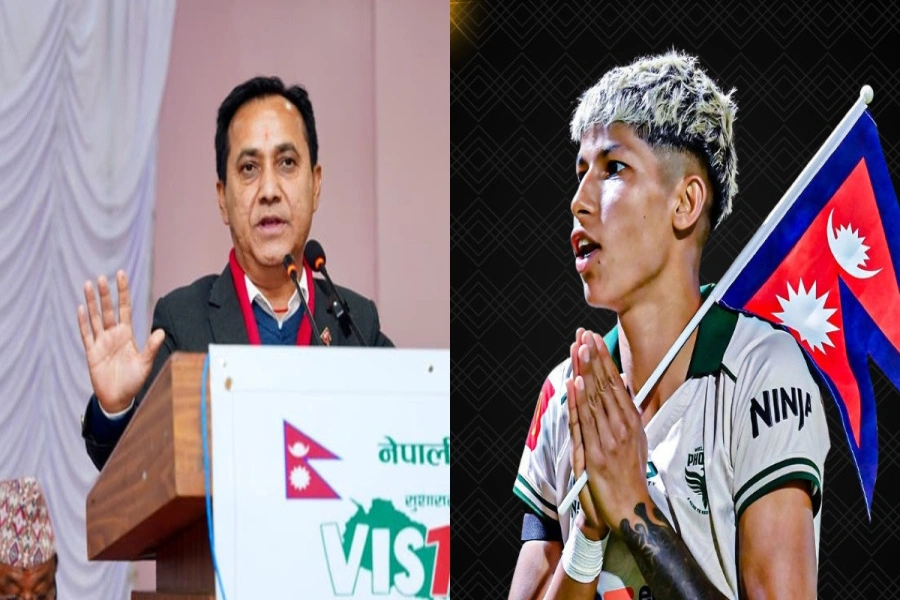
Founding President of Non-Resident Nepalese Association (NRNA) and Chairman of Phul Kumari Mahato Memorial Trust, Upendra Mahato has been actively involved in helping earthquake victims. When Biswas Baral and Mahabir Paudyal caught up with Mahato at his Bhatbhateni residence early on Wednesday, the compound of his house was filled with makeshift tents set up by earthquake victims. Besides opening up his own house to the panicky people, he is also helping out with government rescue and rehabilitation efforts. So how does he evaluate the progress so far? And how can the NRN community help?
Related story
Making a great first impression at an interview

I got to witness the devastation with my own eyes. I was here on April 25. I could feel the pains and suffering of fellow Nepalis. We were clearly not prepared for such a rare disaster.
There are three stages to post-quake response: Rescue, relief and reconstruction. Nepal did well on the first, even thought it was largely unprepared. Given our limited resources, our security agencies did a great job. Regarding relief, Nepalis have the habit of doing things themselves. They do not like to beg. This is something we need to preserve. Nepalis also have the habit of helping their fellow Nepalis during crisis.
But I have found that even acts of kindness can be misplaced. For instance I witnessed some people distributing small parcels with a few kilos of rice and other small stuffs, which would not suffice even for a few days for victim families. This humiliated the victims. If the government had been able to better coordinate relief efforts, perhaps the target families could have received adequate relief materials to last at least a month. The government failed in this in the initial days. The government, individuals, groups and organizations that distribute relief materials now need to ensure that they give adequately to victims, say to fulfill their needs for at least a month.
Our rehabilitation and reconstruction efforts could cost tens of billions of rupees. How will we put together such a big amount?
This is also an opportunity for rebuilding and reconstructing Nepal, to turn the dream of peaceful and prosperous Nepal into a reality. For this the government should clearly plan reconstruction. It can build new communities comprised of residential homes, schools and hospitals and private organizations. The government has estimated that at least six billion rupees will be required for rehabilitation, but I think the scale of damage is so big that much more will be needed. We cannot put together this money on our own. We need help of donors, but they also need to be assured that their contributions will be spent wisely and will help the real victims.
What has been your reading? Has the government failed to take the international community into confidence?
Not really. I would like to call it a state of uncertainty rather than trust deficit. There is a sense of uncertainty in Nepal at the moment. Given the scale of devastation, this is natural, especially in poor and developing countries because they are not prepared to cope with big natural disasters. During such times, people cannot distinguish between right and wrong. People could be inclined to do wrong things. There is uncertainty over what kind of reconstruction plans will be formulated and how they will be executed. But if the government closely works with private and non-governmental actors, I believe it can collect adequate funds for reconstruction.
How can the NRN community help?
Members of NRN community take even small disasters in Nepal very seriously. That's because although they are away, their families, relatives and friends are back home in Nepal. But NRNA as an organization functions according to established rules. It raises funds collectively and executive committee decides where and how to use it. It will formulate its plans in coordination with the government. Its spending will be transparent, reports will be made public.
NRNA has responded to earthquake with seriousness. It has pledged to build 1,000 homes worth Rs 350 million. If the government can prepare a blueprint for economical earthquake-proof houses, NRNA might be able to build even more by staying within this budget. Besides, other NRNs are contributing through their trusts and coordinating agencies. They are also contributing on individual level. Altogether, around 650 million rupees has already been pledged. I am sure NRNs will be more proactive during reconstruction. They will ask their friends abroad to contribute. But government also needs to actively involve NRNs. According to government, eight million people have been affected. But I would say almost every Nepali has been affected, everyone is a victim. So there are great many things to do. We are consulting the government to work out plans to build new townships with health and education facilities.
What have you done at a personal level?
Through Phul Kumari Mahato Memorial Trust, I have provided closed tents—which offer shelter and also have space to store other belongings—along with mattresses, bed sheets, towels and other necessities. Our relief package included rice, lentils, sugar, salt and soaps that lasts at least a month for victim families. These are the basic needs. We have set aside Rs 30 million to help victims meet these basic needs. Now we aim to spend another Rs 120 million for building schools in affected districts. We aim to build at least one school in each affected district, in coordination with government. While doing so, priority will be given to those schools with high student density. Apart from this, we have planned a separate school in coordination with Patanjali Yogpeeth to help children orphaned by this tragedy. This school will ensure food, shelter and education of such children. It will provide education that is a fusion of Vedic and modern education. We plan to accommodate 2,500 to 3,000 students while running classes from primary to higher secondary levels.
How do you assess the fear that involvement of foreign agencies could turn Nepal into another Haiti?
This fear could turn into a reality if we hand over reconstruction entirely to foreign organizations and aid agencies, if the government doesn't lead the process. If it happens, the earthquake victims living in tents today could find themselves in the same tents five years hence. This is why the government must take the lead and coordinate reconstruction efforts. We should ideally have an autonomous government body which will raise funds, plan and implement reconstruction plans, and ensure accountability and transparency in the whole process. This body should be comprised of people with managerial capacity with national and international credibility. This is essential because if you fail to inspire hope and confidence among people soon, things could turn ugly. In Nepal, if the leadership fails to generate hope in the next six months, if it fails to impress on people that needed funds are being raised, and plans are being formulated and implemented, people will start losing confidence in government. Often, during such crisis, individuals and organizations pledge huge amounts on impulse. If we fail to collect the pledged amounts on time, we may not get them at all. Thus the government must work on war footing.
Do you see our fractured polity and prolonged political transition hampering reconstruction works?
If the government is committed, there can be quality reconstruction even in our fractured polity. Political issues will remain secondary for some time. But if the government fails to take people into confidence soon, a new kind of social conflict could emerge, which will be even more difficult to handle. Social harmony could break down and there could be communal conflicts. So we have no time to waste. Next few months are going to be crucial. The government must form an autonomous body to handle post-quake situation and start working immediately. Its transaction should be audited by internationally recognized auditing body, and its progress report made public every three months.
We had stopped focusing on development for quite a long time. For the last one year though we have at least started to talk about it again. Now is the time for our political leadership to deliver on this. Let me tell you, development does not take a long time; the same with reconstruction. We have seen how the countries ravaged by Second World War have transformed themselves into the most developed countries in a very short time. Japan is the perfect example. This earthquake could be a blessing in disguise for us, if we can make ourselves see it as such.
What are your future plans for Nepal?
I believe that Nepal can be transformed into a developed country within a very short period. This is my conviction. This disaster has (and should) energized people to embark on the path of development. I don't believe in the idea of New Nepal. The Nepal we have today is a Nepal we have always had. I rather believe in a prosperous and developed Nepal.
I have seen for myself the hardships people are going through. Now I have an added responsibility. I feel like: "Who will do, if I don't? And when will I do it, if not now?" Perhaps this is the first time I have stayed in Nepal for such a long time since I left the country in 1982. I would come home but would not stay for more than a couple of days. This is not going to happen now. I am going to actively work for reconstruction. I will engage donor agencies, social organizations and government on how we can make reconstruction efforts tangible. I will do so by staying in Nepal. I have decided that I will devote much of the next two years to Nepal.


-1200x560-1772467693.webp)


_20210815071806.jpeg)