KATHMANDU, Nov 4: Industrialists have expressed skepticism over the government’s new middle-ground proposal aimed at resolving the long-standing dispute between dedicated and trunk power lines.
Two weeks after the Nepal Electricity Authority (NEA) disconnected power supply to 25 industries for failing to pay the dedicated and trunk line charges, the Federation of Nepalese Chambers of Commerce and Industry (FNCCI) initiated talks with the government to seek a resolution.
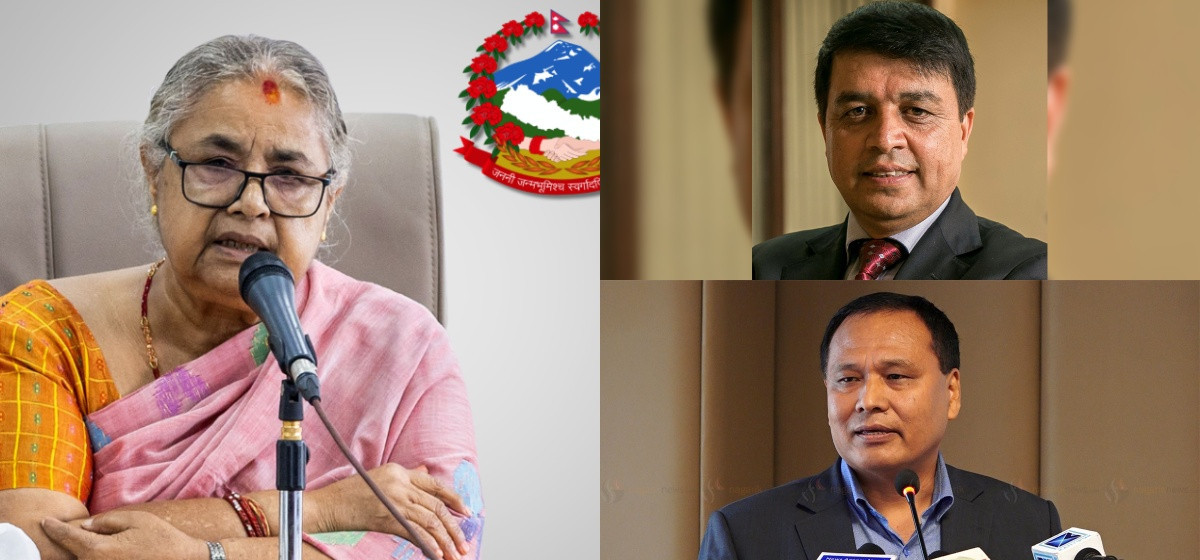
Despite remaining silent for two weeks, the government moved forward with a new proposal after industrialists refused to pay the charges. During a meeting attended by Prime Minister Sushila Karki and several ministers, FNCCI President Chandra Prasad Dhakal proposed that industries deposit an amount equivalent to one of the 28 instalments as a disputed amount—not as payment of dues—and have their electricity reconnected. Dhakal said the prime minister and government officials agreed to the proposal.
“Industries will have their lines reconnected after depositing one instalment amount as security, not as payment,” Dhakal said, adding that industries could later pursue a review process. He, however, claimed there was no reason for industrialists to remain suspicious.
Industrialists complain of not getting smooth power supply whil...

The meeting held at the Prime Minister’s Office was attended by Finance Minister Rameshore Khanal, Ministry for Energy, Water Resources and Irrigation Kulman Ghising, Ministry for Industry, Commerce and Supplies Anil Sinha, Chief Secretary Ek Narayan Aryal, and representatives from the private sector. Some industrialists, however, voiced dissatisfaction that those directly affected by the dedicated and trunk line issue were not included in the talks.
According to the agreement, industries can submit the deposit to NEA while clearly stating their disagreement and requesting a review or other legal remedies in the same application.
The new proposal was introduced after industrialists said they were willing to deposit the disputed amount as a security deposit—provided that NEA accepted it without treating it as payment and allowed them to seek legal remedy.
Some industrialists remain doubtful, fearing that the term “security deposit” could later be interpreted as “payment.” “Until the concerned ministries issue a clear written statement, we remain skeptical,” one industrialist said, recalling previous instances of being “deceived.”
The dispute over dedicated and trunk line tariffs has persisted for eight years. The NEA recently cut power to 25 industries for failing to pay premium charges, forcing them to shut down operations. On September 28, the NEA gave a three-week ultimatum to clear dues. After the deadline expired, NEA disconnected the lines last week.
According to NEA, 25 private industries still owe around Rs 5.5 billion in outstanding dues, while 31 industries in total are yet to pay. Six of them have secured interim court orders. The total dues amount to approximately Rs 6.5 billion, according to NEA’s estimates.
The tariff dispute is also linked to the reputation of current Minister Kulman Ghising, who, as NEA’s former managing director, had taken a strong stance on collecting the premium charges—a move that led to his dismissal by the then KP Sharma Oli-led government. With Ghising now holding ministerial power, the issue has become even more complex.
Industrialists insist they are willing to pay based on Time-of-Day (ToD) meter readings, but claim NEA never installed such meters. They also argue that NEA billed them for premium charges even though they never applied for dedicated or trunk line facilities.
Four industries reconnected
Power supply has been restored to four industries affected by the disconnections — Panchakanya Plastic Industry, Panchakanya Steel Industries, Siddhartha Pet Plant, and Shyam Plastic — all located in the Bhairahawa industrial area of Rupandehi. Panchakanya reportedly paid the disputed amount on the condition that it could seek legal remedies through review.


-1200x560_20220430072818.jpg)